Table of Contents
How To Get Rid Of A Stye Overnight: Fast-Action Treatments and Clinical Protocols
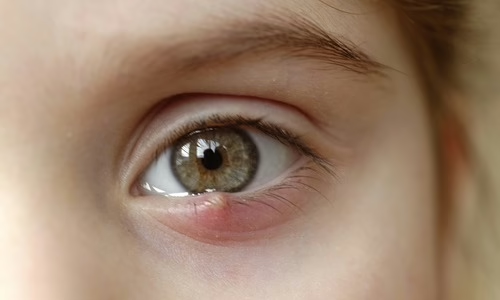
When patients present to our clinic with an acute eyelid swelling, their primary question is almost always how to eliminate the lesion overnight. An acute hordeolum, commonly known as a stye, causes noticeable discomfort, localized erythema, and aesthetic disruption. While complete resolution of an acute focal infection within eight hours is medically rare due to the inflammatory cascade required for tissue repair, applying targeted, evidence-based therapies within the first 24 hours can dramatically reduce pain, minimize inflammation, and accelerate drainage.
In our ophthalmic practice, we focus on establishing an immediate protocol that targets the underlying etiology of the blockade while preventing complications such as preseptal cellulitis or chronic chalazion formation.
Understanding Eyelid Pathology: External vs. Internal Hordeolum
To effectively manage an eyelid bump, we must first establish an accurate clinical diagnosis. A stye is a focal bacterial infection—most commonly caused by Staphylococcus aureus—affecting the secretory glands of the eyelid margin. It is crucial to distinguish between external hordeola, internal hordeola, and chalazia, as treatment strategies and recovery timelines differ.
- External Hordeolum: An acute infection arising in the lash follicles or the associated Glands of Zeis (sebaceous) or Glands of Moll (apocrine). These present as pointed, erythematous nodules on the external eyelid margin and typically point toward the eyelash base.
- Internal Hordeolum: An infection localized within a Meibomian gland situated deeper inside the tarsal plate. These lesions point toward the conjunctival surface of the eyelid, often producing greater pain and diffuse eyelid swelling due to tissue confinement.
- Chalazion: A non-infectious, chronic lipogranulomatous inflammatory lesion resulting from an obstructed Meibomian gland. While a stye is an active, painful microbial infection, a chalazion is typically painless and represents an unabsorbed focal lipid retention following an unresolved internal hordeolum.
According to clinical research published by the National Center for Biotechnology Information (NCBI), hordeola are primarily self-limiting, but delayed or inappropriate intervention increases the risk of secondary encapsulation into a chronic chalazion.
Targeted Protocols to Reduce Stye Swelling and Pain Rapidly
To achieve maximum reduction in swelling and discomfort overnight, we recommend a combination of physical, thermal, and antimicrobial interventions. The objective during the acute phase is to increase localized hyperthermia, lower lipid viscosity within the affected gland, and suppress bacterial overgrowth.
1. High-Efficiency Moist Thermal Therapy
Warm compresses remain the gold standard in initial management. Dry heat or standard cotton washcloths lose thermal energy rapidly. We instruct patients to utilize moist, sustained heat between 40 degrees and 45 degrees Celsius (104 degrees to 113 degrees Fahrenheit) for 10 to 15 minutes per session, repeated 3 to 4 times daily.
- Heat liquefies thickened meibum (eyelid oil) locked within the gland canal.
- Localized vasodilation increases blood flow, mobilizing white blood cells to clear bacterial infection.
- Utilizing a warm compress before bed facilitates glandular softening overnight.
2. Eyelid Margin Hygiene and Hypochlorous Acid
Bacterial load reduction along the eyelid margin is essential to prevent secondary infection of adjacent lash follicles. Washing the area gently with a diluted baby shampoo solution or an over-the-counter hypochlorous acid (0.018%) lid spray provides rapid antimicrobial action without irritating the ocular surface.
- Hypochlorous acid neutralizes bacterial toxins and eradicates pathogenic Staphylococcus organisms.
- Gentle cleansing removes crusting, exudate, and cellular debris along the Meibomian gland orifices.
3. Lubrication and Topical OTC Pain Mitigation
Over-the-counter topical stye ointments containing white petrolatum and mineral oil reduce friction between the inflamed eyelid mucosa and the cornea. Oral nonsteroidal anti-inflammatory drugs (NSAIDs) such as ibuprofen (200 mg to 400 mg every 4 to 6 hours as appropriate) help control localized pain and tissue edema.
4. Strict Avoidance of Mechanical Trauma
Under no circumstances should a patient squeeze, pop, or lance a stye at home. Mechanical pressure forces purulent fluid deeper into the delicate subcutaneous tissue of the tarsal plate, converting a localized hordeolum into extensive preseptal cellulitis.
5. Temporary Elimination of Cosmetics and Contact Lenses
Continued use of contact lenses or eye makeup introduces exogenous bacteria and prevents gland drainage. Patients must discontinue contact lens wear until the infection resolves completely and discard eye makeup used prior to the onset of symptoms.
For comprehensive clinical guidelines on eyelid management, consult the resources provided by the American Academy of Ophthalmology.
Comparison of At-Home and Clinical Stye Therapies
The following structured table outlines the mechanisms, typical timelines, and clinical considerations for primary stye treatments:
| Treatment Method | Action Mechanism | Expected Time to Relief | Efficacy Level | Key Clinical Considerations |
|---|---|---|---|---|
| Moist Warm Compress | Liquefies clogged meibum and increases localized vascularity | 24 to 48 hours for symptom reduction | High (First-Line) | Must maintain temperature around 40-45 degrees Celsius; avoid scalding |
| Hypochlorous Acid Lid Spray | Eradicates skin-surface bacterial pathogens and reduces toxin load | 12 to 24 hours | High | Non-irritating; ideal for underlying blepharitis |
| Topical Antibiotic Ointment | Direct inhibition of bacterial growth along the lid margin | 24 to 72 hours | Moderate to High | Prescription strength required for severe cases; prevents infection spread |
| Oral Antibiotics (e.g., Doxycycline) | Systemic bacterial inhibition and anti-inflammatory action | 48 to 72 hours | High | Indicated for internal hordeola or spreading cellulitis |
| In-Office Incision & Curettage | Surgical drainage of focal purulent accumulation | Immediate relief | Very High | Performed under local anesthesia when conservative treatment fails |
Clinical Case Studies: Managing Complex and Recurrent Cases
In our practice, we frequently manage complex presentations where standard home care is insufficient or where underlying ocular surface disease complicates recovery. Below are two real-world examples from our clinical files:
Case 1: Recurrent Internal Hordeolum Secondary to Ocular Rosacea and Demodex
A 44-year-old female presented with a recurrent, painful internal hordeolum on her left upper eyelid that failed to improve after ten days of warm washcloth applications. Slit-lamp examination revealed severe chronic Meibomian Gland Dysfunction (MGD), ocular rosacea, and Demodex folliculorum collarettes along her eyelash roots.
- Resolution: We initiated a combined therapeutic regimen consisting of a oral Doxycycline course (100 mg twice daily for anti-inflammatory and lipid-thinning effects), daily tea tree oil-based lid scrubs for Demodex eradication, and microblepharoexfoliation performed in-office. Within 48 hours, localized inflammation decreased significantly, and the internal gland achieved full patency within one week.
Case 2: Deep-Seated Tarsal Chalazion Following Unresolved Hordeolum
A 31-year-old male presented with a firm, non-tender nodule measuring 6 millimeters on his lower right eyelid that persisted for six weeks following an acute stye. The lesion created a noticeable cosmetic defect and induced localized corneal astigmatism.
- Resolution: Because conservative heat therapy was no longer effective for this encapsulated lipogranuloma, we performed a minor in-office surgical incision and curettage under local anesthesia. Through a vertical transconjunctival incision, the granulomatous tissue was evacuated without skin scarring. The patient reported immediate relief from lid pressure and complete restoration of smooth eyelid contour within five days.
When Professional Ophthalmic Intervention Is Required
While most simple hordeola respond well to home therapy, certain symptoms require urgent professional evaluation to prevent systemic complications. We advise immediate clinical assessment if any of the following occur:
- Swelling or erythema extends beyond the eyelid margin to the cheek, eyebrow, or upper facial structures.
- Pain worsens rapidly despite consistent warm compress application over 48 hours.
- The patient experiences changes in visual acuity, double vision, or pain during ocular movements.
- The eyelid swells entirely shut or exhibits marked purulent discharge causing eye adhesion.
- The bump remains firm, persistent, and unchanged for longer than two weeks.
Long-Term Prevention Strategies for Eyelid Health
Preventing recurrent styes requires maintaining a healthy ocular surface and ensuring unobstructed glandular secretion:
- Perform daily lid margin cleansing using dedicated, neutral-pH eyelid cleansers or hypochlorous acid sprays.
- Manage underlying chronic blepharitis, dry eye disease, or Meibomian gland dysfunction with guidance from an eye care practitioner.
- Replace ocular cosmetics, particularly mascara and liquid eyeliner, every three months.
- Wash hands thoroughly before applying or removing contact lenses, and adhere to proper disinfection schedules.
Frequently Asked Questions
Can a stye completely disappear overnight?
A stye rarely vanishes entirely overnight because the body requires time to process bacterial clearance and tissue inflammation. However, applying high-efficiency warm compresses and antimicrobial lid sprays before sleep can significantly lower pain, reduce eyelid edema, and jumpstart natural drainage within 12 to 24 hours.
Is it safe to pop or squeeze a stye at home?
No, squeezing or popping a stye is unsafe. Compressing the eyelid can break the internal barrier of the infected gland, driving bacteria deeper into surrounding tarsal tissues and potentially leading to preseptal or orbital cellulitis, which requires emergency medical treatment.
What is the difference between a stye and a chalazion?
A stye (hordeolum) is an acute, painful bacterial infection of an eyelash follicle or oil gland at the eyelid edge. A chalazion is a non-infectious, typically painless bump that forms deeper in the eyelid when an oil gland becomes blocked and encapsulates unabsorbed lipid secretions.
Should I wear contact lenses or eye makeup while treating a stye?
No, you should discontinue using both contact lenses and eye cosmetics while treating an active stye. Makeup products and contact lenses can harbor bacteria, exacerbate inflammation, and obstruct the drainage of the affected gland. Resume use only after the infection has fully resolved.
When should I see an eye care professional for a stye?
You should consult an eye care provider if the stye does not show improvement after 48 hours of home care, if pain or swelling spreads to the surrounding face, if vision becomes blurred, or if the bump persists for longer than two weeks without resolving.
Sources
- American Academy of Ophthalmology: What Are Chalazia and Styes? https://www.aao.org/eye-health/diseases/what-are-chalazia-styes
- National Center for Biotechnology Information (NCBI) StatPearls: Hordeolum (Stye) Treatment Protocols. https://www.ncbi.nlm.nih.gov/books/NBK459349/
- Mayo Clinic: Stye (Sty) Diagnosis and Treatment. https://www.mayoclinic.org/diseases-conditions/stye/diagnosis-treatment/drc-20378022