
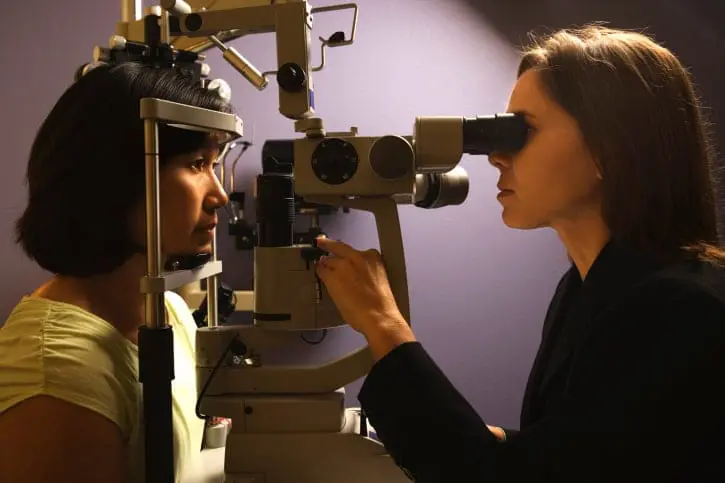

I had a great experience at Liberty Laser Eye Center. Dr. Nancy Tanchel and her entire team were extremely professional, kind, and made me feel comfortable throughout the whole process. They explained everything clearly and answered all of my questions, which really helped me feel confident before the procedure.
The surgery went smoothly and the staff was very supportive from start to finish. I’m very grateful to Dr. Tanchel and her team for their excellent care and professionalism.
Thank you all for helping me improve my vision. I truly appreciate the great work you do.

My vision wasn't terrible, but I was just sick of dealing with the hassle of contacts for sports until I came here. Great and professional business

I had a really good experience at Liberty Laser Eye Center. The staff was friendly and made me feel comfortable the whole time. The procedure was quick, and my vision is so much better now.

Informative staff offering careful evaluations and supportive patient care throughout the process.

Having LASIK surgery was the best thing I have ever done. Waking up every morning with the ability to see 20/20 without having to reach for my glasses or contacts is the ultimate freedom. The surgery was painless and the staff was incredible. I highly recommend it so don't wait!

Brought My grandmother for her eye exam. Jeeimy helped us and explained in detail such amazing team.

I’d been thinking about LASIK for years but kept putting it off out of sheer nervousness. The staff at Liberty are some of the kindest and most patient people I’ve ever met. It’s been a few months and I’m still not used to the freedom of just rolling out of bed and seeing.

I consider this the best investment I've ever made in myself, no question about it. The freedom of just rolling out of bed and being able to see is something I'll never take for granted.
Yes, you absolutely still need regular eye exams after LASIK. The procedure corrects your refractive error, but it does not make you immune to other eye conditions or the natural aging process of your eyes. Comprehensive eye exams are crucial for monitoring your overall ocular health, checking for issues like glaucoma, cataracts, macular degeneration, and dry eye syndrome, which LASIK does not prevent. Your eye doctor will also ensure your corneas remain healthy and stable long-term. For professionals who spend long hours on digital devices, these exams are especially important to manage screen-related strain, a topic we explore in our article LASIK And Screen Fatigue Relief For Professionals. Maintaining a schedule of annual exams is a key part of protecting your vision for life.
Patients with Sjögren's syndrome, an autoimmune disorder that causes severe dry eye, require a very careful evaluation before considering LASIK. The procedure can exacerbate dry eye symptoms, which are a primary contraindication. A comprehensive pre-operative assessment is essential, focusing on the stability and severity of the dry eye condition. Many surgeons would advise against LASIK if dry eye is not well-managed. Alternative vision correction procedures, such as PRK (which may pose a slightly lower dry eye risk) or implantable contact lenses (ICL), might be considered safer options. A consultation with a corneal specialist who can evaluate your individual ocular surface health is the critical first step.
Yes, many individuals with type 2 diabetes can safely have laser eye surgery, but careful evaluation and management are crucial. The primary concern is the stability of the patient's condition. Good blood sugar control over a period of time is essential, as uncontrolled diabetes can cause fluctuations in vision and affect healing. A comprehensive pre-operative exam will assess the health of the retina, as diabetes increases the risk of conditions like diabetic retinopathy. If such conditions are present and unstable, they must be treated and managed before proceeding. Ultimately, candidacy is determined on a case-by-case basis by a qualified surgeon following a thorough health and eye examination.
Yes, you can absolutely get laser eye surgery if you have astigmatism. Modern laser vision correction procedures, such as LASIK and PRK, are specifically designed to treat astigmatism by reshaping the irregularly curved cornea into a more spherical shape. This is achieved using advanced wavefront-guided technology that maps the unique imperfections of your eye. Astigmatism is a very common condition, and treating it is a standard part of most refractive surgeries. The best way to determine your candidacy is through a comprehensive eye exam. For a detailed comparison of the two most common procedures, please refer to our internal article LASIK Vs. PRK: Which Is Right For You?.
Certain individuals are not ideal candidates for laser eye surgery. Those under 18, as their vision is still changing, should typically wait. People with unstable vision prescriptions that have changed significantly in the past year are also advised to postpone surgery. Individuals with certain medical conditions, such as autoimmune diseases (e.g., rheumatoid arthritis), uncontrolled diabetes, or conditions that impair healing, are often not suitable candidates. Additionally, those with thin or irregular corneas, severe dry eye syndrome, or certain eye diseases like keratoconus or glaucoma may be excluded. A comprehensive pre-operative evaluation at a clinic like Liberty Laser Eye Center is essential to determine candidacy based on individual eye health and medical history.
LASIK stands for Laser-Assisted In Situ Keratomileusis. It is a popular and highly effective refractive surgery procedure designed to correct common vision problems such as nearsightedness (myopia), farsightedness (hyperopia), and astigmatism. During the procedure, a surgeon creates a thin, hinged flap in the cornea. Then, an excimer laser precisely reshapes the underlying corneal tissue to improve how light is focused onto the retina. The flap is then repositioned, where it heals naturally. LASIK is renowned for its quick recovery time and high success rates, offering many patients the potential to reduce or eliminate their dependence on glasses or contact lenses.


130 reviews

