Presbyopia

Vision Symptoms

Presbyopia

Presbyopia is an age-related condition where the eye gradually loses its ability to focus on close objects. This occurs because the lens in the eye becomes less flexible over time, making it difficult to read or perform tasks up close, typically starting around age 40.

Symptoms:

Liberty Laser Eye

Recommended Procedure for Presbyopia

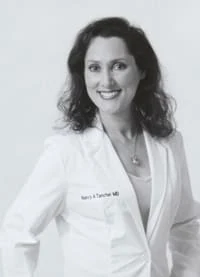
At Liberty Laser Eye Center, we provide customized solutions for presbyopia to fit your lifestyle and vision needs. Our experienced surgeon uses the latest technology and advanced techniques to help restore near vision and reduce dependence on reading glasses.

Using advanced laser technology, our team reshapes the cornea to create multiple focal points, allowing for clearer near and far vision.
Related Articles

People Also Ask

The main cause of presbyopia is the natural aging process of the eye. Over time, the lens inside the eye gradually loses its flexibility and elasticity. This stiffening makes it difficult for the lens to change shape and focus on nearby objects, a process called accommodation. While everyone experiences this age-related change, typically becoming noticeable after age 40, it is not a disease. For comprehensive insights into how aging affects vision, including conditions like presbyopia, you can read our detailed article at Dementia & Vision Care: Optometry’s Role in Eye Health | Liberty Laser Eye Center. At Liberty Laser Eye Center, we provide advanced evaluations to help manage this common condition.

Presbyopia cannot be reversed, but it can be effectively managed with several treatment options. The most common solution is reading glasses, but for those seeking freedom from glasses, surgical options are excellent. At Liberty Laser Eye Center, we often recommend monovision LASIK, where one eye is corrected for distance and the other for near vision. This approach allows the brain to adapt, providing clear vision at all distances. For a detailed explanation of this procedure, please read our article Monovision LASIK For Over-40s In The DC Area. Other options include multifocal contact lenses or conductive keratoplasty. A comprehensive eye exam is essential to determine the best plan for your unique visual needs.

Presbyopia is neither nearsighted nor farsighted, though it is often confused with farsightedness. It is a natural age-related condition where the eye's lens loses flexibility, making it difficult to focus on close objects. This typically begins around age 40. In contrast, nearsightedness (myopia) is a refractive error where distant objects appear blurry, while farsightedness (hyperopia) involves difficulty seeing close objects clearly. At Liberty Laser Eye Center, we help patients understand that presbyopia is a separate condition that affects everyone with age, and it can be managed with options like reading glasses, multifocal lenses, or laser procedures designed to improve near vision.

No, presbyopia and astigmatism are not the same condition. Presbyopia is an age-related loss of the eye's ability to focus on close objects, typically occurring after age 40 due to the natural hardening of the lens. Astigmatism, on the other hand, is a refractive error caused by an irregularly shaped cornea or lens, which blurs vision at all distances. While both can affect your sight, they have different causes and treatments. For patients over 40 in our service area, a common solution is monovision LASIK, which corrects distance vision in one eye and near vision in the other. For more details, please see our article Monovision LASIK For Over-40s In The DC Area. At Liberty Laser Eye Center, we recommend a comprehensive exam to determine the best approach for your unique eyes.

The correct pronunciation of presbyopia is "prez-bee-OH-pee-uh." This common age-related condition affects nearly everyone after the age of 40, gradually reducing the eye's ability to focus on close objects. At Liberty Laser Eye Center, we understand that understanding your condition is the first step toward clear vision. While presbyopia cannot be prevented, modern treatments such as monovision LASIK or premium lens implants can effectively restore your near vision. If you have questions about your options, we encourage you to schedule a consultation with our experienced team in Vienna.

For patients experiencing presbyopia, the natural lens loses flexibility, making it difficult to focus on close objects. While reading glasses are a common solution, many seek a more permanent correction. The choice often comes down to a lens exchange versus a laser procedure. A multifocal intraocular lens (IOL) replaces the eye's natural lens to provide multiple focal points, effectively treating both cataracts and presbyopia. In contrast, LASIK reshapes the cornea. For those without significant cataracts, LASIK can be used to create a monovision setup, where one eye is corrected for distance and the other for near vision. To help you decide which path is best for your lifestyle, we recommend reviewing our detailed analysis in the article Multifocal IOLs Vs. LASIK For Presbyopia. At Liberty Laser Eye Center, we guide each patient through these options based on their unique visual needs.

Presbyopia is commonly referred to as lao hua yan in Chinese, which translates to aging eyes. This condition naturally affects most people starting around age 40, as the eye's lens loses flexibility, making it difficult to focus on close objects. While presbyopia is not a disease, it can be managed with reading glasses, bifocals, or contact lenses. For those seeking a more permanent solution, laser vision correction options are available. At Liberty Laser Eye Center, we provide advanced evaluations to determine if you are a candidate for monovision LASIK or other refractive procedures tailored to address presbyopia. It is important to have a comprehensive eye exam to rule out other age-related changes and to discuss the best approach for your visual needs.

Facebook
Google
Yelp

Overall Rating

5.0
★★★★★

130 reviews