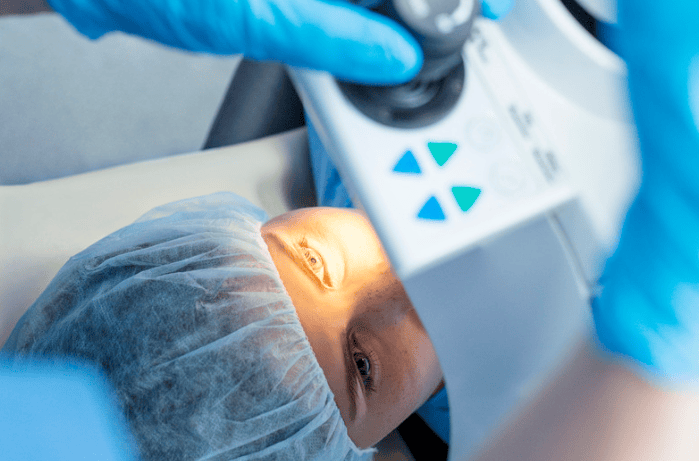
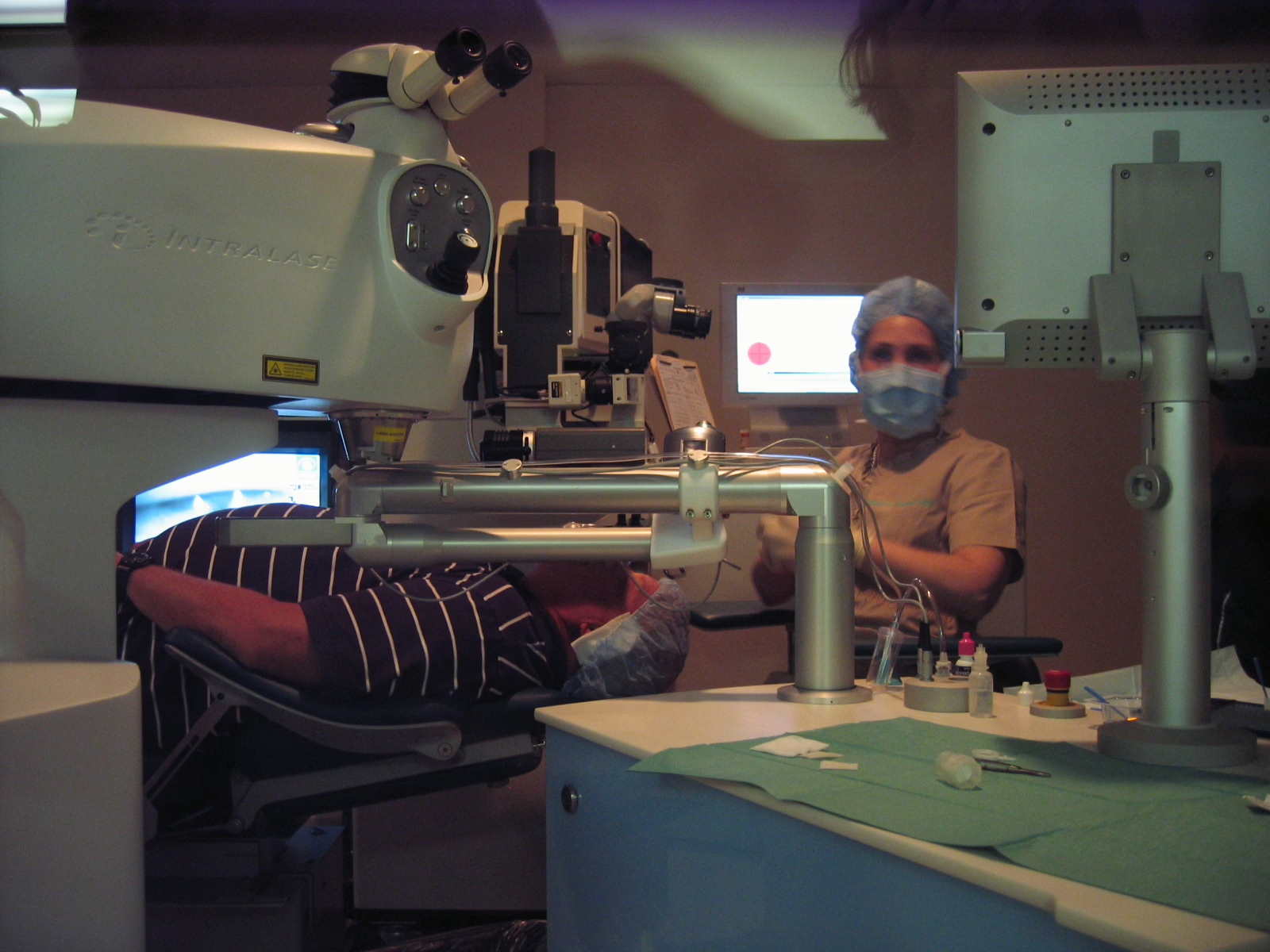
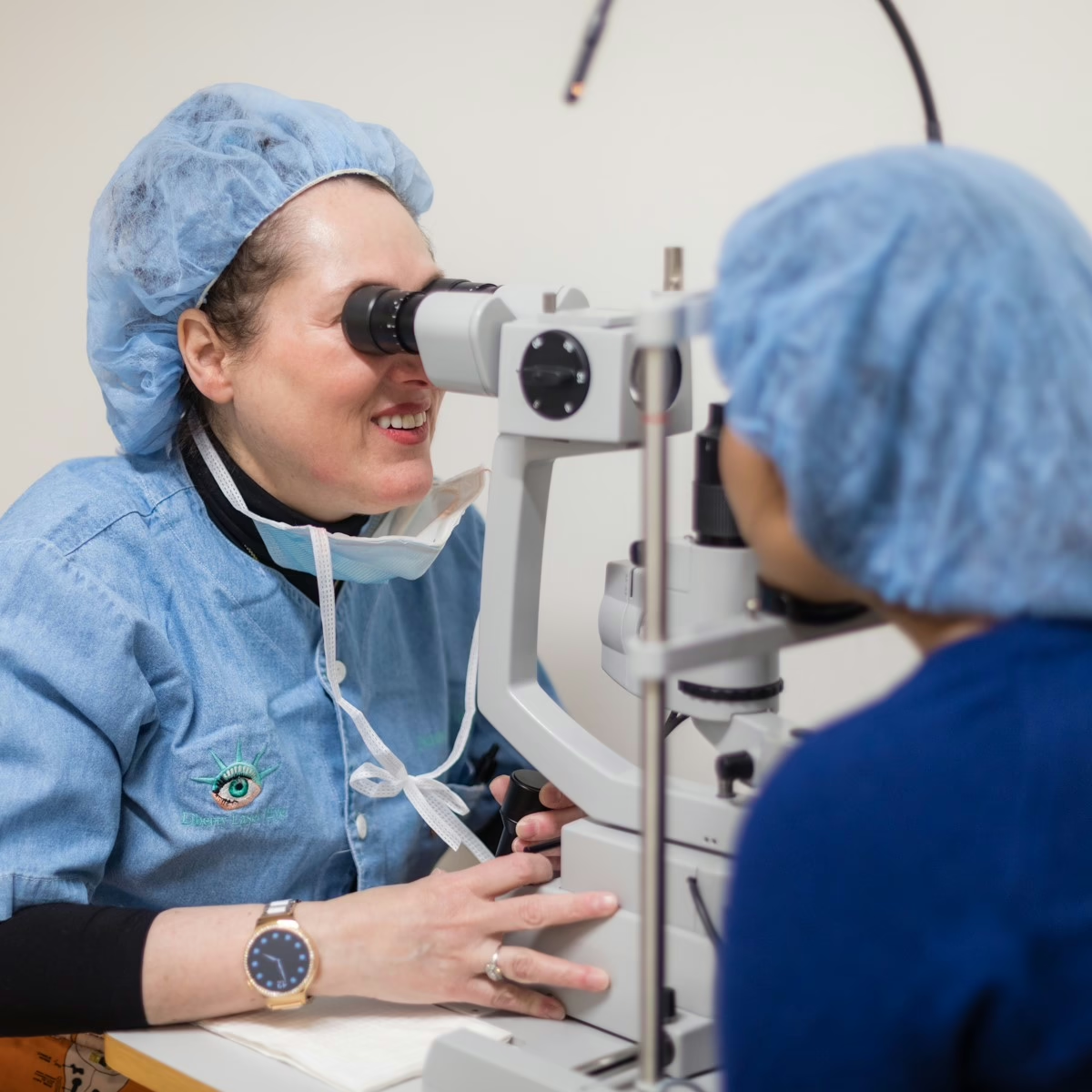
Advanced PRK, or Advanced Photorefractive Keratectomy, is a sophisticated laser vision correction procedure designed to reshape the cornea and correct refractive errors like nearsightedness, farsightedness, and astigmatism. It is an advanced form of traditional PRK, distinguished by the use of state-of-the-art laser technology and often a no-touch, brushless epithelial removal technique. This method is particularly beneficial for patients with thinner corneas or certain corneal irregularities who may not be ideal candidates for LASIK. The procedure promotes a natural healing process, leading to excellent long-term visual outcomes. For a detailed look at the technology and personalized care available, you can explore our comprehensive resource on Advanced PRK Services in Arlington, VA.
When comparing PRK and LASIK, the concept of one being universally "better" is a common misconception. The optimal procedure depends entirely on your individual corneal anatomy, prescription, lifestyle, and specific eye health factors. LASIK, which involves creating a thin corneal flap, typically offers a faster visual recovery. PRK, a surface ablation technique that does not create a flap, is often the recommended choice for patients with thinner corneas, certain occupations, or those involved in contact sports, as it eliminates any future flap-related risks. A thorough pre-operative evaluation is essential to determine the safest and most effective option for you. For a detailed side-by-side comparison of the procedures, recovery, and candidacy, we recommend reviewing our comprehensive resource, PRK vs LASIK: Laser Eye Surgery Guide | Liberty Laser Eye Center.
There is no verified public information that Taylor Swift has undergone any eye surgery. Celebrities often have access to top-tier medical care, including advanced vision correction procedures like LASIK or PRK, but any such personal health decisions are typically private. For the general public considering vision correction, a comprehensive consultation is essential to determine candidacy for procedures such as LASIK, which reshapes the cornea to correct refractive errors, or implantable lenses for those not suitable for laser surgery. The best procedure always depends on an individual's unique eye anatomy, prescription, and lifestyle, as determined by a qualified ophthalmologist.
The most anticipated new eye surgery for 2026 is not a single procedure but a wave of advanced technologies enhancing existing treatments. Experts expect significant refinements in laser-assisted cataract surgery with more precise lens calculations and integration of real-time diagnostic imaging. Furthermore, advancements in corneal procedures, such as topography-guided and wavefront-optimized LASIK, will offer even more personalized vision correction. These innovations aim to improve safety profiles, expand candidacy, and deliver superior visual outcomes, particularly in low-light conditions. For a detailed look at the specific technologies on the horizon, we explore them in our internal article, Revolutionary Eye Surgery Technologies Expected To Arrive In 2026.
ASA (Advanced Surface Ablation) and PRK (Photorefractive Keratectomy) are both laser vision correction procedures that reshape the cornea to correct refractive errors like nearsightedness, farsightedness, and astigmatism. PRK is the original procedure where the surgeon completely removes the thin outer layer of the cornea (the epithelium) before applying the excimer laser. ASA is essentially an enhanced, modern form of PRK that often involves the use of mitomycin-C, an anti-scarring agent, and advanced laser profiles to improve outcomes and potentially reduce healing discomfort. The core difference is technological refinement; ASA builds on the proven PRK method with updated techniques aimed at optimizing safety, precision, and recovery. Both are excellent options for patients with thinner corneas or certain lifestyle needs, as they do not require creating a corneal flap like LASIK. The best choice depends on a thorough pre-operative evaluation by your ophthalmologist.
ASA (Advanced Surface Ablation) and LASIK are both laser vision correction procedures, but they differ in technique. LASIK involves creating a thin corneal flap, lifting it, and reshaping the underlying tissue with a laser before repositioning the flap. ASA, which includes procedures like PRK and LASEK, works on the eye's surface by gently removing the outer epithelial layer before applying the laser to reshape the cornea; no flap is created. ASA is often recommended for patients with thinner corneas or certain occupational risks (like contact sports) where a flap could be a concern, as it eliminates flap-related complications. LASIK typically offers a faster visual recovery with less initial discomfort. The best procedure depends on a thorough pre-operative evaluation of your corneal thickness, prescription, eye health, and lifestyle.
130 reviews