

Juggling three toddlers while dealing with chronic burning eyes was an absolute nightmare. I finally found this Vienna clinic for Dry Eye Treatment. I booked my appointment online at two in the morning. The relief I felt after my visit was instantaneous.

Scheduling my Presby LASIK in Alexandria took five minutes online and finally got rid of my annoying reading glasses.

As a firefighter in Arlington I could not risk a corneal flap so I went with Advanced PRK. They handed me a flat quote upfront with zero hidden fees.

The Dunn Loring clinic calendar got me in instantly for Advanced PRK and their final bill matched the upfront quote perfectly.

I had been wearing glasses since I was a kid and finally decided it was time for a change. The team explained every step before the procedure and made sure I was completely comfortable. Recovery was easier than I expected, and my vision is now sharper than ever.

Everyone at the clinic made me feel comfortable from the moment I walked in. They were friendly, knowledgeable, and always willing to answer my questions. I never felt pressured into making a decision, which made the experience even better. I'm thrilled with my results

My vision had been getting worse every year, so I finally decided to schedule a consultation here. The testing was very thorough, and the doctor explained every result in a way that was easy to understand. The procedure was smooth, and I noticed a huge improvement in my eyesight the very next day.

I was impressed by how detailed the initial evaluation was before recommending treatment. They took the time to make sure I was a suitable candidate instead of rushing into surgery. That level of care gave me complete confidence. Everything went smoothly, and my vision has been excellent ever since.

The whole process was easy and the results was life-changing. This clinic is simple and the best and I would highly recommend this Eye Clinic.

This place combines advanced technology with genuinely caring service. The diagnostics were incredibly detailed and helped me understand my vision problems much better. Staff members were friendly, knowledgeable, and very reassuring throughout the process. Overall an outstanding experience.


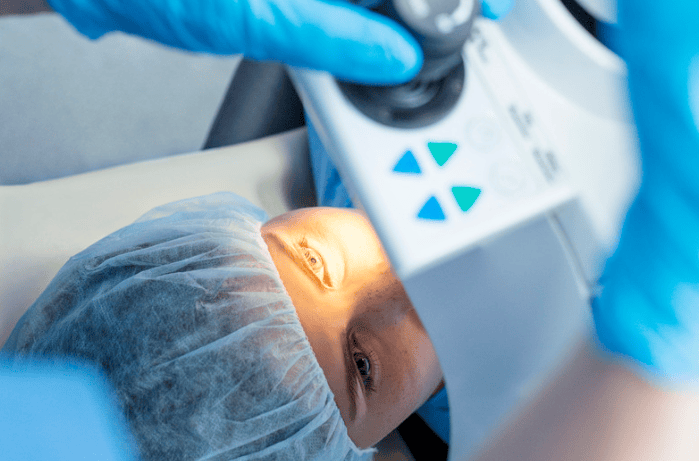

Corneal crosslinking is generally not a painful procedure itself, as numbing drops are used throughout. The discomfort typically begins a few hours after the treatment, once the anesthetic wears off. Most patients report a gritty, burning sensation, light sensitivity, and a feeling like sand in the eye for the first 24 to 48 hours. This is a normal part of the epithelial healing process. Pain levels vary, but they are usually well-managed with prescribed oral pain relievers and lubricating eye drops. At Liberty Laser Eye Center, we provide detailed aftercare instructions to help you manage this short recovery window comfortably. The significant discomfort rarely lasts beyond the first few days, and most patients return to normal activities within a week.
Yes, keratoconus is a serious eye condition that requires professional management. It causes the cornea to thin and bulge into a cone shape, leading to distorted vision, glare, and sensitivity to light. While it is not an emergency, if left untreated, it can significantly impair daily activities and, in advanced stages, may require a corneal transplant. Early diagnosis is key. At Liberty Laser Eye Center, we emphasize that with modern treatments like corneal cross-linking to halt progression and specialized contact lenses to improve vision, most patients maintain functional sight. Regular monitoring by an eye care specialist is essential to prevent severe vision loss and to tailor a treatment plan to your specific stage of the condition.
Corneal crosslinking (CXL) is a procedure to halt the progression of keratoconus. Whether insurance covers it depends on your specific plan and the medical necessity criteria. Most major insurers, including those serving Vienna and Fairfax County, Virginia, will cover CXL when it is deemed medically necessary, typically requiring documented progression of the condition over a defined period. However, coverage varies widely; some plans may classify it as elective, while others require prior authorization. At Liberty Laser Eye Center, our team can help you verify your benefits and submit the necessary clinical documentation to support your claim. We recommend contacting your insurance provider directly to confirm your specific out-of-pocket costs and coverage parameters.
Yes, you can use your phone after corneal cross-linking, but not immediately. For the first 24 to 48 hours, your eyes will be extremely sensitive to light and likely watery, making screen use uncomfortable. We advise resting with your eyes closed as much as possible. After that initial period, you may use your phone for short intervals, but you must use the preservative-free artificial tears frequently to prevent dryness. Screen brightness should be lowered, and you should take breaks every 10 to 15 minutes. At Liberty Laser Eye Center, we recommend waiting until your doctor confirms epithelial healing at your follow-up visit before resuming normal digital device use.
Corneal cross-linking (CXL) is a minimally invasive procedure designed to halt the progression of keratoconus and other corneal ectatic disorders. During the treatment, your eye surgeon applies riboflavin (vitamin B2) drops to the cornea and then activates them with precise ultraviolet light. This combination strengthens the corneal tissue's collagen bonds, preventing further bulging and vision deterioration. CXL is typically an outpatient procedure, and most patients experience a stabilization of their condition, which can eliminate the need for a future corneal transplant. At Liberty Laser Eye Center, we emphasize that early intervention is key. For a deeper look into advanced treatment combinations, we recommend reading our internal article titled 'The Washingtonian’s Guide To Combining Topography-Guided LASIK With Cross-Linking For Keratoconus' via this link: The Washingtonian’s Guide To Combining Topography-Guided LASIK With Cross-Linking For Keratoconus. Always consult with a specialist to see if you are a candidate for this sight-saving procedure.
Corneal cross-linking (CXL) recovery typically spans a few days to several months, depending on your healing rate. In the first 24 to 72 hours, you can expect significant light sensitivity, tearing, and a gritty sensation as the epithelium regrows. Most patients return to work and normal non-strenuous activities within 3 to 5 days, but vision remains blurry for the first few weeks. Visual stabilization often takes 3 to 6 months, with continued improvement up to a year. You will need to avoid rubbing your eyes, swimming, and strenuous exercise for at least one month. For a detailed breakdown of how this procedure fits into a combined treatment plan, we recommend reviewing our internal article titled 'The Washingtonian’s Guide To Combining Topography-Guided LASIK With Cross-Linking For Keratoconus' at The Washingtonian’s Guide To Combining Topography-Guided LASIK With Cross-Linking For Keratoconus. At Liberty Laser Eye Center, we tailor your post-op schedule to ensure optimal comfort and safety.
Corneal cross-linking (CXL) is the primary treatment to halt the progression of keratoconus, a condition where the cornea thins and bulges outward. The procedure strengthens corneal tissue using riboflavin (vitamin B2) drops and controlled ultraviolet light, creating new collagen bonds. This is not a vision correction surgery; its goal is to prevent further deterioration, which can otherwise lead to the need for a corneal transplant. While CXL does not flatten the cornea, it often stabilizes vision, and patients may need glasses or contact lenses afterward. If you are diagnosed with progressive keratoconus, early intervention is critical. For a deeper understanding of how this procedure works alongside advanced laser vision correction, we recommend reviewing our internal article titled 'The Washingtonian’s Guide To Combining Topography-Guided LASIK With Cross-Linking For Keratoconus' at The Washingtonian’s Guide To Combining Topography-Guided LASIK With Cross-Linking For Keratoconus. At Liberty Laser Eye Center, we prioritize a thorough evaluation to determine if you are a candidate for this stabilizing treatment.



125 reviews