
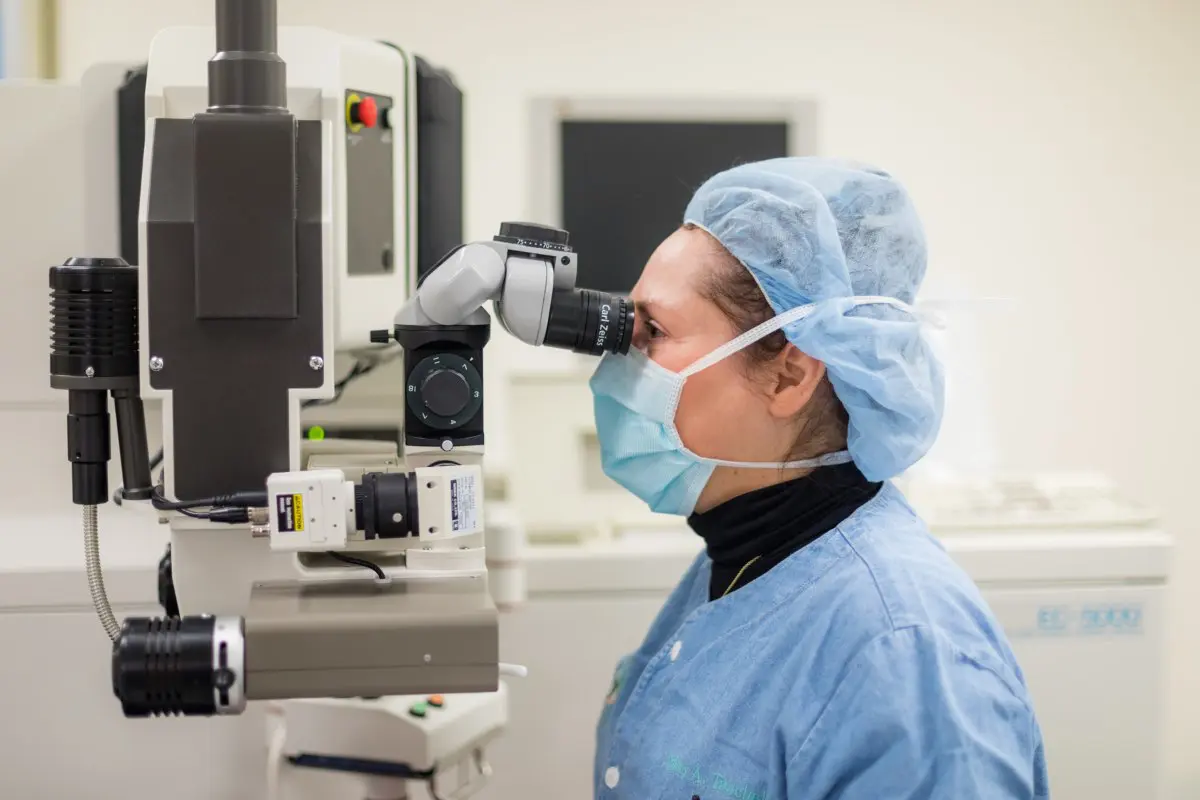

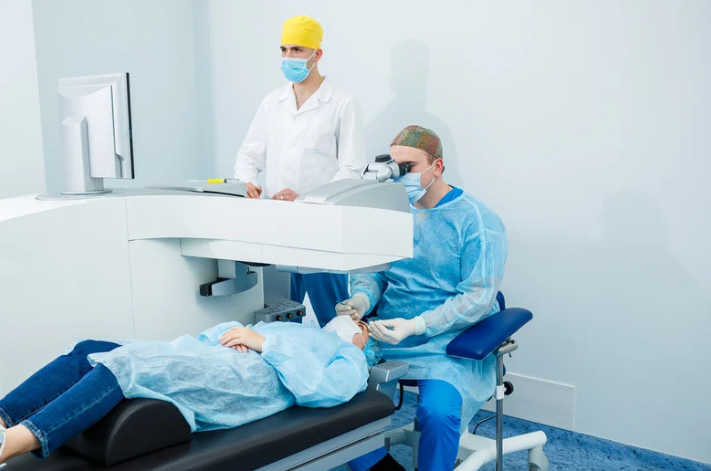

I had a great experience at Liberty Laser Eye Center. Dr. Nancy Tanchel and her entire team were extremely professional, kind, and made me feel comfortable throughout the whole process. They explained everything clearly and answered all of my questions, which really helped me feel confident before the procedure.
The surgery went smoothly and the staff was very supportive from start to finish. I’m very grateful to Dr. Tanchel and her team for their excellent care and professionalism.
Thank you all for helping me improve my vision. I truly appreciate the great work you do.

My vision wasn't terrible, but I was just sick of dealing with the hassle of contacts for sports until I came here. Great and professional business

I had a really good experience at Liberty Laser Eye Center. The staff was friendly and made me feel comfortable the whole time. The procedure was quick, and my vision is so much better now.

Informative staff offering careful evaluations and supportive patient care throughout the process.

Having LASIK surgery was the best thing I have ever done. Waking up every morning with the ability to see 20/20 without having to reach for my glasses or contacts is the ultimate freedom. The surgery was painless and the staff was incredible. I highly recommend it so don't wait!

Brought My grandmother for her eye exam. Jeeimy helped us and explained in detail such amazing team.

I’d been thinking about LASIK for years but kept putting it off out of sheer nervousness. The staff at Liberty are some of the kindest and most patient people I’ve ever met. It’s been a few months and I’m still not used to the freedom of just rolling out of bed and seeing.

I consider this the best investment I've ever made in myself, no question about it. The freedom of just rolling out of bed and being able to see is something I'll never take for granted.
The cost of corneal cross-linking (CXL) per eye varies significantly based on geographic location, the specific surgical facility, the surgeon's expertise, and the technology used. In the United States, the average price range is typically between $2,500 and $4,000 per eye. This is generally considered an out-of-pocket expense, as most insurance plans classify it as an elective procedure, though coverage is increasingly available for cases of progressive keratoconus. It is crucial to obtain a detailed consultation that includes a comprehensive pre-operative evaluation, as the quoted price should encompass all related fees for the procedure, follow-up visits, and any necessary medications. Patients are advised to seek a clear, itemized cost breakdown from their provider.
While specific treatments for 2026 are still under development, the current standard of care for progressive keratoconus is corneal cross-linking (CXL). This procedure uses riboflavin (vitamin B2) drops and ultraviolet light to strengthen corneal collagen fibers, halting progression. For advanced cases, treatment often involves specialized contact lenses or surgical options like intracorneal ring segments (ICRS) to improve vision and shape. Looking ahead, research is focused on enhancing CXL protocols, developing new biomaterials for ring segments, and refining techniques for combined procedures. The most significant advancements are typically in improving the precision, safety, and recovery profiles of existing treatments rather than entirely new modalities. Patients should consult a corneal specialist for a personalized assessment based on the latest available technology and their specific condition.
Crosslinking for keratoconus is often covered by insurance, but coverage varies significantly by provider and plan. Many major insurance companies now recognize it as a medically necessary procedure to halt the progression of the disease, especially following FDA approval. However, strict criteria usually apply, such as documented progression of corneal thinning and curvature. Patients typically need prior authorization, and deductibles and co-pays will apply. It is crucial to consult directly with both your insurance provider and our clinic's billing specialists. They can verify your specific benefits, guide you through the pre-authorization process, and provide a clear understanding of any out-of-pocket costs you may be responsible for.
Both CXL and C3R refer to the same primary procedure: corneal collagen cross-linking, a treatment to halt the progression of keratoconus and other corneal ectatic diseases. The term C3R (Collagen Crosslinking with Riboflavin) is often used interchangeably with CXL, though it specifically highlights the use of riboflavin (vitamin B2) drops activated by ultraviolet light to strengthen corneal collagen fibers. There is no medical distinction where one is "better" than the other; they describe the same standard of care. The procedure's effectiveness depends on patient eligibility, the specific protocol used (epi-on or epi-off), and the surgeon's expertise. Consulting with a corneal specialist is essential to determine if you are a suitable candidate for this vision-stabilizing treatment.
When searching for the best ophthalmologist in Fairfax, VA, it is crucial to consider board certification, subspecialty expertise, and patient reviews. An excellent ophthalmologist will be certified by the American Board of Ophthalmology, indicating rigorous training and adherence to high standards. Look for a specialist whose focus aligns with your needs, such as cataract surgery, glaucoma, or refractive procedures like LASIK. Advanced technology and a commitment to personalized care are also key indicators of a top practice. In Fairfax, VA, leading ophthalmologists often combine extensive surgical experience with a compassionate approach to ensure optimal eye health and vision correction outcomes for every patient.
Eye Specialists and Surgeons of Northern Virginia is a well-regarded practice in the region, offering comprehensive ophthalmological care. Such a practice typically includes board-certified ophthalmologists who are both medical doctors and surgeons, specializing in conditions like cataracts, glaucoma, macular degeneration, and diabetic eye disease. They provide advanced surgical procedures, including LASIK and cataract surgery with premium lens implants. When choosing a specialist, it is important to verify their credentials, experience with the latest technologies, and patient reviews. A reputable center will offer thorough consultations, personalized treatment plans, and follow-up care to ensure optimal eye health and vision correction outcomes for every patient.
When searching for the best ophthalmologist in Northern Virginia, it is important to consider several key factors. Look for a board-certified surgeon who specializes in the specific procedure you need, whether it's LASIK, cataract surgery, or general eye care. Evaluate their experience, technology, and patient reviews. A top practice will offer a comprehensive consultation using advanced diagnostic tools to create a personalized treatment plan. It is also crucial to choose a surgeon who prioritizes clear communication, detailed pre- and post-operative care, and has a strong reputation for safety and results. Always verify credentials and ask about their success rates during your research.


130 reviews

