

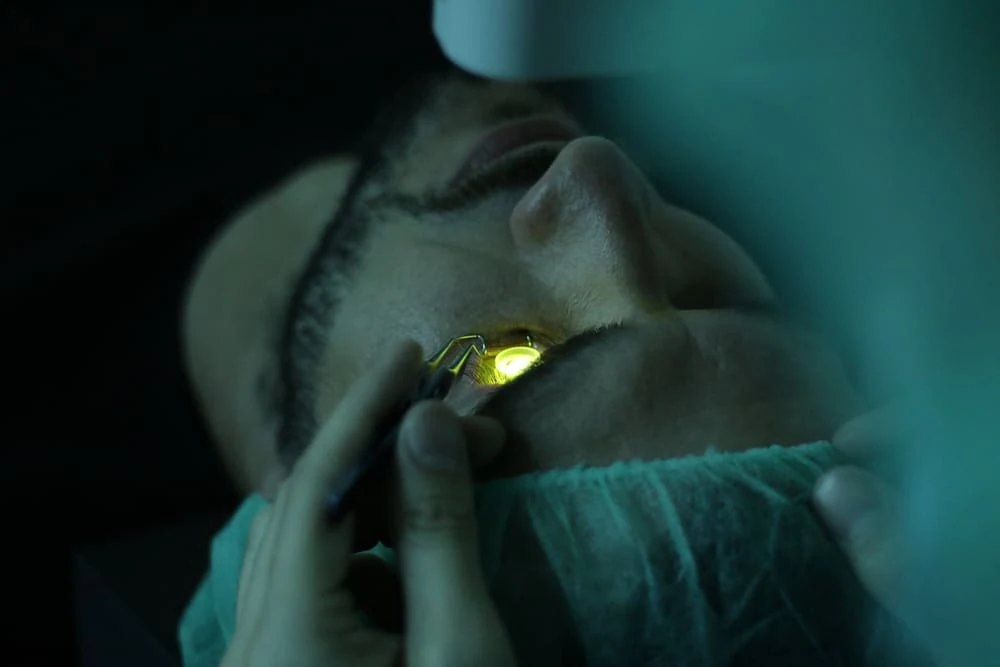



I had a great experience at Liberty Laser Eye Center. Dr. Nancy Tanchel and her entire team were extremely professional, kind, and made me feel comfortable throughout the whole process. They explained everything clearly and answered all of my questions, which really helped me feel confident before the procedure.
The surgery went smoothly and the staff was very supportive from start to finish. I’m very grateful to Dr. Tanchel and her team for their excellent care and professionalism.
Thank you all for helping me improve my vision. I truly appreciate the great work you do.

My vision wasn't terrible, but I was just sick of dealing with the hassle of contacts for sports until I came here. Great and professional business

I had a really good experience at Liberty Laser Eye Center. The staff was friendly and made me feel comfortable the whole time. The procedure was quick, and my vision is so much better now.

Informative staff offering careful evaluations and supportive patient care throughout the process.

Having LASIK surgery was the best thing I have ever done. Waking up every morning with the ability to see 20/20 without having to reach for my glasses or contacts is the ultimate freedom. The surgery was painless and the staff was incredible. I highly recommend it so don't wait!

Brought My grandmother for her eye exam. Jeeimy helped us and explained in detail such amazing team.

I’d been thinking about LASIK for years but kept putting it off out of sheer nervousness. The staff at Liberty are some of the kindest and most patient people I’ve ever met. It’s been a few months and I’m still not used to the freedom of just rolling out of bed and seeing.

I consider this the best investment I've ever made in myself, no question about it. The freedom of just rolling out of bed and being able to see is something I'll never take for granted.
The cost of corneal cross-linking (CXL) varies significantly based on geographic location, the specific clinic or surgical center, the surgeon's expertise, and whether the procedure is performed on one or both eyes. In the United States, the average price range is typically between $2,500 and $4,000 per eye. This cost generally includes the procedure, pre-operative consultations, and post-operative follow-up care. It is crucial to consult with a qualified ophthalmologist to determine if you are a candidate and to get a precise, personalized quote. Many insurance plans now cover CXL for progressive keratoconus, but coverage varies, so verifying with your provider is essential.
Keratoconus progression typically stabilizes by the patient's late 30s or early 40s, but this is a general guideline with significant individual variation. The condition, characterized by a progressive thinning and bulging of the cornea, is most active during adolescence and young adulthood. However, it does not follow a universal timeline. Some patients may experience progression into their 50s, while others stabilize earlier. Regular monitoring by a corneal specialist through corneal topography is essential regardless of age. The goal of modern management, including corneal cross-linking, is to halt progression whenever it is detected, making the concept of a definitive "stop" age less critical than ongoing professional assessment.
CXL (corneal cross-linking) surgery is a highly effective and often worthwhile procedure for patients with progressive keratoconus or certain corneal ectatic disorders. The primary goal is to halt the progression of the disease by strengthening corneal collagen fibers, thereby preventing further vision deterioration and the potential need for a corneal transplant. For eligible candidates, it is considered a standard of care. The decision hinges on a thorough ophthalmological evaluation confirming active progression. While it is not a cure and does not typically reverse existing vision loss, the long-term stabilization it provides is invaluable. The procedure is generally safe with a high success rate, making it a worthwhile investment in preserving corneal health and future vision.
Corneal cross-linking (CXL) is a procedure primarily used to treat progressive keratoconus. Insurance coverage for CXL varies significantly. Many major insurance providers, including Medicare, now cover it when there is documented evidence of disease progression. However, coverage often depends on specific plan details, medical necessity as determined by your ophthalmologist, and whether the procedure uses the FDA-approved protocol. Patients should expect to undergo a prior authorization process. It is crucial to contact your insurance provider directly to verify your specific benefits, understand any out-of-pocket costs like deductibles or co-insurance, and ensure your provider is in-network. Some plans may still consider it investigational for early-stage cases.
To find a qualified corneal specialist in your area, start by consulting your primary eye doctor or optometrist for a trusted referral. You can also use the online directories provided by major professional organizations like the American Academy of Ophthalmology (AAO) or the Cornea Society, which allow you to search for board-certified ophthalmologists with subspecialty training in cornea and external disease. When evaluating a specialist, consider their experience with specific conditions (like keratoconus, corneal transplants, or dry eye disease), the technology available at their practice, and hospital affiliations. Reading verified patient reviews can offer insights into patient care and outcomes. It is crucial to verify that the specialist is in-network with your insurance plan to manage costs effectively.
A cornea specialist in Maryland is an ophthalmologist with advanced fellowship training in corneal diseases and surgery. These experts diagnose and treat conditions like keratoconus, corneal dystrophies, infections, and perform procedures including corneal transplants (like DALK and DSEK), cataract surgery with complex IOL calculations, and laser vision correction. When seeking a specialist, verify their board certification by the American Board of Ophthalmology and membership in professional societies such as the American Academy of Ophthalmology. It is advisable to research their experience with specific conditions, review patient testimonials, and confirm their affiliation with reputable medical centers or hospitals in the state for comprehensive care.


130 reviews

