Key Takeaways: The most important thing to know about laser eye surgery technology isn’t the brand name on the machine. It’s about the specific combination of technologies your surgeon uses to map your eye, and how that data guides a laser that can now treat a much wider range of vision problems with remarkable precision and comfort. The “best” tech is the one perfectly matched to your unique eyes.
We’ve all seen the ads. The sleek machines with futuristic names, promising “bladeless” this and “wavefront-guided” that. If you’re considering LASIK in the Vienna, VA area, you’re probably trying to cut through that marketing haze to figure out what actually matters. Is the latest laser eye surgery technology just a sales pitch, or does it make a tangible difference in your results?
Here’s the perspective from our side of the laser: The technology has evolved in genuinely meaningful ways over the last decade, but not in the way you might think. It’s less about a single magic machine and more about a smarter, more integrated system. The real advancement is in how we measure your eye and how the laser uses that data.
What is modern LASIK technology, really?
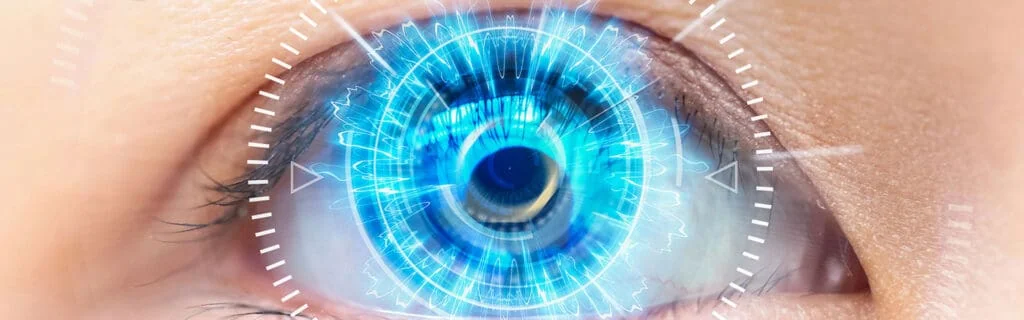
Modern LASIK is a suite of integrated technologies, not just one laser. It starts with advanced corneal topography and wavefront aberrometry—fancy terms for creating an ultra-precise 3D map of your eye’s unique surface and internal optics. This map, which details imperfections even your glasses don’t correct, is then fed to an excimer laser that performs the vision correction with microscopic accuracy. A separate femtosecond laser is typically used to create the corneal flap with a gentle burst of light, replacing the older mechanical blade.
The Tech That Actually Changes the Game
Forget the brochure for a second. When we talk about cutting-edge tech with patients at our Vienna office, we’re usually focusing on three concrete areas that directly impact their experience and outcome.
First, diagnostic precision. The old adage “garbage in, garbage out” absolutely applies here. We use systems that don’t just measure your prescription; they capture over 22,000 data points on each eye, mapping microscopic elevations and irregularities. This is crucial for folks in our area who’ve spent decades in dry office buildings or battling seasonal allergies—factors that can affect the eye’s surface. A good map accounts for that.
Second, laser agility and speed. Newer excimer lasers have smaller spot sizes and faster tracking. Why should you care? Because your eye isn’t a stationary target. It makes tiny, involuntary movements called saccades. A slower laser with crude tracking is like painting a detailed portrait on a moving subway car. The latest tech has eye-tracking that adjusts in microseconds, placing each pulse of laser energy with absurd accuracy. This translates to a smoother corneal surface post-op, which can mean better quality of vision, especially in low light.
It’s Not Just for “Easy” Cases Anymore
One of the biggest shifts we’ve seen is the expansion of who can be a good candidate. A decade ago, if you had thin corneas, a high prescription, or significant astigmatism, you might have been turned away or steered toward older procedures.
Now, with technologies like contoura vision (which uses that detailed topographic map to guide treatment) and the ability to perform SMILE or PRK with the same high-level planning, we can safely tailor approaches that we couldn’t before. It’s less about forcing your eyes to fit the technology and more about having a versatile toolkit to match the solution to the individual.
The Human Element in the High-Tech Room
This is where a lot of the marketing falls flat. You can have the most expensive machine in the state, but if the surgeon doesn’t know how to interpret the data or handle an atypical case, you’re not getting the full benefit. The technology is a tool.
We’ve had patients come in after consultations elsewhere, confused by conflicting recommendations. Often, it’s not that one center has “better” tech—it’s that their surgeon is more conservative or more aggressive in interpreting the same data. For example, those detailed maps might show a slight irregularity. One surgeon may see a reason to proceed with a custom plan, while another may see a reason to pause. That’s clinical judgment, not laser capability.
Common Misconceptions We Hear in Consultations
- “Bladeless is the only thing that matters.” While using a femtosecond laser for the flap is the modern standard and a great thing, it’s just one step. The precision of the treatment laser that corrects your vision is far more critical to your final outcome.
- “The newest laser is always the best.” Not necessarily. The most important factor is a platform that’s been proven reliable, with a long track record of safety and outcomes, operated by an experienced team. The “latest model” might have only a minor iterative update.
- “All this mapping is overkill.” We used to think that too. But time and again, we see that treating the generic prescription vs. treating the unique map of your eye’s optics can be the difference between seeing 20/20 and seeing crisp, clear, and comfortable 20/20. It’s about quality, not just the chart.
When “Cutting-Edge” Might Not Be For You
Honestly, the latest tech suite isn’t always the deciding factor. If you’re a straightforward, low-prescription candidate with very healthy eyes, you’d likely get an excellent result on several different modern platforms. The investment in the most advanced custom treatment might offer diminishing returns for you.
The real value of this technology shines in handling complexity: higher prescriptions, tricky astigmatism, corneas that are on the thinner side, or patients who have higher-order aberrations affecting their night vision. It also provides a greater safety net through enhanced precision.
What to Actually Ask About Technology
Don’t just ask, “What laser do you use?” Dig deeper in your consultation:
- “Do you use a combined topographic and wavefront map to plan my treatment, or just my glasses prescription?”
- “How does your laser track my eye movement during the procedure?”
- “Based on my maps, am I a candidate for a fully customized treatment, and why or why not?”
- “What percentage of your patients achieve better than 20/20 vision with your current technology?” (This speaks to outcomes, not just hardware.)
A Realistic Look at the Local Landscape
Practicing in the D.C. metro area, including here in Vienna, we see a lot of patients who are researchers, analysts, or drivers who navigate the Mixing Bowl at night. Their concerns are practical: “Can I read detailed screens for 10 more years?” or “Will my night vision be sharp?” The technology we’re talking about is specifically designed to address these quality-of-vision issues, not just get you to a passable line on the chart. The dry climate and pollen seasons we experience also make the precision of a tissue-sparing laser treatment and detailed pre-op surface analysis even more important for healing.
| Technology Feature | What It Does | Why It Matters to You |
|---|---|---|
| Corneal Topography & Wavefront Mapping | Creates a unique 3D “fingerprint” of your eye’s optics, beyond your standard prescription. | Allows for a truly customized treatment that can improve visual quality (reduce glare, halos) and potentially achieve very sharp vision. |
| Femtosecond Laser Flap Creation | Uses a rapid pulse of laser light to create the corneal flap, replacing the older mechanical microkeratome blade. | Generally allows for a more precise, predictable flap thickness and architecture, which can be important for safety and healing. |
| High-Speed Eye Tracking | Tracks your eye’s microscopic movements in 6 dimensions (up/down, side-to-side, rotation, etc.) during the treatment. | Ensures the vision correction laser is applied exactly where planned, even if your eye moves. Critical for accuracy. |
| Contoura® Vision or Equivalent | Uses the detailed corneal topography map (not just the prescription) to guide the laser’s treatment pattern. | Can correct subtle corneal irregularities you were born with, often leading to very high rates of 20/20 vision or better. |
So, Is It Worth Seeking Out?
In our experience, yes—but with a major caveat. The technology is a powerful enabler, but it’s not a substitute for surgeon experience, thorough screening, and honest communication. The best outcome happens when advanced tech is in the hands of a team that knows how to use it fully and when to rely on it.
The goal isn’t to sell you on a brand name. It’s to use the best tools available to deliver a result that feels seamless—to get you back to hiking Great Falls Park or reading a book without scrambling for glasses, and not having to think about your vision at all. That’s the real promise of modern laser eye surgery technology, and it’s a promise that’s now grounded in some pretty remarkable engineering. If you’re in the Vienna area and have questions about how these specifics apply to your eyes, the conversation always starts with a detailed map, not a sales pitch.
People Also Ask
Determining the "best" country for laser eye surgery depends heavily on individual priorities like cost, technology, and surgeon expertise. Many patients prioritize countries with highly regulated medical systems, such as the United States, Canada, the United Kingdom, Germany, and South Korea. These nations often have stringent safety protocols and access to the latest FDA-approved or equivalent technologies. However, it's crucial to research specific clinics and surgeons, as quality can vary widely within any country. The most important factors are the surgeon's experience, the technology used, and a thorough pre-operative evaluation, not just the geographic location. For service members and veterans, exploring options like Military Discounts For LASIK Near DC Bases can provide valuable, localized information and potential savings.
Yes, laser eye surgery is a common and effective treatment for astigmatism. Modern procedures like LASIK and PRK are specifically designed to correct the irregular corneal shape that causes astigmatism. The laser precisely reshapes the cornea, creating a more symmetrical, spherical surface to improve focus. Candidacy depends on factors such as the degree of astigmatism, corneal thickness, overall eye health, and prescription stability. A comprehensive pre-operative evaluation at a clinic like Liberty Laser Eye Center is essential to determine the best surgical plan. For many patients, laser surgery can significantly reduce or eliminate dependence on glasses or contact lenses for astigmatism.
The most advanced laser eye surgery technology available today is a combination of femtosecond lasers and wavefront-guided excimer lasers. The procedure, often called all-laser LASIK or Bladeless LASIK, uses a femtosecond laser to create the corneal flap with exceptional precision, replacing the older microkeratome blade. The excimer laser then reshapes the cornea to correct vision, with the latest systems utilizing wavefront-optimized or topography-guided treatments. These advanced mapping technologies create a highly personalized 3D map of the eye, allowing the laser to correct not just common refractive errors like nearsightedness and astigmatism, but also higher-order aberrations for potentially sharper vision. This technology prioritizes safety, accuracy, and improved visual outcomes.