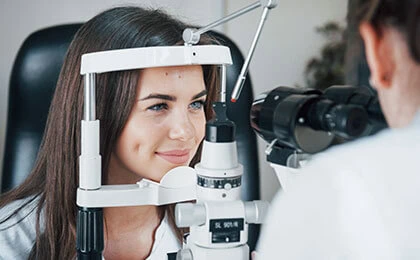

Recent developments in refractive surgery have fundamentally shifted the paradigm from simple visual acuity correction to full-spectrum visual performance. At Liberty Laser Eye Center, we observe that the most consequential breakthroughs in vision correction are not defined by faster laser speed alone, but by integrated diagnostic intelligence, ultra-precise treatment customization, and expanded surgical pathways for patients who were previously deemed unsuitable candidates. The clinical goal is no longer limited to eliminating dependence on corrective lenses; it is focused on optimizing contrast sensitivity, minimizing night-vision disturbances, and protecting corneal biomechanics for long-term optical health.
When evaluating contemporary vision correction options, patients often look for technological innovations that maximize safety and predictability. The core mechanism of laser vision correction—using cool ultraviolet light to reshape corneal micro-geometry—has evolved into a sophisticated, data-driven methodology. By evaluating up to 25,000 unique elevation points on a single eye, we can tailor custom surgical profiles that treat both basic refractive errors and subtle structural irregularities.
Table of Contents
Advanced Diagnostic Mapping: Moving Beyond Standard Prescriptions
The foundational upgrade in modern vision correction lies in diagnostic acquisition. Historically, surgical parameters relied heavily on manifest refraction—the subjective process of determining glasses power through a phoropter. While effective for prescribing lenses, this method captures only lower-order aberrations, such as basic nearsightedness, farsightedness, and regular astigmatism.
Today, we utilize integrated high-definition corneal topography, ray-tracing analysis, and optical coherence tomography (OCT) to map the entire optical pathway. This diagnostic depth allows us to analyze the exact surface contour of the cornea and measure higher-order aberrations—microscopic optical imperfections that cause glare, halos, starbursts, and reduced contrast sensitivity in low-light environments.
Key diagnostic benchmarks used in custom treatment planning include:
- Corneal Elevation Mapping: Quantifies anterior and posterior corneal elevation differences to detect early structural instability or subtle irregular astigmatism.
- Wavefront Aberrometry: Measures how light waves pass through the optical media, recording optical distortions beyond sphere and cylinder values.
- Pachymetric Subtraction Analysis: Calculates precise tissue depth at every coordinate to maintain a safe residual stromal bed thickness.
- Tear Film and Epithelial Mapping: Evaluates corneal epithelial thickness and tear film stability to prevent post-surgical dry eye complications.
Clinical Resolution: Managing Ocular Surface Breakdown Before Mapping
In our practice, we evaluated a patient with persistent blurred vision and irregular astigmatism following long-term rigid contact lens wear. Initial topography showed significant corneal distortion, which initially pointed toward a non-treatable corneal ectasia. However, epithelial pachymetry revealed that severe localized dry eye and surface breakdown were distorting the diagnostic measurements. We instituted a six-week ocular surface rehabilitation program consisting of intense pulsed light (IPL) therapy, preservative-free immunomodulating drops, and temporary punctal occlusion. Upon re-mapping, the corneal irregularity resolved, revealing a healthy, stable corneal architecture. We then performed topography-guided surface ablation, achieving 20/15 uncorrected vision without compromising corneal integrity.
Personalized Laser Treatment Profiles and Customization Technologies
Once precise diagnostic data is acquired, we program the excimer laser using advanced software algorithms tailored to the patient’s individual anatomical metrics. Rather than applying a standardized optical treatment, we utilize distinct customization protocols depending on the optical profile of the eye.
The primary customization modalities available today include:
- Wavefront-Guided Systems: Measure light distortion across the entire optical system to create a personalized ablation plan aimed at reducing overall visual aberrations.
- Topography-Guided Systems (Contoura Vision): Map up to 22,000 precise points on the corneal surface to smooth subtle elevation irregularities. This approach aligns with established American Academy of Ophthalmology guidelines for managing complex corneal shapes and improving low-light visual acuity.
- Ray-Tracing / Whole-Eye Diagnostics: Combine corneal topography and ocular wavefront measurement into a singular 3D optical model, allowing micro-level customization across both the front surface and internal optics of the eye.
Clinical Resolution: Correcting Post-Traumatic Irregular Astigmatism
A patient presented to our clinic with symptomatic double vision in one eye caused by a minor corneal injury sustained years prior. Standard glasses and soft contact lenses could not resolve the optical ghosting because the imperfection was localized to a small, elevated corneal scar. Using topography-guided custom ablation, we targeted only the elevation anomaly while preserving the surrounding healthy tissue. The procedure successfully smoothed the optical zone, eliminated the ghosting artifact, and restored crisp single vision.
Expanding Patient Candidacy: Options Beyond Traditional LASIK
Technological advancements have significantly expanded who can safely undergo vision correction. In the early days of laser refractive surgery, patients with thin corneas, severe myopia, or pre-existing dry eye syndrome were routinely turned away. Today, an expanded range of therapeutic options allows us to match the right technology to the specific physiological profile of each patient.
The table below outlines the primary contemporary surgical approaches, their optimal clinical indications, and key performance considerations:
| Surgical Procedure | Primary Clinical Indication | Corneal Tissue Impact | Visual Recovery Timeline | Reversibility Profile | Dry Eye Risk Level |
|---|---|---|---|---|---|
| Advanced Topography LASIK | Low to high myopia, hyperopia, regular/irregular astigmatism | Flap creation and stromal ablation | 24 to 48 hours | Permanent tissue reshaping | Moderate temporary risk |
| SMILE (Small Incision Lenticule Extraction) | Mild to high myopia, moderate astigmatism | Keyhole incision; no flap created | 48 to 72 hours | Permanent tissue reshaping | Low temporary risk |
| Advanced Surface Ablation (PRK/LASEK) | Mild to high myopia, thin corneas, active lifestyle | Surface epithelium removal; zero flap | 3 to 7 days | Permanent tissue reshaping | Minimal long-term risk |
| Implantable Collamer Lens (EVO ICL) | High to extreme myopia, thin corneas, chronic dry eye | Zero corneal tissue removed | 24 to 48 hours | Fully removable / reversible | Zero corneal nerve impact |
For patients with high refractive errors or thin corneas, the Implantable Collamer Lens (EVO ICL) provides an extraordinary alternative to laser tissue ablation. The ICL is a soft, biocompatible lens placed in the posterior chamber of the eye behind the iris and in front of the natural crystalline lens. Because it requires no corneal tissue removal, it preserves natural corneal curvature and strength. According to published clinical research in refractive surgery, intraocular lens insertion techniques offer exceptional optical quality and high contrast sensitivity for severe optical corrections.
Clinical Resolution: Reversible Correction for High Myopia with Thin Corneas
A 28-year-old patient presented with a severe prescription of -11.50 Diopters of myopia and thin corneas measuring 485 microns. Performing standard LASIK or PRK on this patient would have required removing excessive corneal tissue, risking post-operative corneal instability. We selected the EVO ICL procedure. Utilizing high-frequency anterior segment ultrasound, we calculated the exact anterior chamber depth and vault space. We implanted a custom toric ICL through a micro-incision. The patient achieved 20/15 vision within 24 hours without altering corneal tissue or disrupting tear film production.
Presbyopia and Age-Related Vision Adjustments
As the natural crystalline lens inside the eye loses flexibility—a condition known as presbyopia that typically begins in one’s early 40s—reading vision becomes increasingly difficult. Modern refractive techniques allow us to treat presbyopia with high precision using customized visual strategies:
- Custom Monovision: One eye is optimized for distance vision while the non-dominant eye is corrected for near tasks. Modern mapping ensures the depth of focus blends naturally between eyes.
- Presbyopic Blended Vision: A refined variation of monovision where laser profiles increase the depth of field in both eyes, creating a seamless micro-monovision transition zone without sacrificing depth perception.
- Pre-Surgical Simulation Protocols: Before finalizing any presbyopia surgery plan, we fit patients with trial contact lenses that simulate the exact optical outcome. Patients test this setup in their daily living and working environments to verify visual comfort and brain adaptation before undergoing surgery.
Post-Operative Recovery, Environmental Factors, and Clinical Realities
Successful outcomes depend as much on post-operative care and environmental management as they do on laser precision. Regional environmental conditions—such as dry winter heating inside homes throughout Northern Virginia and the greater Washington DC region—can temporarily increase tear evaporation during the initial healing window.
To ensure optimal recovery and long-term optical stability, we implement tailored perioperative care protocols:
- Pre-Operative Tear Film Optimization: Patients undergo tear osmolality and Meibomian gland evaluation. Pre-treating dry eye with thermal pulsation or prescription eye drops ensures rapid epithelial healing.
- Healing Timelines: While visual recovery after LASIK or ICL often occurs within 24 to 48 hours, subtle refractive fluctuations and micro-healing of corneal nerves continue for six to eight weeks.
- Avoidance of Commodity-Based Surgery: Discount laser centers often advertise ultra-low base prices (e.g., a few hundred US Dollars per eye) that exclude comprehensive diagnostic mapping, custom ablation algorithms, or necessary post-operative care. Modern vision correction requires high-tier technology, continuous calibration, and personalized surgeon oversight to achieve safe, long-term results.
Frequently Asked Questions
What is the latest breakthrough technology in laser vision correction?
The most significant advances are topography-guided laser treatments (such as Contoura Vision) and whole-eye ray-tracing diagnostics. Instead of treating basic eyeglass prescriptions, these systems use up to 22,000 individual elevation points to map and reshape the unique surface contours of your eye, improving night vision quality and contrast sensitivity.
Is LASIK or an Implantable Collamer Lens (ICL) better for high prescriptions?
For patients with high myopia (above -8.00 Diopters) or naturally thin corneas, an Implantable Collamer Lens (EVO ICL) is often the safer and superior choice. While LASIK removes corneal tissue to alter focus, the ICL works inside the eye without tissue removal, preserving structural integrity and offering a completely reversible correction option.
How do advanced diagnostics improve night vision and reduce halos?
Advanced diagnostic mapping measures higher-order aberrations—microscopic surface irregularities that traditional eyeglass prescriptions cannot measure. By targeting and smoothing these tiny elevation defects during surgery, custom treatments reduce post-operative glare, halos around streetlights, and starbursts during nighttime driving.
Can patients with thin corneas or dry eyes safely undergo vision correction?
Yes. Patients with thin corneas who are not candidates for standard LASIK can often safely undergo Advanced Surface Ablation (PRK) or EVO ICL placement. For patients with dry eye, pre-treating the ocular surface before surgery and choosing flapless procedures like SMILE, PRK, or ICL significantly reduces the risk of long-term dryness.
How long does vision take to stabilize after custom refractive surgery?
Most patients achieve functional 20/20 or better vision within 24 to 48 hours following LASIK or ICL surgery. However, complete micro-structural healing, tear film stabilization, and final visual refinement take between six to eight weeks.
Sources
- American Academy of Ophthalmology. Refractive Surgery Preferred Practice Pattern Guidelines. https://www.aao.org/eye-health/treatments/refractive-surgery-options
- National Center for Biotechnology Information (NCBI) / PubMed Central. Recent Advances in Refractive Surgery: An Overview. https://www.ncbi.nlm.nih.gov/pmc/articles/PMC8141433/
- U.S. Food and Drug Administration (FDA). Medical Devices: LASIK Information and Safety Guidelines. https://www.fda.gov/medical-devices/lasik