

Juggling three toddlers while dealing with chronic burning eyes was an absolute nightmare. I finally found this Vienna clinic for Dry Eye Treatment. I booked my appointment online at two in the morning. The relief I felt after my visit was instantaneous.

Scheduling my Presby LASIK in Alexandria took five minutes online and finally got rid of my annoying reading glasses.

As a firefighter in Arlington I could not risk a corneal flap so I went with Advanced PRK. They handed me a flat quote upfront with zero hidden fees.

The Dunn Loring clinic calendar got me in instantly for Advanced PRK and their final bill matched the upfront quote perfectly.

I had been wearing glasses since I was a kid and finally decided it was time for a change. The team explained every step before the procedure and made sure I was completely comfortable. Recovery was easier than I expected, and my vision is now sharper than ever.

Everyone at the clinic made me feel comfortable from the moment I walked in. They were friendly, knowledgeable, and always willing to answer my questions. I never felt pressured into making a decision, which made the experience even better. I'm thrilled with my results

My vision had been getting worse every year, so I finally decided to schedule a consultation here. The testing was very thorough, and the doctor explained every result in a way that was easy to understand. The procedure was smooth, and I noticed a huge improvement in my eyesight the very next day.

I was impressed by how detailed the initial evaluation was before recommending treatment. They took the time to make sure I was a suitable candidate instead of rushing into surgery. That level of care gave me complete confidence. Everything went smoothly, and my vision has been excellent ever since.

The whole process was easy and the results was life-changing. This clinic is simple and the best and I would highly recommend this Eye Clinic.

This place combines advanced technology with genuinely caring service. The diagnostics were incredibly detailed and helped me understand my vision problems much better. Staff members were friendly, knowledgeable, and very reassuring throughout the process. Overall an outstanding experience.

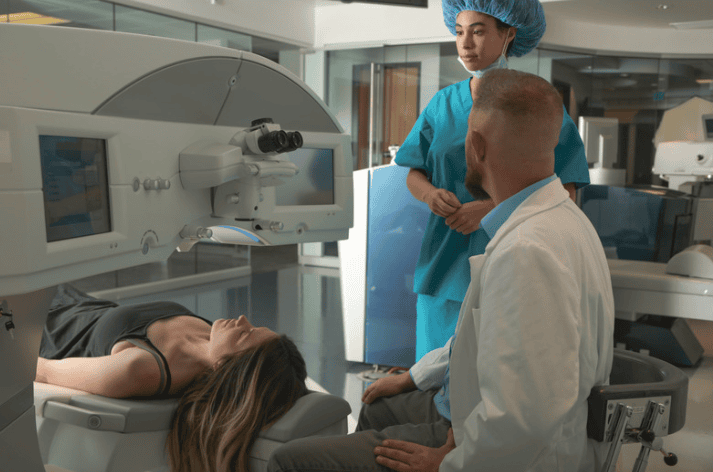


The cost of topography-guided LASIK can vary based on the specific technology used and the complexity of your prescription. At Liberty Laser Eye Center, we provide personalized evaluations to determine if this advanced treatment is right for you. Industry standards for topography-guided LASIK often range higher than traditional LASIK due to the customized mapping of your cornea. For a detailed breakdown of how this procedure compares to standard options, especially for professionals who spend long hours on screens, we recommend reviewing our internal article LASIK And Screen Dominant Jobs: Tech Industry Focus. To receive an exact quote tailored to your eyes, we encourage you to schedule a consultation.
Topography-guided LASIK is an advanced form of laser vision correction that uses detailed 3D mapping of the cornea's surface to guide the laser. Unlike standard LASIK, which primarily corrects for nearsightedness, farsightedness, and astigmatism based on a glasses prescription, this technology analyzes the unique contours and irregularities of your individual cornea. The laser then applies treatment to smooth out these imperfections, often preserving more corneal tissue and reducing the risk of inducing higher-order aberrations like glare or halos. For patients seeking the highest level of visual quality, this represents a significant advancement. To learn more about how this technology is applied in our region, you can read our internal article titled Topography-Guided LASIK Services in Bethesda, MD. At Liberty Laser Eye Center, we prioritize customizing treatment to your specific eye anatomy for the best possible outcome.
Ten years after LASIK, most patients continue to enjoy stable vision, though natural age-related changes may occur. It is common to develop presbyopia, typically around age 40 to 50, which requires reading glasses for close-up tasks. Additionally, some individuals might experience a minor regression of their initial correction or the onset of dry eye symptoms. Routine eye exams remain essential to monitor for conditions like cataracts or glaucoma, which are unrelated to the surgery itself. For those considering contact lens use again later in life, we recommend reviewing our article titled Wearing Contacts After LASIK: What You Need to Know 10 Years Later to understand the specific precautions and healing requirements. At Liberty Laser Eye Center, we emphasize that long-term satisfaction depends on maintaining regular follow-up care and realistic expectations about the aging eye.



125 reviews