So, You’re Thinking About Laser Eye Surgery? Let’s Talk Facts, Not Fear.
Hey there. We get it. You’re scrolling, you’re searching, maybe even typing “best Lasik surgeon near me” at 2 AM. Your glasses are smudged, your contacts feel like sandpaper, and you’re daydreaming about waking up and actually seeing the alarm clock. We’ve had this chat with thousands of people in our chair, and we’re here to have it with you now—no pressure, just the straight talk you want.
Let’s clear the air first. Laser vision correction isn’t one-size-fits-all. It’s a spectrum of amazing technologies, and the “best” procedure is the one that’s perfect for your eyes. That’s the whole game. At Liberty Laser Eye Center in Vienna, Virginia, we live and breathe this stuff. Our entire philosophy is built on matching the right technology to the right person. So, grab a coffee, get comfortable, and let’s break this down together.
Your Eyes Are Not a Textbook: Why the Consultation is Everything
We can’t stress this enough. The single most important step isn’t the surgery day—it’s the evaluation. Anyone who tells you otherwise is, well, let’s just say we disagree strongly. This is where we move from “laser eye surgery” as a vague concept to a concrete plan for you.
Think of it like this: we’re gathering the blueprint of your eyes. We go way beyond the standard “read the tiny letters” chart. We’re talking about a suite of diagnostics that would make a sci-fi movie proud. Wavefront Analysis maps the unique imperfections in your optical system—the ones glasses can’t even correct. Topography-Guided LASIK Surgery planning uses a detailed 3D map of your cornea’s surface. This isn’t just for show; it’s how we tailor the laser’s work with insane precision.
This detailed look helps us answer the big questions: Are you a candidate? Which of the eye surgery types is your ideal match? Do we need to address other factors like Dry Eye Treatment first to ensure a smooth Lasik recovery? Skipping this step is like building a house without a foundation. It’s why our consultations at Liberty Laser Eye Center are so thorough. We need all the facts before we even think about talking price.
The Lineup: It’s Not Just “LASIK” Anymore
Okay, let’s get into the nitty-gritty. When people say “Lasik eye surgery,” they’re usually talking about the classic method. But the family has grown! Here’s a quick, friendly rundown of the heavy hitters we use every day.
- LASIK: The popular one. We create a thin corneal flap, lift it, reshape the tissue underneath with a laser, and lay the flap back down. Recovery is famously quick. Most people see great by the next day.
- Advanced PRK Surgery: The OG of laser vision correction. No flap involved. Instead, we gently remove the very surface layer of the cornea before applying the laser. It’s fantastic for people with thinner corneas or certain lifestyles (think martial artists, firefighters). The initial recovery takes a few more days than LASIK, but the long-term result is rock-solid.
- PresbyLASIK Surgery: This is for our over-40 friends who are experiencing Presbyopia—that lovely “my arms aren’t long enough to read this menu” phase. IMO, it’s a game-changer. We use the laser to create a multifocal effect on the cornea, often aiming for monovision (one eye set for distance, one for near). It tackles Nearsightedness, Farsightedness, Astigmatism, and the reading blur all at once.
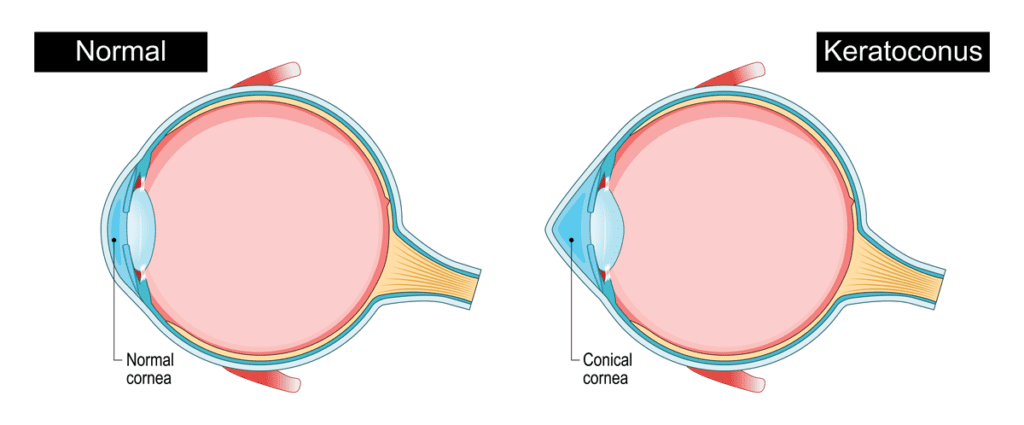
And sometimes, it’s not about ditching glasses at all, but about saving your vision. Procedures like Corneal Cross-Linking halt the progression of Keratoconus, a condition that weakens and thins the cornea. It’s a vital tool in our belt to protect eye health.
To make this easier, here’s a handy table comparing the common vision issues with the typical solutions we discuss:
| What You’re Dealing With (The Fancy Term) | What It Feels Like | The Typical Laser Solutions We Might Discuss |
|---|---|---|
| Nearsightedness (Myopia) | Blurry road signs, clear phone. “Near sighted” sums it up. | LASIK, PRK, ICL (Implantable Collamer Lens) |
| Farsightedness (Hyperopia) | Your phone is blurry, but the TV is okay (until it isn’t). | LASIK, PRK |
| Astigmatism | Lights have starbursts or streaks; vision is fuzzy at all distances. | Wavefront or Topography-Guided LASIK Surgery, PRK |
| Presbyopia | Suddenly needing “reader” glasses after 40. Your arms are too short. | PresbyLASIK Surgery, Monovision LASIK/PRK |
| Keratoconus | Progressive thinning and bulging of the cornea, causing distorted vision. | Corneal Cross-Linking (to stop progression), then specialty contacts or implants. |
Let’s Demystify the Big Worries: Cost, Pain, and “What Ifs?”
We hear the same concerns every day, and they’re totally valid. Let’s tackle them head-on.
- The “Affordable” Question: Look, we know “affordable” is a relative term. When you consider the lifetime cost of glasses, contacts, solutions, and exams, laser vision correction often makes solid financial sense. We offer transparent pricing at Liberty Laser Eye Center because you deserve to make a decision without hidden surprises. The cost is an investment in a quality-of-life upgrade that you enjoy every single waking hour.
- The Pain Factor: Honestly? The idea is worse than the reality. You’ll get numbing drops. You might feel a little pressure during the procedure, but not pain. Afterward, it feels like an eyelash is in your eye for a few hours (with PRK, this lasts a bit longer). Then you take a nap, and when you wake up, the world is already starting to look different. It’s wild in the best way.
- The Success Rate: We love this stat. LASIK boasts one of the highest patient satisfaction success rates of any elective procedure—over 96%. The technology and Lasik doctors‘ expertise have gotten incredibly refined. The key is that rigorous candidate selection we talked about. That’s what protects that amazing statistic.
Why “Near Me” Matters More Than You Think
Searching for “Lasik eye surgeons” or “Washington DC laser eye surgery” is a great start. But here’s our two cents: proximity is a bigger deal than you might realize for follow-up care. Your post-op checkups are crucial. The first day, the first week, the first month—we need to see you.
That’s a practical advantage of choosing a center like ours in Vienna, Virginia. We’re easily accessible from across the Washington DC area. If you have a question during your Lasik recovery, we’re your nearest resource. You’re not planning a day trip for a 15-minute checkup; you’re popping in to see your care team who knows your history. It makes the whole process smoother and less stressful. FYI, that peace of mind is priceless.
Your Action Plan: How to Move From Scrolling to Seeing
Alright, let’s wrap this up with a practical to-do list that doesn’t suck.
- Start with Your Own Eye Doctor: If you have a good relationship with your optometrist, get your Annual Eye Exam. Talk to them about your interest. A healthy, updated prescription is a great starting point.
- Do Your Research, But Focus on the Right Stuff: Read reviews, absolutely. But look for patterns. Do people talk about a thorough consultation? Do they feel cared for? At Liberty Laser Eye Center, we’re proud that our reviews consistently mention our patience and no-pressure approach. That’s the culture we’ve built.
- Schedule a Few Consultations: This is your most important research step. Meet the team. See the technology. Feel the vibe. You should feel heard, not sold to. Any best Lasik surgeon will welcome your questions and give you clear, honest answers about your specific suitability.
- Ask Us Anything: Seriously. When you come see us, bring a list. No question is silly. We’ll walk you through every detail, from the science to the snack you should have when you get home.
The Bottom Line
Choosing to see clearly is a personal journey, but you don’t have to navigate it alone with just a search bar. It’s about partnering with experts who use the latest tech not as a buzzword, but as a tailored tool. It’s about finding a place close by that you trust for the long haul.
We built Liberty Laser Eye Center on that simple idea. So, if you’re tired of just reading about it and ready to explore what it could mean for your life, give us a shout. Let’s have this conversation in person and look at your eyes, not just a screen. The first step to ditching those glasses is easier than you think :).
P.S. Your Questions, Answered.
We’ll leave you with answers to the most common questions we get in our office.
Q: How long does the actual LASIK procedure take?
A: The laser time is shockingly short—often about 20-30 seconds per eye. Your total time in the procedure room is usually about 10-15 minutes.
Q: Is LASIK permanent?
A: Yes, the corneal reshaping is permanent. However, your eyes can still age naturally. Most people won’t need an enhancement, but some may experience changes due to Presbyopia (the need for readers) or very minor shifts later in life.
Q: What happens if I move my eye during surgery?
A: Modern lasers like the ones we use have incredibly sophisticated eye-tracking systems. They follow your eye’s micro-movements thousands of times per second and pause if you look away. It’s a brilliant safety feature.
Q: Can both eyes be done on the same day?
A: Absolutely. In fact, that’s the standard practice. It’s more convenient, and it allows your brain to adapt to your new vision in both eyes simultaneously.
People Also Ask
The overall regret rate for LASIK is exceptionally low, with large-scale studies consistently showing patient satisfaction rates above 95%. The key to minimizing regret is proper patient screening to rule out those with unstable prescriptions, thin corneas, or certain health conditions that make them poor candidates. Realistic expectations about outcomes, including the potential for needing reading glasses later or experiencing temporary dry eye, are also crucial. For a deep dive into long-term patient perspectives, we encourage you to read our detailed analysis in The 10-Year LASIK Satisfaction Survey Results, which examines satisfaction a full decade after the procedure. This underscores that for suitable candidates, LASIK provides a highly satisfying, life-changing improvement in vision.
The controversy surrounding LASIK eye surgery primarily stems from a small percentage of patients who experience significant, persistent side effects. While the vast majority achieve excellent vision, some report chronic dry eyes, glare, halos, or starbursts, especially at night. A key public concern, often amplified by media, is the risk of severe complications like vision loss. It is crucial to understand that modern LASIK is extremely safe, and the risk of blindness is extraordinarily low, as detailed in our internal article Can You Go Blind From LASIK? Unveiling The Truth. The debate centers on ensuring patients have realistic expectations and are thoroughly screened for risk factors like thin corneas or severe dry eye, as not everyone is an ideal candidate. The procedure's high satisfaction rate must be balanced with transparent discussion of potential risks.
There is no confirmed public information that Taylor Swift has undergone LASIK surgery. Celebrities often keep personal medical details private, and Swift has not addressed this topic directly. However, she is frequently seen without glasses, which can be achieved through contact lenses or corrective procedures. For anyone considering LASIK, it is a highly effective laser vision correction surgery that reshapes the cornea to improve focus. It is crucial to have a comprehensive consultation with a qualified ophthalmologist to determine candidacy, which depends on factors like corneal thickness, prescription stability, and overall eye health. The procedure boasts a high success rate for reducing dependence on glasses.
Taylor Swift has not publicly disclosed any specific diagnosed eye conditions. However, she has been open about experiencing vertigo and related symptoms, which can sometimes affect vision and balance. In the entertainment industry, performers often face eye strain from intense lighting, long hours, and screen use. General eye care for such professionals includes regular comprehensive exams, protective eyewear under stage lights, and managing screen time to prevent digital eye strain. Maintaining overall health with proper hydration and nutrition also supports good vision. For any specific symptoms, consulting with an ophthalmologist is the standard professional recommendation.
While online forums like Reddit can contain personal anecdotes, it is important to approach LASIK "horror stories" with a balanced perspective. The procedure has a very high success rate, with over 95% of patients achieving 20/20 vision or better. Complications are statistically rare but can include issues like dry eyes, glare, or halos, which are often temporary. The key to a positive outcome is a thorough pre-operative screening by a qualified surgeon to ensure you are a suitable candidate. Relying on individual stories, which often represent outliers, can create undue anxiety. For reliable information, consult directly with a board-certified ophthalmologist who can provide data on their own complication rates and discuss your specific risks and expectations based on a comprehensive eye exam.
LASIK surgery has a high success rate, but it is not without risks. A small percentage of patients can experience significant complications, such as chronic dry eye, glare, halos, or vision fluctuations, which can profoundly impact quality of life. If you feel your procedure has led to a poor outcome, it is crucial to seek professional support. This includes consulting with your original surgeon or an independent corneal specialist for a thorough evaluation. They can assess your condition and discuss potential management options, which may include specialized contact lenses or additional corrective procedures. It is also important to address the emotional toll; consider seeking counseling or connecting with patient support groups who understand this specific challenge. Documenting all your symptoms and communications with your medical team is a critical step.