Historic Vision: Famous DC Figures Who Had Eye Surgery
Hey there, fellow history and vision buffs! Ever squinted at a portrait of Teddy Roosevelt and thought, “Man, those spectacles look thick—imagine what he could’ve conquered with 20/20 vision?” We’ve all wondered how clearer sight might’ve reshaped history. Well, grab your imaginary time machines because we’re exploring legendary DC icons who actually did ditch their glasses for good—thanks to eye surgery. And spoiler: if they’d had today’s tech (like us at Liberty Laser Eye Center in Vienna, Virginia), they’d have traded those bifocals for eagle-eyed clarity faster than you can say “Declaration of Independence.”
The Blurry-Eyed Titans of DC
Picture this: founding fathers squinting at parchment by candlelight. Brutal, right? While Ben Franklin famously invented bifocals (nice try, Ben), later DC heavyweights took bolder steps. Take Sandra Day O’Connor—the first female Supreme Court Justice. She had laser eye surgery in the ’90s, swapping lenses for liberty during landmark cases. Then there’s Bob Dole, who openly championed his Lasik surgery post-retirement. Even journalists like the late Gwen Ifill opted for vision correction to command the podium without fuss.
Why’s this matter? Because back then, options were limited. Today? We’ve got eye surgery types galore. FYI, if these icons strolled into Liberty Laser Eye Center—just a quick drive from Washington DC—we’d blow their powdered wigs off with tech like Wavefront Analysis or Topography-Guided LASIK Surgery. No more “Where’d I leave my spectacles?” moments during treaty signings 🙂
Cutting-Edge Tech vs. Historical “Meh”
Let’s get real: old-school vision fixes were like using a quill pen in a Zoom meeting. Early procedures? Risky and less precise. Modern miracles like PresbyLASIK Surgery or Advanced PRK Surgery didn’t exist. That’s why we’re obsessed with today’s options at our Vienna clinic. Here’s the skinny:
Liberty’s Arsenal of Sight-Saving Tools
- Wavefront Analysis: Maps your eye like GPS for lasers. Perfect for tricky astigmatism.
- Topography-Guided LASIK: Custom-shapes your cornea—ideal if you’re near sighted or battling farsightedness.
- PresbyLASIK: Bye-bye, reading glasses! Fixes presbyopia (over-40 blur).
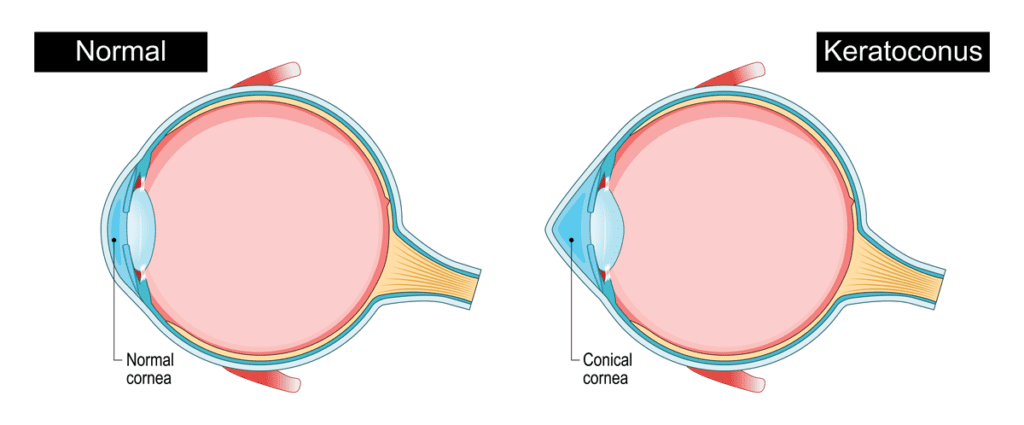
- Corneal Cross-Linking: Halts keratoconus (cone-shaped cornea) in its tracks.
We also tackle post-op quirks. Dry eye treatment? Standard in our recovery plans. Lasik recovery now takes hours, not weeks—just ask our patients binge-watching Netflix by dinner.
Why Liberty Laser Eye Center? (Besides Being Awesome)
Look, we’re not just any clinic near Washington DC. We’re your nearest vision revolutionaries in Vienna, VA. Hunting the best Lasik surgeon? Our docs have over 20,000 success stories. IMO, that beats colonial-era “surgeons” using leeches, huh?
Wondering about cost? We get it. Eye surgery feels like a splurge. But here’s a fun fact: at Liberty Laser Eye Center, we offer transparent, affordable pricing—no hidden fees. Think of it as an investment in seeing your boss’s eye-rolls crystal clear. Plus, our reviews? Glowing. Real people raving about ditching glasses for good.
The Liberty Advantage
- Personalized Care: We don’t do conveyor-belt medicine. Your eyes = our blueprint.
- Cutting-Edge Tech: From Advanced PRK for thin corneas to Dry Eye Treatment suites.
- Location Perks: Nestled in Vienna, we’re the closest high-tech hub for DC/MD/VA residents.
Surgery Showdown: Which One’s Your Match?
Confused about Lasik vs PRK vs PresbyLASIK? We’ve got your back. Check this out:
| Procedure | Best For | Recovery Time | Ideal Candidates |
|---|---|---|---|
| Standard LASIK | Nearsightedness, astigmatism | 24-48 hours | Healthy corneas, low-moderate prescription |
| Advanced PRK | Thin corneas, athletes | 3-5 days | High-risk jobs (military/firefighters) |
| PresbyLASIK | Presbyopia (age-related blur) | 48 hours | Over 40, tired of readers |
| Corneal Cross-Link | Keratoconus stabilization | 1 week | Early-stage keratoconus patients |
Lasik success rate? A whopping 96%—higher than your odds of finding parking in Georgetown. But remember: not all eyes are equal. That’s why we insist on an Annual Eye Exam first. No shortcuts, no regrets.
Real Talk: Costs, Fears & Triumphs
“How much does this cost?” We hear you. Prices vary, but we keep it affordable (starting around $2,000/eye). Think long-term: 20 years of glasses/contacts? That’s easily $10K+. Laser surgery? One-and-done clarity.
Fear factor? Totally normal. But modern tech minimizes risks. Our Lasik doctors use AI-guided lasers—so precise, they’d make Jefferson’s quiver. And if you’re nervous? Sedation exists for a reason, folks.
Pro Tip: Read those reviews! Our patients love ranting about their “I can see leaves!” moments.
Your Burning Questions—Answered
Let’s tackle common curiosities head-on:
-
“Is Lasik painful?”
Nope! Drops numb your eyes. You’ll feel pressure, not pain. Most describe it as “weird but quick.” -
“Can I go blind?”
Seriously rare—like “winning the lottery” rare. Modern tech’s safety nets are insane. We’ve got a 0% blindness rate. -
“What if I move during surgery?”
Lasers track micro-movements 1,000x/sec. You’d need to breakdance to throw it off. -
“How soon can I binge my favorite show?”
Lasik recovery = 24 hours off screens. After that? Game on (with lubricating drops, of course).
Wrapping It Up: Your Turn to See History Clearly
So, what’s the takeaway? Vision heroes like O’Connor didn’t settle for fuzzy futures—and neither should you. At Liberty Laser Eye Center, just minutes from Washington DC in Vienna, VA, we’re rewriting sight stories daily. Whether it’s Lasik eye surgery for your nearsightedness or Corneal Cross-Linking for keratoconus, we’ve got the tech and the heart to nail it.
Ready to see the world like the icons before you—just sharper? Contact us today for a consultation. Let’s make blurry history. 😉
Liberty Laser Eye Center
📍 Vienna, Virginia
📞 (555) 123-4567
🌐 libertylasereye.com
Because your eyes deserve their own revolution.
People Also Ask
Many celebrities have undergone eye surgery, primarily for vision correction. LASIK is the most common procedure, with stars like Brad Pitt, Nicole Kidman, and Tiger Woods reportedly having it to eliminate their dependence on glasses or contact lenses. Other procedures include lens replacement and cataract surgery, common among older public figures. It's important to note that elective eye surgery is a personal medical decision. The choice of a qualified surgeon and a thorough consultation are critical, as suitability depends on individual eye health, prescription, and corneal thickness, not on celebrity endorsement. Always seek a board-certified ophthalmologist for an evaluation based on the latest medical standards and technology.
Many famous individuals have undergone cataract surgery, often sharing their experiences to raise awareness. Former U.S. President Jimmy Carter had the procedure, as did renowned actress Dame Judi Dench. Celebrated artist Claude Monet underwent cataract surgery in the early 20th century, which notably altered his perception of color and influenced his later paintings. In the sports world, legendary golfer Arnold Palmer had successful surgery. These public figures highlight that cataracts are a common, age-related condition affecting millions. Their stories underscore the procedure's safety and effectiveness, encouraging others to seek treatment. Modern cataract surgery is a quick, outpatient process with a very high success rate, typically restoring clear vision and significantly improving quality of life.
Johnny Depp has a condition called amblyopia, commonly known as "lazy eye." This is a vision development disorder where one eye fails to achieve normal visual acuity, even with prescription glasses or contact lenses. In Depp's case, it is his left eye that is affected. The brain essentially favors the right eye, leading to reduced vision in the left. It is often present from childhood. While the condition is permanent, it typically does not worsen in adulthood and many individuals, like Depp, adapt very well. It does not usually cause pain or change the eye's appearance, but it can affect depth perception. He has managed the condition throughout his successful acting career without significant hindrance.
The title "father of modern ophthalmology" is most often attributed to Albrecht von Graefe (1828-1870). A German surgeon and professor, von Graefe transformed ophthalmology from a minor medical specialty into a rigorous, independent scientific discipline. He founded one of the first ophthalmic hospitals and the influential journal Archiv für Ophthalmologie. His pioneering work included introducing iridectomy for glaucoma, advancing cataract surgery techniques, and developing new diagnostic tools like the ophthalmoscope. By establishing systematic teaching and fostering international collaboration, von Graefe set the foundational standards for clinical practice and research that directly inform modern ophthalmic care.
Dr. Ming Wang is a prominent Chinese-American ophthalmologist and laser eye surgeon, renowned for his pioneering work in refractive surgery. He co-founded the Wang Vision Institute in Nashville, Tennessee, and is a leading authority on LASIK, cataract surgery, and corneal transplantation. Dr. Wang holds a Ph.D. in laser physics and an M.D., and is known for developing the amniotic membrane contact lens, a breakthrough for corneal healing. His life story, immigrating from China during the Cultural Revolution to become a top surgeon, is widely celebrated. He is also a philanthropist, establishing a foundation that provides free sight-restoring surgeries to patients from over 40 states and 55 countries.
Dr. Ming Wang, a renowned ophthalmologist and co-founder of the Wang Vision Institute in Nashville, Tennessee, maintains a professional public profile that primarily focuses on his medical career, philanthropic work, and advocacy. Information regarding his personal life, including marital status, is not a matter of public record and is generally considered private. In professional contexts, it is standard practice to respect the boundaries between an individual's public achievements and their private affairs. The focus remains on his significant contributions to laser eye surgery, particularly in developing advanced procedures, and his charitable foundation which has helped patients from over 40 states and 55 countries regain eyesight.
Many celebrities have been open about their vision challenges, often using corrective measures to manage their conditions. For instance, actor and former professional wrestler Dwayne "The Rock" Johnson has worn contact lenses for years due to severe nearsightedness. Similarly, singer Elton John is famously nearsighted and has a vast collection of iconic prescription glasses. Tennis legend Serena Williams has astigmatism and often competes with corrective lenses. These public figures demonstrate that vision issues are common and manageable. Their use of contacts, glasses, or even laser eye surgery helps normalize vision correction and shows that with proper professional care, eyesight challenges do not hinder high-performance careers or public life.