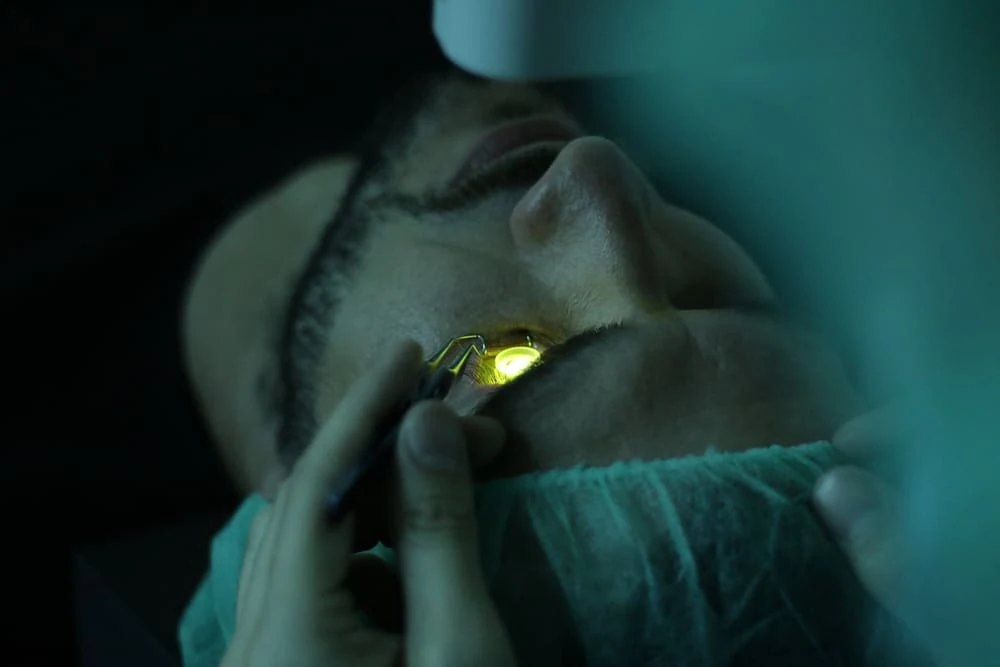

I had a great experience at Liberty Laser Eye Center. Dr. Nancy Tanchel and her entire team were extremely professional, kind, and made me feel comfortable throughout the whole process. They explained everything clearly and answered all of my questions, which really helped me feel confident before the procedure.
The surgery went smoothly and the staff was very supportive from start to finish. I’m very grateful to Dr. Tanchel and her team for their excellent care and professionalism.
Thank you all for helping me improve my vision. I truly appreciate the great work you do.

My vision wasn't terrible, but I was just sick of dealing with the hassle of contacts for sports until I came here. Great and professional business

I had a really good experience at Liberty Laser Eye Center. The staff was friendly and made me feel comfortable the whole time. The procedure was quick, and my vision is so much better now.

Informative staff offering careful evaluations and supportive patient care throughout the process.

Having LASIK surgery was the best thing I have ever done. Waking up every morning with the ability to see 20/20 without having to reach for my glasses or contacts is the ultimate freedom. The surgery was painless and the staff was incredible. I highly recommend it so don't wait!

Brought My grandmother for her eye exam. Jeeimy helped us and explained in detail such amazing team.

I’d been thinking about LASIK for years but kept putting it off out of sheer nervousness. The staff at Liberty are some of the kindest and most patient people I’ve ever met. It’s been a few months and I’m still not used to the freedom of just rolling out of bed and seeing.

I consider this the best investment I've ever made in myself, no question about it. The freedom of just rolling out of bed and being able to see is something I'll never take for granted.
The most successful treatment for dry eyes is typically a personalized, multi-faceted approach tailored to the underlying cause. For many patients, this begins with consistent use of preservative-free artificial tear drops and lifestyle modifications, such as increasing humidity and taking screen breaks. When these are insufficient, in-office procedures like LipiFlow or intense pulsed light (IPL) therapy are highly effective for evaporative dry eye caused by meibomian gland dysfunction. For chronic, severe cases, prescription medications like cyclosporine or lifitegrast eye drops can reduce inflammation and increase tear production. A comprehensive eye exam is essential to diagnose the specific type of dry eye and determine the most successful treatment plan, which may combine several of these therapies.
Insurance coverage for dry eye therapy varies significantly depending on your specific plan and provider. Generally, most standard vision or medical insurance plans do not fully cover treatments considered elective or for chronic management, such as specialized in-office procedures or certain prescription eye drops. However, diagnostic evaluations for dry eye disease are often covered if medically necessary. It is crucial to check directly with your insurance company, as some plans may offer partial coverage for specific therapies like punctal plugs or prescription medications like Restasis or Xiidra if prior authorization is obtained. We recommend contacting our office; our staff can assist in verifying your benefits and exploring all available payment options.
The 20-20-20 rule is a simple, effective strategy to help manage and prevent digital eye strain, which is a major contributor to dry eye symptoms. The rule states that for every 20 minutes spent looking at a screen, you should take a 20-second break and look at something at least 20 feet away. This practice combats the reduced blink rate that occurs during concentrated screen use, which allows tears to evaporate more quickly and leads to dryness and irritation. Consistently applying this rule helps reset your focus, encourages more complete blinking to spread tears, and gives your eyes a necessary rest, thereby reducing discomfort and supporting overall ocular surface health.
Jennifer Aniston has not publicly disclosed specific details about her personal dry eye treatment regimen. However, as a condition commonly addressed in ophthalmology, standard professional treatments align with industry best practices. For a patient with similar concerns, a comprehensive evaluation at a clinic like Liberty Laser Eye Center would first determine the underlying cause—whether evaporative, aqueous-deficient, or inflammatory. Treatment typically begins with preservative-free artificial tears and warm compresses. For more persistent cases, prescription anti-inflammatory eye drops (like Restasis or Xiidra), in-office procedures such as thermal pulsation (LipiFlow) or intense pulsed light (IPL) therapy, and lifestyle modifications (including dietary omega-3 supplementation and environmental adjustments) are evidence-based standards of care.
Eye consultants and surgeons are highly specialized medical professionals dedicated to diagnosing, managing, and treating complex eye conditions. An ophthalmologist is a medical doctor (MD or DO) who can provide comprehensive eye care, including prescribing glasses, managing diseases with medication, and performing intricate surgical procedures like cataract removal, LASIK, and retinal surgeries. Optometrists (OD) are eye care consultants who perform exams, prescribe corrective lenses, and manage certain eye diseases, but they do not perform surgery. For surgical needs, a board-certified ophthalmologist with fellowship training in a specific surgical subspecialty, such as cornea or retina, represents the highest standard of care, ensuring patients receive expert treatment based on the latest medical advancements.
When searching for an eye doctor in Gainesville, VA, it is important to distinguish between the services you need. An ophthalmologist is a medical doctor specializing in eye and vision care, including surgery, disease treatment, and prescribing glasses or contacts. An optometrist provides primary vision care, including sight testing, correction, and diagnosis of some eye conditions. For surgical vision correction like LASIK, you would seek a refractive surgeon. Liberty Laser Eye Center, located in the broader Washington D.C. area, specializes in advanced LASIK and cataract surgery. For routine eye exams or prescriptions, a local optometrist or ophthalmology practice in Gainesville would be appropriate. Always verify a provider's credentials, experience, and patient reviews.
The Dry Eye Center of Manassas is a specialized facility dedicated to diagnosing and treating dry eye disease, a common condition that can cause significant discomfort and vision problems. It offers a comprehensive approach, moving beyond temporary relief like artificial tears. Patients typically receive a detailed evaluation to determine the root cause, which may involve meibomian gland dysfunction, inflammation, or environmental factors. Treatment plans are personalized and can include advanced options such as intense pulsed light (IPL) therapy, LipiFlow thermal pulsation, prescription eye drops, and nutritional guidance. The center's focus is on providing long-term management to improve ocular surface health, tear film stability, and overall patient comfort and quality of life.


130 reviews

