
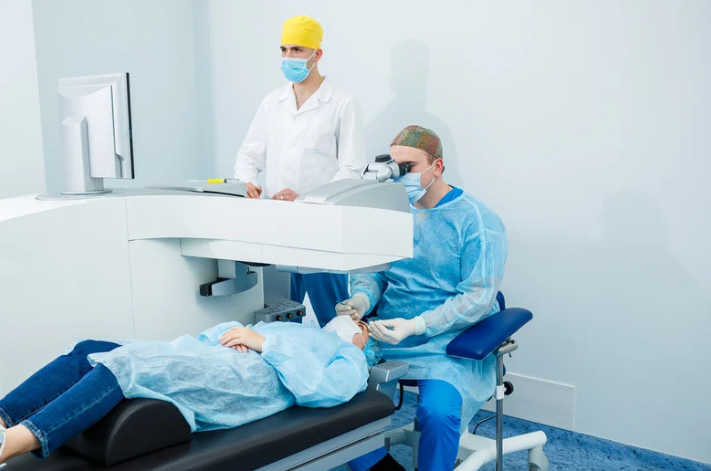

I had a great experience at Liberty Laser Eye Center. Dr. Nancy Tanchel and her entire team were extremely professional, kind, and made me feel comfortable throughout the whole process. They explained everything clearly and answered all of my questions, which really helped me feel confident before the procedure.
The surgery went smoothly and the staff was very supportive from start to finish. I’m very grateful to Dr. Tanchel and her team for their excellent care and professionalism.
Thank you all for helping me improve my vision. I truly appreciate the great work you do.

My vision wasn't terrible, but I was just sick of dealing with the hassle of contacts for sports until I came here. Great and professional business

I had a really good experience at Liberty Laser Eye Center. The staff was friendly and made me feel comfortable the whole time. The procedure was quick, and my vision is so much better now.

Informative staff offering careful evaluations and supportive patient care throughout the process.

Having LASIK surgery was the best thing I have ever done. Waking up every morning with the ability to see 20/20 without having to reach for my glasses or contacts is the ultimate freedom. The surgery was painless and the staff was incredible. I highly recommend it so don't wait!

Brought My grandmother for her eye exam. Jeeimy helped us and explained in detail such amazing team.

I’d been thinking about LASIK for years but kept putting it off out of sheer nervousness. The staff at Liberty are some of the kindest and most patient people I’ve ever met. It’s been a few months and I’m still not used to the freedom of just rolling out of bed and seeing.

I consider this the best investment I've ever made in myself, no question about it. The freedom of just rolling out of bed and being able to see is something I'll never take for granted.
The cost of a yearly vision exam varies significantly based on location, provider type, and insurance coverage. Without insurance, a comprehensive eye exam at a retail optical chain or independent optometrist typically ranges from $50 to $250. Exams at an ophthalmologist's office, which include medical eye health screening, can be higher, often between $100 and $300. Most vision insurance plans, like VSP or EyeMed, cover an annual exam fully or with a small copay, usually $10 to $50. It is crucial to confirm coverage with your insurer and provider beforehand. For accurate pricing, contact local eye care offices directly, as they can provide specific fees and any package deals that include the exam.
Yes, in many countries, you can receive a free eye test for glaucoma under specific public health programs or insurance coverage. In the UK, for instance, the NHS offers free eye tests for individuals at higher risk, including those over 40 with a family history of glaucoma, and for everyone over 60. In the US, Medicare Part B covers an annual glaucoma test for high-risk individuals like those with diabetes or a family history. However, coverage varies widely by country, insurance plan, and individual risk factors. It is crucial to check with your local health authority or insurance provider to understand your eligibility. Early detection through comprehensive eye exams, which include measuring intraocular pressure and assessing the optic nerve, is vital as glaucoma often has no early symptoms.
For a comprehensive yearly eye exam, you should schedule an appointment with an optometrist (OD) or an ophthalmologist (MD or DO). An optometrist is a primary eye care professional trained to perform eye exams, prescribe corrective lenses, and diagnose common eye conditions. An ophthalmologist is a medical doctor who specializes in eye and vision care, capable of performing surgery and managing complex eye diseases. Your choice may depend on your age, overall eye health, and specific concerns. Regardless of your provider, a regular exam is crucial for monitoring vision changes and detecting issues early. For more on the importance of early detection, see our internal article Eye Disease Symptoms & Risk Factors | Early Detection & Prevention.
High blood pressure, or hypertension, can indeed cause blurry vision in one eye, often as a sign of hypertensive retinopathy. Chronically elevated pressure damages the delicate blood vessels in the retina, potentially leading to bleeding, fluid leakage, or swelling. This damage can manifest as blurred or impaired vision, sometimes affecting one eye more noticeably than the other. It is a serious symptom indicating that high blood pressure is affecting ocular health. Anyone experiencing sudden or persistent blurry vision should seek immediate medical evaluation, as it could also signal other urgent conditions like a retinal vein occlusion or stroke. Managing blood pressure through lifestyle changes and medication is crucial to prevent long-term vision damage and other cardiovascular complications.
When searching for the best eye doctor in Arlington, VA, it is crucial to consider board certification, specialization, and patient reviews. Look for an optometrist or ophthalmologist who is a member of professional organizations like the American Academy of Ophthalmology or the American Optometric Association. A top-rated practice will offer comprehensive services, including routine exams, management of ocular diseases like glaucoma and macular degeneration, and surgical consultations if needed. Modern clinics utilize advanced diagnostic technology such as optical coherence tomography (OCT) and digital retinal imaging. For personalized care, seek a doctor who takes time to explain conditions and treatment options, ensuring a strong patient-doctor relationship.
Virginia Vision Associates is a well-regarded eye care practice in Virginia, providing comprehensive services for patients of all ages. Their team of optometrists and ophthalmologists offers routine eye exams, contact lens fittings, and management of conditions like glaucoma, cataracts, and macular degeneration. They utilize advanced diagnostic technology to ensure accurate assessments and personalized treatment plans. For patients considering vision correction, they provide consultations on options including LASIK, evaluating candidacy based on individual eye health and lifestyle needs. It's important for any patient to choose a practice with strong credentials, modern equipment, and a commitment to ongoing care, which are hallmarks of established providers in the field.
When seeking an eye doctor in Clarendon, it is essential to choose a qualified professional for comprehensive vision care. Look for a licensed optometrist or ophthalmologist with strong credentials and positive patient reviews. Optometrists provide primary vision care, including exams, prescriptions, and contact lens fittings, while ophthalmologists are medical doctors who can diagnose and treat complex eye diseases and perform surgery. A reputable practice should offer advanced diagnostic technology for accurate assessments. Consider factors like office location, hours, accepted insurance plans, and the range of services provided, such as treatment for dry eye or glaucoma. Scheduling a consultation can help determine if the doctor's expertise and approach align with your specific eye health needs.
Arlington eye care encompasses a range of professional vision services, from routine comprehensive exams to specialized treatments. A reputable practice will prioritize thorough evaluations, including tests for glaucoma, cataracts, and macular degeneration, using advanced diagnostic technology. It is essential to choose a provider that offers a full spectrum of care, including prescriptions for glasses and contact lenses, management of ocular diseases, and pre- and post-operative care for procedures like LASIK. Patients should look for licensed optometrists or ophthalmologists with strong local reputations and clear communication styles. Regular eye exams are a critical component of overall health, as they can detect not only vision changes but also early signs of systemic conditions like diabetes and hypertension.


130 reviews

