

The Dunn Loring clinic calendar got me in instantly for Advanced PRK and their final bill matched the upfront quote perfectly.

I had been wearing glasses since I was a kid and finally decided it was time for a change. The team explained every step before the procedure and made sure I was completely comfortable. Recovery was easier than I expected, and my vision is now sharper than ever.

Everyone at the clinic made me feel comfortable from the moment I walked in. They were friendly, knowledgeable, and always willing to answer my questions. I never felt pressured into making a decision, which made the experience even better. I'm thrilled with my results

My vision had been getting worse every year, so I finally decided to schedule a consultation here. The testing was very thorough, and the doctor explained every result in a way that was easy to understand. The procedure was smooth, and I noticed a huge improvement in my eyesight the very next day.

I was impressed by how detailed the initial evaluation was before recommending treatment. They took the time to make sure I was a suitable candidate instead of rushing into surgery. That level of care gave me complete confidence. Everything went smoothly, and my vision has been excellent ever since.

The whole process was easy and the results was life-changing. This clinic is simple and the best and I would highly recommend this Eye Clinic.

This place combines advanced technology with genuinely caring service. The diagnostics were incredibly detailed and helped me understand my vision problems much better. Staff members were friendly, knowledgeable, and very reassuring throughout the process. Overall an outstanding experience.

The combination of their advanced technology and the hospitality is what sets them aside. The diagnotics provided were detailed and they helped me make a pre-informed decision for my LASIK.



For many patients, wavefront LASIK is a worthwhile investment because it uses advanced mapping technology to correct subtle imperfections in the eye that standard LASIK cannot address. This personalized approach often results in sharper vision with fewer night vision side effects, such as glare or halos. The decision ultimately depends on your specific prescription and corneal health. At Liberty Laser Eye Center, we guide patients through this choice by reviewing comprehensive data on long-term outcomes. For a deeper look at how these results hold up over time, we recommend reading our internal article titled Long-Term Patient Satisfaction Rates For LASIK Surgery In Northern Virginia. A thorough consultation is the best way to determine if the enhanced precision of wavefront technology aligns with your visual goals.
The three main types of wavefronts are planar, spherical, and cylindrical. A planar wavefront has a flat surface with light rays traveling parallel to each other, typically seen from a distant light source. A spherical wavefront curves outward like a bubble, originating from a point source of light. A cylindrical wavefront focuses light along a single axis, which is commonly associated with astigmatism. At Liberty Laser Eye Center, understanding these wavefronts is essential for diagnosing refractive errors and customizing laser vision correction. By mapping the unique wavefront of each eye, we can precisely target imperfections to improve visual clarity.
When comparing wavefront LASIK and SMILE LASIK, both are advanced vision correction techniques, but wavefront LASIK is often considered more customizable. Wavefront LASIK uses detailed mapping of the eye to correct higher-order aberrations, potentially providing sharper visual quality, especially in low light. SMILE LASIK is a flapless, minimally invasive procedure that may be suitable for patients with dry eyes or thinner corneas. The best choice depends on your specific eye anatomy and prescription. At Liberty Laser Eye Center, we recommend a thorough consultation to determine which option aligns with your needs. For more insight into the procedure experience, you can read our article Is LASIK Painful? Debunking Common Fears.
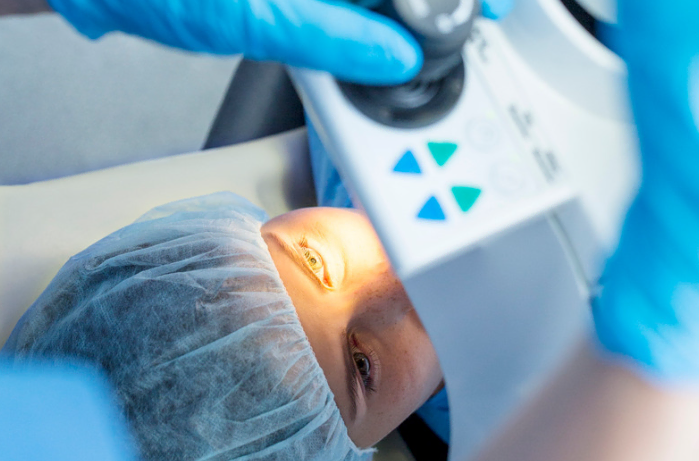
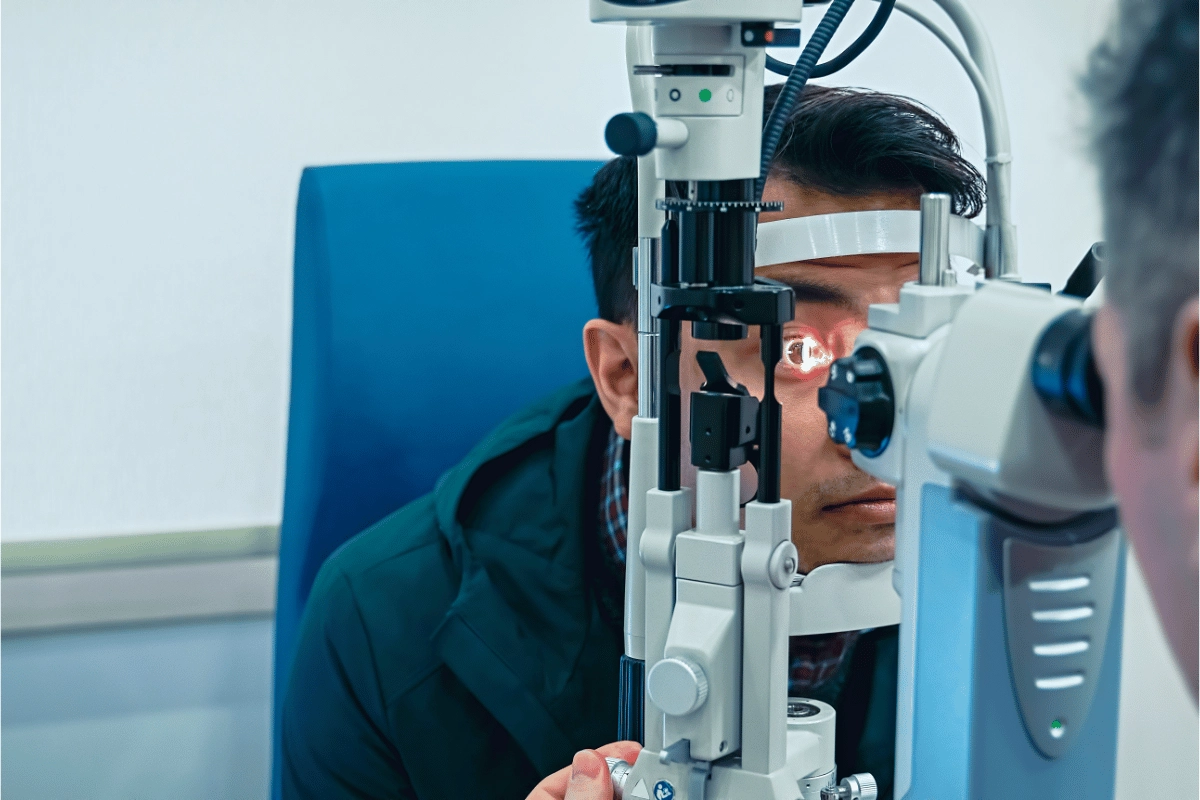
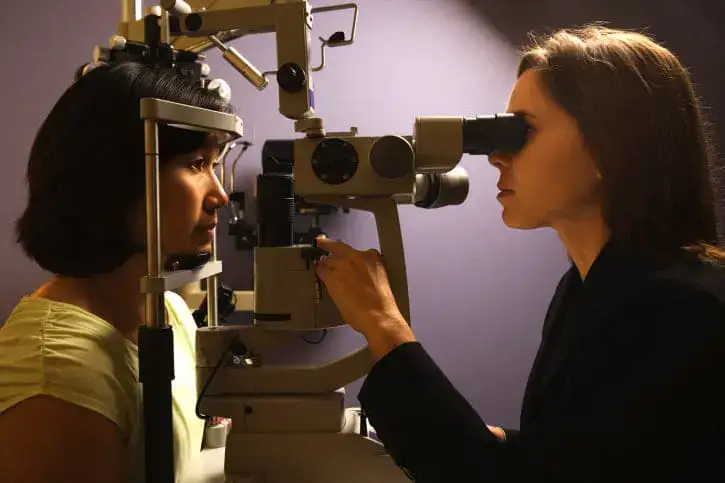
During a wavefront exam, you will look into a device that measures how light travels through your eye. This advanced diagnostic test creates a detailed 3D map of your unique visual system, identifying even subtle imperfections beyond standard prescriptions. The process is painless and non-invasive; you simply rest your chin on a support and focus on a target. The entire scan takes only a few seconds per eye. This data helps your surgeon plan a highly customized treatment. At Liberty Laser Eye Center, we use this technology to enhance precision. For more on how this applies to active professionals, our article LASIK For Firefighters And First Responders details specific considerations for those in demanding roles.
For patients seeking wavefront aberrometry near Vienna and Fairfax County, Virginia, it is important to understand that this advanced diagnostic tool measures unique imperfections in your eye's optical system, known as higher-order aberrations. These measurements go beyond standard refraction to create a detailed map of how light travels through your eye. At Liberty Laser Eye Center, we use this data to customize laser vision correction for each individual. To help you better prepare for your consultation, we recommend reviewing our internal article A Patient’s Guide To Interpreting Your Own Wavefront Aberrometry Report Before Your DC Consultation, which explains how to interpret your own wavefront aberrometry report before your DC consultation. This guide provides valuable context for discussing your results with your surgeon.
When reviewing a corneal wavefront analysis, you are looking at how light travels through the front surface of your eye. This measurement isolates the cornea's shape to identify irregularities that cause visual distortions. The resulting map shows lower-order aberrations like nearsightedness and astigmatism, as well as higher-order aberrations such as coma and trefoil. Understanding these numbers is key to determining your candidacy for advanced vision correction. At Liberty Laser Eye Center, we use this data alongside other diagnostics to create a personalized treatment plan. For a deeper understanding of how to read your specific results before your appointment, please review our internal article A Patient’s Guide To Interpreting Your Own Wavefront Aberrometry Report Before Your DC Consultation.
For patients considering Wavefront LASIK, understanding your pre-operative measurements is key to setting realistic expectations. Wavefront technology maps the unique imperfections of your eye, allowing for a highly customized treatment that aims to correct not only standard refractive errors but also higher-order aberrations like glare or halos. At Liberty Laser Eye Center, we emphasize that while this data is valuable, interpreting it without clinical context can be misleading. For a thorough explanation of what your specific numbers mean, we recommend reviewing our internal article titled A Patient’s Guide To Interpreting Your Own Wavefront Aberrometry Report Before Your DC Consultation. This resource provides a clear framework for understanding your report before your consultation, helping you ask informed questions about your potential visual outcomes.
The Shack-Hartmann wavefront sensor is a critical diagnostic tool used in modern refractive surgery to create a detailed map of the eye's optical system. It works by projecting a grid of light points onto the retina and measuring how these points are distorted as they reflect back. This data reveals lower and higher-order aberrations, which are subtle imperfections beyond standard nearsightedness, farsightedness, and astigmatism. At Liberty Laser Eye Center, this advanced technology allows our surgeons to customize laser vision correction for each patient's unique visual signature. By addressing these individual aberrations, the goal is to achieve a sharper, more precise outcome that can often exceed the clarity provided by standard glasses or contact lenses.



121 reviews
