

The Dunn Loring clinic calendar got me in instantly for Advanced PRK and their final bill matched the upfront quote perfectly.

I had been wearing glasses since I was a kid and finally decided it was time for a change. The team explained every step before the procedure and made sure I was completely comfortable. Recovery was easier than I expected, and my vision is now sharper than ever.

Everyone at the clinic made me feel comfortable from the moment I walked in. They were friendly, knowledgeable, and always willing to answer my questions. I never felt pressured into making a decision, which made the experience even better. I'm thrilled with my results

My vision had been getting worse every year, so I finally decided to schedule a consultation here. The testing was very thorough, and the doctor explained every result in a way that was easy to understand. The procedure was smooth, and I noticed a huge improvement in my eyesight the very next day.

I was impressed by how detailed the initial evaluation was before recommending treatment. They took the time to make sure I was a suitable candidate instead of rushing into surgery. That level of care gave me complete confidence. Everything went smoothly, and my vision has been excellent ever since.

The whole process was easy and the results was life-changing. This clinic is simple and the best and I would highly recommend this Eye Clinic.

This place combines advanced technology with genuinely caring service. The diagnostics were incredibly detailed and helped me understand my vision problems much better. Staff members were friendly, knowledgeable, and very reassuring throughout the process. Overall an outstanding experience.

The combination of their advanced technology and the hospitality is what sets them aside. The diagnotics provided were detailed and they helped me make a pre-informed decision for my LASIK.


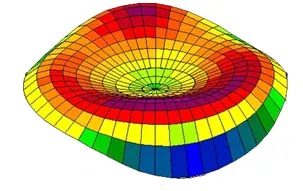
The cost of topography-guided LASIK varies based on individual prescription complexity and technology used. At Liberty Laser Eye Center, we provide personalized consultations to determine the exact fee, as factors like corneal thickness and astigmatism correction influence pricing. For a detailed breakdown of what this advanced procedure includes, please review our internal article titled Topography-Guided LASIK Services in Pimmit Hills, VA. Generally, industry-standard pricing for this custom laser vision correction ranges from $2,000 to $3,000 per eye, covering pre-operative testing, the surgery itself, and follow-up care. We recommend scheduling an evaluation to receive a precise quote tailored to your eyes.
LASIK is designed to correct a wide range of refractive errors, but the "worst" eyesight it can fix depends on your specific prescription and corneal thickness. Generally, most reputable surgeons can treat up to -12.00 diopters of nearsightedness, +6.00 diopters of farsightedness, and up to 6.00 diopters of astigmatism. However, these are not strict limits. The most critical factor is having enough healthy corneal tissue to safely reshape. At Liberty Laser Eye Center, we emphasize that high prescriptions require a thorough evaluation to avoid complications. For a deeper understanding of how to achieve the best possible outcome, we recommend reading our internal article titled 'The Truth About “HD LASIK”: How to Get Genuinely Sharper, Safer Vision Without Falling for Marketing Gimmicks' at The Truth About “HD LASIK”: How to Get Genuinely Sharper, Safer Vision Without Falling for Marketing Gimmicks. Always consult with a qualified surgeon to determine your candidacy.
The primary difference between topography and wavefront LASIK lies in how each technology maps the eye for treatment. Topography measures the anterior surface of the cornea, creating a detailed map of its curvature and shape. This is particularly useful for diagnosing conditions like keratoconus or irregular astigmatism. In contrast, wavefront technology analyzes the entire optical pathway of the eye, measuring how light travels through the cornea and lens to the retina. This captures both lower-order aberrations (like nearsightedness) and higher-order aberrations (such as glare or halos). For patients in Vienna and Fairfax County, understanding these distinctions is crucial when considering your options. At Liberty Laser Eye Center, we recommend reviewing our internal article titled The 4 Types Of Wavefront Maps Every DC Patient Must Review Before Booking A Consultation to better understand which map type suits your unique visual needs before booking a consultation.
For patients in Vienna and Fairfax County, Virginia, topography-guided LASIK uses advanced mapping technology to create a highly personalized treatment plan. Unlike standard LASIK, which corrects based on a basic prescription, this method analyzes the unique contours of your cornea to address subtle irregularities and reduce higher-order aberrations. This can lead to sharper visual quality, especially in low light, and may lower the risk of side effects like glare or halos. To help you compare outcomes, Liberty Laser Eye Center recommends reviewing our internal article titled Topography-Guided LASIK Vs. Standard LASIK: A Side-by-Side Outcomes Tracker For Northern Virginia Patients, which provides a detailed side-by-side analysis for Northern Virginia patients. This resource can clarify how the precision of topography-guided treatment might benefit your specific vision needs.
For patients seeking advanced vision correction, Contoura LASIK is a topography-guided procedure that maps the unique contours of your cornea to correct not only nearsightedness, farsightedness, and astigmatism but also subtle irregularities that standard LASIK cannot address. This personalized approach often results in sharper visual quality, especially in low light. If you are searching for "Contoura LASIK near me" in the Vienna or Fairfax County area, it is essential to choose a provider with certified technology and experienced surgeons. At Liberty Laser Eye Center, we prioritize patient education on all advanced options. For a detailed breakdown of costs and financing, please refer to our internal article titled Complete Guide To LASIK Eye Surgery Costs And Financing In Washington DC.



121 reviews
