
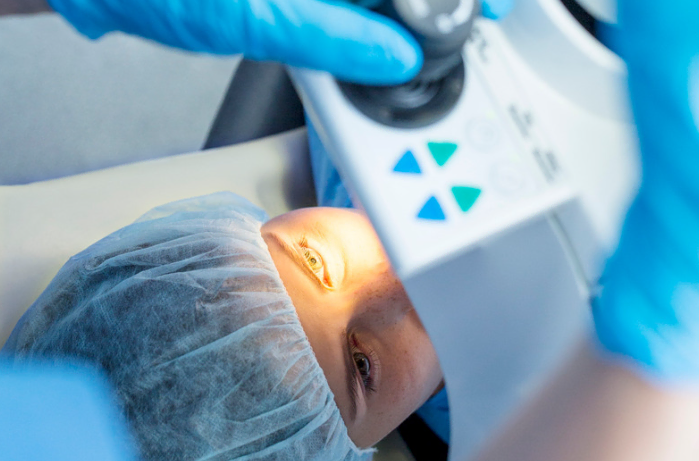
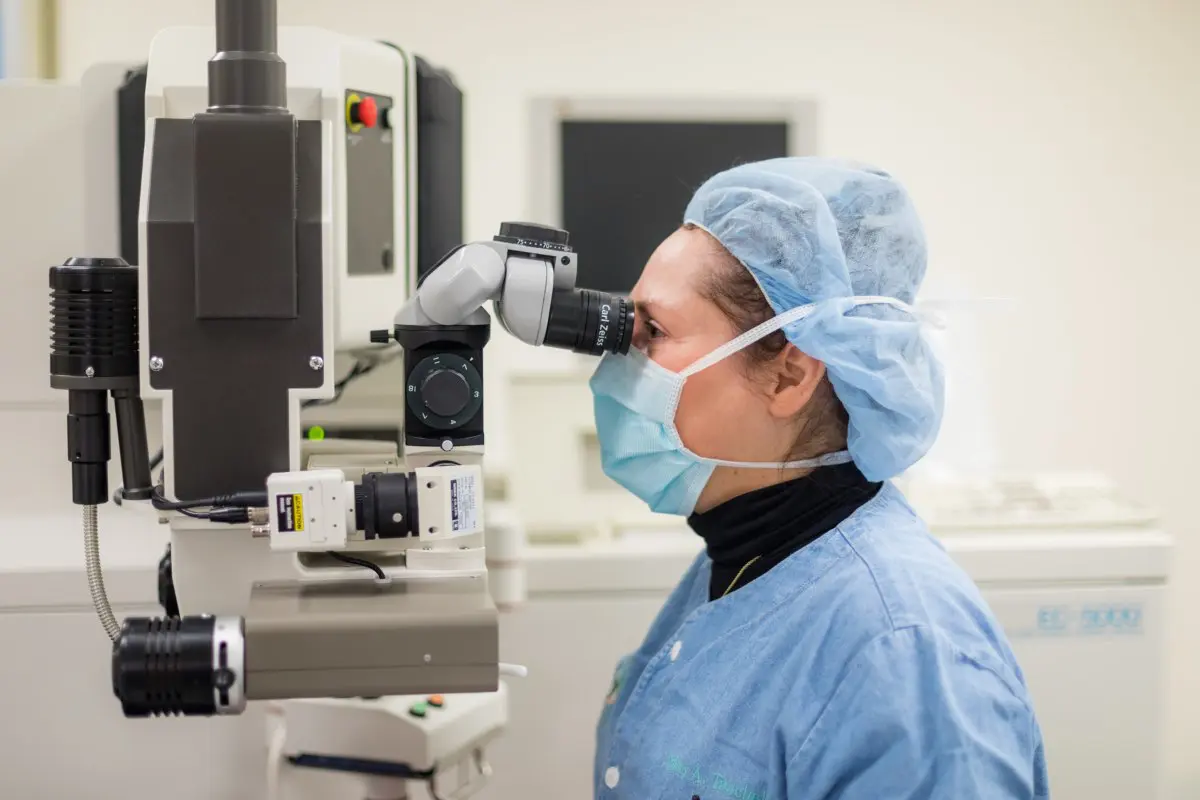

I had a great experience at Liberty Laser Eye Center. Dr. Nancy Tanchel and her entire team were extremely professional, kind, and made me feel comfortable throughout the whole process. They explained everything clearly and answered all of my questions, which really helped me feel confident before the procedure.
The surgery went smoothly and the staff was very supportive from start to finish. I’m very grateful to Dr. Tanchel and her team for their excellent care and professionalism.
Thank you all for helping me improve my vision. I truly appreciate the great work you do.

My vision wasn't terrible, but I was just sick of dealing with the hassle of contacts for sports until I came here. Great and professional business

I had a really good experience at Liberty Laser Eye Center. The staff was friendly and made me feel comfortable the whole time. The procedure was quick, and my vision is so much better now.

Informative staff offering careful evaluations and supportive patient care throughout the process.

Having LASIK surgery was the best thing I have ever done. Waking up every morning with the ability to see 20/20 without having to reach for my glasses or contacts is the ultimate freedom. The surgery was painless and the staff was incredible. I highly recommend it so don't wait!

Brought My grandmother for her eye exam. Jeeimy helped us and explained in detail such amazing team.

I’d been thinking about LASIK for years but kept putting it off out of sheer nervousness. The staff at Liberty are some of the kindest and most patient people I’ve ever met. It’s been a few months and I’m still not used to the freedom of just rolling out of bed and seeing.

I consider this the best investment I've ever made in myself, no question about it. The freedom of just rolling out of bed and being able to see is something I'll never take for granted.
Topography-guided LASIK and SMILE are both advanced laser vision correction procedures, but they are fundamentally different technologies designed to address different needs. Topography-guided LASIK uses detailed corneal mapping to create a highly personalized treatment plan, which is exceptionally effective for correcting irregular astigmatism and subtle corneal imperfections. SMILE (Small Incision Lenticule Extraction) is a flapless, minimally invasive procedure that may offer advantages in dry eye symptoms and biomechanical stability for suitable candidates with myopia and astigmatism. The "better" procedure depends entirely on your unique corneal shape, prescription, and lifestyle goals. A comprehensive evaluation is essential to determine which technology aligns with your ocular anatomy. For a detailed comparison of these two leading options, please see our internal article LASIK vs. SMILE Eye Surgery | Vision Correction Washington DC.
The price of LASIK can vary significantly based on geographic location, the technology used, the surgeon's experience, and the specific needs of the patient. While $4000 is within the national average range for the procedure, it is not inherently "good" or "bad" without context. A comprehensive evaluation is crucial. This quoted price should include all pre- and post-operative care. It is essential to ensure you are comparing similar technology packages; a lower price might use older technology or exclude necessary follow-ups. The most important factor is the quality and reputation of the surgeon and surgical center, not just the cost. Always prioritize safety and outcomes over price alone.
The field of refractive surgery is continuously evolving, and while specific procedures for 2026 are still under development, the most anticipated advancements are in the realm of presbyopia-correcting treatments and enhanced laser and lens-based technologies. Research is heavily focused on next-generation accommodating intraocular lenses (IOLs) that provide a greater range of clear vision, and refinements in laser platforms for even greater precision and customization in procedures like SMILE and LASIK. The goal for new surgeries is to improve safety profiles, expand treatable prescriptions, and deliver more consistent outcomes, particularly for patients with presbyopia (age-related near vision loss). It is essential to consult with a qualified ophthalmologist to determine which proven, FDA-approved procedure is best suited for your individual eyes and vision goals when the time comes.
Topoguided LASIK is an advanced form of laser vision correction that uses detailed corneal mapping to create a highly personalized treatment plan. This technology, often called corneal topography or wavefront-guided, analyzes thousands of unique data points on the eye's surface to create a 3D map. This map identifies even the most minute irregularities in the cornea's shape that standard prescriptions might miss. The laser then uses this precise blueprint to guide its correction, potentially improving outcomes for patients with complex prescriptions or subtle corneal irregularities. The goal is to achieve not just standard 20/20 vision, but the highest possible quality of vision by treating the unique optical imperfections of each individual eye.


130 reviews

