
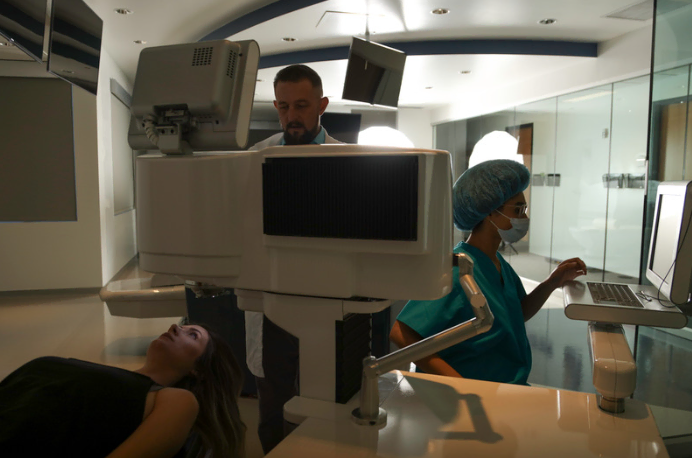
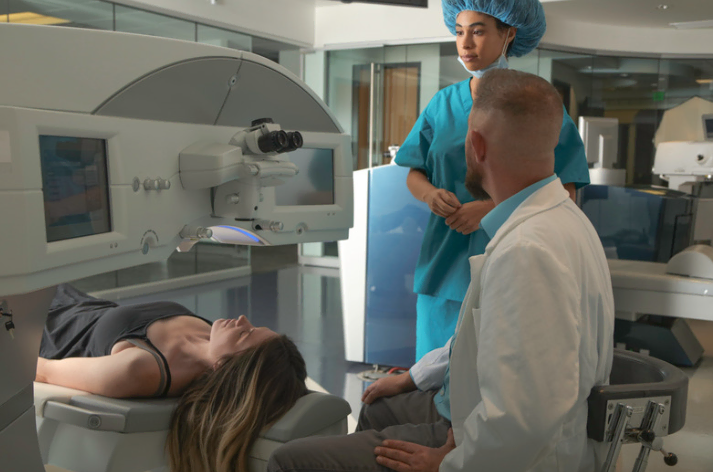
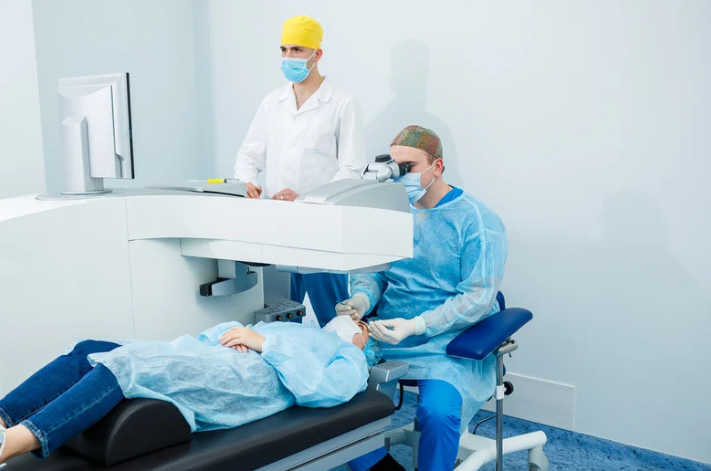


I had a great experience at Liberty Laser Eye Center. Dr. Nancy Tanchel and her entire team were extremely professional, kind, and made me feel comfortable throughout the whole process. They explained everything clearly and answered all of my questions, which really helped me feel confident before the procedure.
The surgery went smoothly and the staff was very supportive from start to finish. I’m very grateful to Dr. Tanchel and her team for their excellent care and professionalism.
Thank you all for helping me improve my vision. I truly appreciate the great work you do.

My vision wasn't terrible, but I was just sick of dealing with the hassle of contacts for sports until I came here. Great and professional business

I had a really good experience at Liberty Laser Eye Center. The staff was friendly and made me feel comfortable the whole time. The procedure was quick, and my vision is so much better now.

Informative staff offering careful evaluations and supportive patient care throughout the process.

Having LASIK surgery was the best thing I have ever done. Waking up every morning with the ability to see 20/20 without having to reach for my glasses or contacts is the ultimate freedom. The surgery was painless and the staff was incredible. I highly recommend it so don't wait!

Brought My grandmother for her eye exam. Jeeimy helped us and explained in detail such amazing team.

I’d been thinking about LASIK for years but kept putting it off out of sheer nervousness. The staff at Liberty are some of the kindest and most patient people I’ve ever met. It’s been a few months and I’m still not used to the freedom of just rolling out of bed and seeing.

I consider this the best investment I've ever made in myself, no question about it. The freedom of just rolling out of bed and being able to see is something I'll never take for granted.
The price of LASIK can vary significantly based on technology, surgeon experience, and geographic location. While $4000 for both eyes is within the typical national average range, it is crucial to assess what that quote includes. A good price should correspond to a high-quality procedure. This means the quote should cover all pre- and post-operative care, use of the latest laser technology (like wavefront-guided), and be performed by a highly experienced, board-certified surgeon. Be wary of prices that seem unusually low, as they may cut corners on critical factors. The best approach is to prioritize the surgeon's credentials and technology over cost alone for a procedure with such important long-term outcomes.
The primary difference between SMILE and topography-guided LASIK lies in the technique and the type of corneal irregularities they best address. SMILE (Small Incision Lenticule Extraction) is a flapless, minimally invasive procedure where a femtosecond laser creates a precise lenticule within the cornea that is then removed through a small incision. It is generally considered for standard vision correction. Topography-guided LASIK, a form of wavefront-optimized LASIK, uses detailed corneal mapping to create a personalized treatment plan. This approach is particularly advantageous for correcting irregular corneas, such as those with prior surgical complications or subtle irregularities, by addressing unique surface imperfections beyond standard prescriptions. Both are advanced, but the choice depends on individual corneal anatomy and specific visual needs.
A corneal topography scan is typically performed by an ophthalmologist or an optometrist. Ophthalmologists are medical doctors (MDs or DOs) who specialize in eye and vision care, including surgery, and they use topography for diagnosing conditions like keratoconus, planning for LASIK or cataract surgery, and fitting contact lenses. Optometrists (ODs) are eye care professionals who also routinely use corneal topography in clinical practice for similar diagnostic and fitting purposes. The test itself is often administered by a trained ophthalmic technician. The procedure is non-invasive and involves the patient looking into a lighted bowl to map the precise curvature and shape of the cornea's surface.
PTK (phototherapeutic keratectomy) surgery is generally considered to have minimal discomfort during the procedure itself, as anesthetic eye drops are used to numb the eye. Patients typically feel only slight pressure. The post-operative period, however, involves a recovery process that can include several days of moderate pain, a gritty or foreign body sensation, light sensitivity, and tearing. This discomfort is usually managed effectively with prescribed lubricating and medicated eye drops, and sometimes oral pain medication. The level of pain is often compared to a severe corneal abrasion. It is crucial to follow all post-op care instructions, including using protective shields and avoiding eye rubbing, to ensure proper healing and minimize complications.
The concept of a "lifetime guarantee" for TLC LASIK or any laser vision correction is a significant marketing and service feature offered by some providers. It typically means that if your vision regresses to a certain degree after the initial procedure, you may be eligible for an enhancement surgery at no additional charge, often with specific conditions. These conditions are crucial and usually include maintaining annual eye exams at the provider's network, the regression being due to the natural healing response and not a new prescription change from aging (like presbyopia), and your corneas remaining suitable for a repeat procedure. It is a strong commitment from the provider, but patients must thoroughly understand the detailed terms, eligibility requirements, and any potential fees for follow-up exams. Always review the guarantee documentation carefully before proceeding.


130 reviews

