
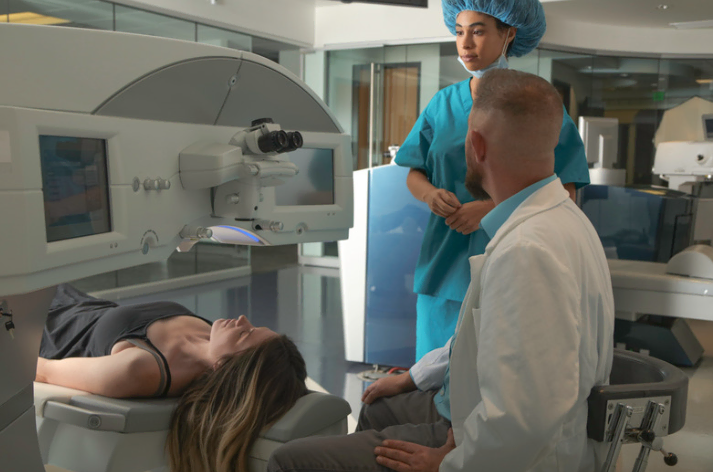
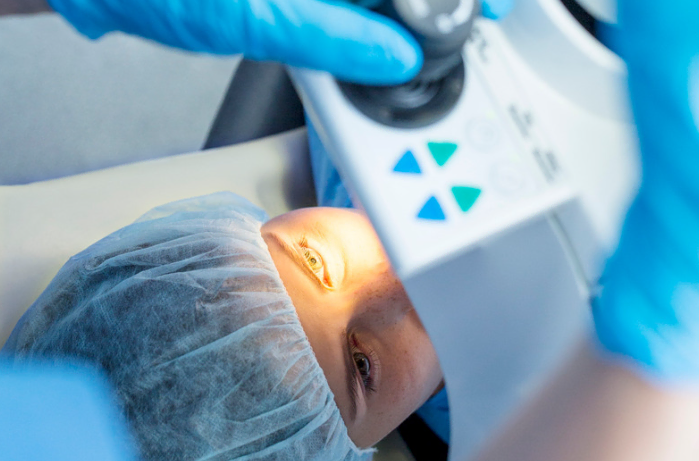


I had a great experience at Liberty Laser Eye Center. Dr. Nancy Tanchel and her entire team were extremely professional, kind, and made me feel comfortable throughout the whole process. They explained everything clearly and answered all of my questions, which really helped me feel confident before the procedure.
The surgery went smoothly and the staff was very supportive from start to finish. I’m very grateful to Dr. Tanchel and her team for their excellent care and professionalism.
Thank you all for helping me improve my vision. I truly appreciate the great work you do.

My vision wasn't terrible, but I was just sick of dealing with the hassle of contacts for sports until I came here. Great and professional business

I had a really good experience at Liberty Laser Eye Center. The staff was friendly and made me feel comfortable the whole time. The procedure was quick, and my vision is so much better now.

Informative staff offering careful evaluations and supportive patient care throughout the process.

Having LASIK surgery was the best thing I have ever done. Waking up every morning with the ability to see 20/20 without having to reach for my glasses or contacts is the ultimate freedom. The surgery was painless and the staff was incredible. I highly recommend it so don't wait!

Brought My grandmother for her eye exam. Jeeimy helped us and explained in detail such amazing team.

I’d been thinking about LASIK for years but kept putting it off out of sheer nervousness. The staff at Liberty are some of the kindest and most patient people I’ve ever met. It’s been a few months and I’m still not used to the freedom of just rolling out of bed and seeing.

I consider this the best investment I've ever made in myself, no question about it. The freedom of just rolling out of bed and being able to see is something I'll never take for granted.
The typical cost of PRK (Photorefractive Keratectomy) in the United States ranges from approximately $1,500 to $3,000 per eye. This is a general industry average, and the final price can vary significantly based on several factors. These include the technology used (such as advanced wavefront-guided treatment), the surgeon's experience and reputation, and the geographic location of the practice. It is crucial to understand that this fee is often all-inclusive, covering the pre-operative consultations, the surgical procedure itself, and essential post-operative care. Patients should seek a detailed, written quote from their provider to confirm what is included, as some centers may advertise a lower base price that excludes necessary follow-up visits or medications.
The question of whether PRK is better than LASIK depends entirely on the individual patient's eyes, lifestyle, and specific corneal characteristics. Both are highly effective laser vision correction procedures. LASIK is often preferred for its rapid visual recovery and minimal discomfort, making it suitable for many patients with sufficient corneal thickness. PRK, which does not create a corneal flap, is an excellent option for those with thinner corneas, certain corneal shapes, or more active lifestyles with a risk of eye impact. A thorough pre-operative evaluation is essential to determine the safest and most effective procedure for you. For a detailed comparison of the procedures, recovery, and candidacy, please see our comprehensive guide: PRK vs LASIK: Laser Eye Surgery Guide | Liberty Laser Eye Center.
Insurance coverage for PRK surgery varies significantly. Most standard health insurance plans classify PRK as an elective procedure and do not cover it. However, there are exceptions. Some vision insurance plans may offer a discount, and if the surgery is deemed medically necessary—for instance, to correct vision after a corneal injury or due to a condition that prevents LASIK—partial coverage might be possible. It is crucial to contact both your health and vision insurance providers directly to understand your specific policy's exclusions and benefits. Additionally, many laser eye centers, including ours, offer financing plans to help make procedures like PRK more affordable for patients.
Advanced PRK, or Photorefractive Keratectomy, is a laser vision correction procedure that reshapes the cornea to correct refractive errors like nearsightedness, farsightedness, and astigmatism. It is termed "advanced" due to modern technological enhancements, such as wavefront-guided or topography-guided treatments, which create a highly personalized corneal map for greater precision. Unlike LASIK, PRK does not involve creating a corneal flap; instead, the surgeon gently removes the thin outer layer of the cornea (epithelium) before applying the excimer laser. This makes it a preferred option for individuals with thinner corneas or certain corneal irregularities. The recovery period is slightly longer than LASIK, but it offers excellent long-term visual outcomes and stability.
Eye consultants and surgeons are highly specialized medical professionals who diagnose, manage, and treat complex eye conditions. An ophthalmologist is a medical doctor (MD or DO) who can perform eye surgery, prescribe medications, and provide comprehensive medical and surgical eye care, including cataract, glaucoma, and refractive surgery. An optometrist (OD) is a primary eye care provider focused on vision exams, prescriptions for glasses and contact lenses, and managing certain eye diseases through non-surgical means. For surgical interventions, consulting a board-certified ophthalmologist with fellowship training in a specific surgical subspecialty, such as cornea or retina, is essential for optimal outcomes.


130 reviews

