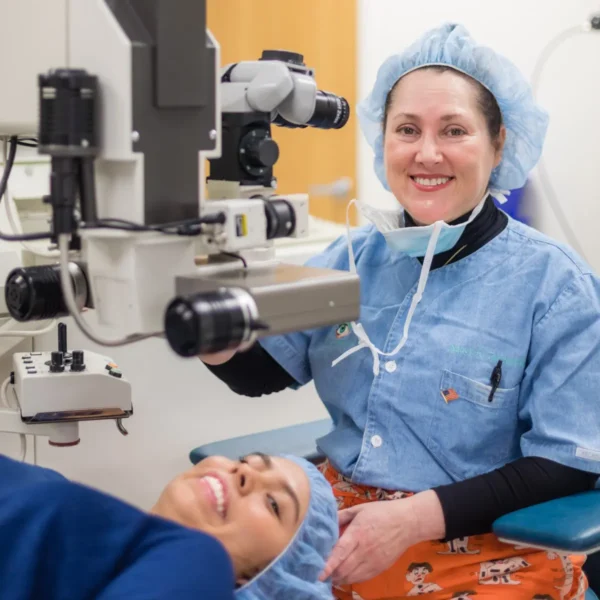


I had a great experience at Liberty Laser Eye Center. Dr. Nancy Tanchel and her entire team were extremely professional, kind, and made me feel comfortable throughout the whole process. They explained everything clearly and answered all of my questions, which really helped me feel confident before the procedure.
The surgery went smoothly and the staff was very supportive from start to finish. I’m very grateful to Dr. Tanchel and her team for their excellent care and professionalism.
Thank you all for helping me improve my vision. I truly appreciate the great work you do.

My vision wasn't terrible, but I was just sick of dealing with the hassle of contacts for sports until I came here. Great and professional business

I had a really good experience at Liberty Laser Eye Center. The staff was friendly and made me feel comfortable the whole time. The procedure was quick, and my vision is so much better now.

Informative staff offering careful evaluations and supportive patient care throughout the process.

Having LASIK surgery was the best thing I have ever done. Waking up every morning with the ability to see 20/20 without having to reach for my glasses or contacts is the ultimate freedom. The surgery was painless and the staff was incredible. I highly recommend it so don't wait!

Brought My grandmother for her eye exam. Jeeimy helped us and explained in detail such amazing team.

I’d been thinking about LASIK for years but kept putting it off out of sheer nervousness. The staff at Liberty are some of the kindest and most patient people I’ve ever met. It’s been a few months and I’m still not used to the freedom of just rolling out of bed and seeing.

I consider this the best investment I've ever made in myself, no question about it. The freedom of just rolling out of bed and being able to see is something I'll never take for granted.
There is no verified public information that Taylor Swift has undergone any eye surgery. Celebrities often have access to top-tier medical and aesthetic care, but their personal health decisions are private. In general, popular vision correction procedures include LASIK and PRK to eliminate the need for glasses or contacts, and cataract surgery to restore vision clouded by a natural lens opacity. The best procedure for any individual is determined through a comprehensive eye exam that assesses corneal thickness, prescription stability, and overall eye health. It is always recommended to consult with a qualified ophthalmologist to discuss personal suitability and the potential risks and benefits of any surgical option.
Advanced PRK, or Photorefractive Keratectomy, is a laser vision correction procedure that reshapes the cornea to correct refractive errors like nearsightedness, farsightedness, and astigmatism. It is termed "advanced" due to modern technological enhancements, such as wavefront-guided or topography-guided laser systems, which create a highly personalized treatment map of the eye for greater precision. Unlike LASIK, PRK does not involve creating a corneal flap; instead, the outer epithelial layer is gently removed before the laser application. This makes it a preferred option for individuals with thinner corneas or certain corneal irregularities. The recovery period is slightly longer than LASIK, but it offers excellent, stable long-term visual outcomes and is a proven, safe procedure.
While LASIK is not automatically ruled out after 40, the candidacy criteria become more complex. The primary reason for caution is the onset of presbyopia, the age-related loss of near vision that typically begins in the early to mid-40s. A standard LASIK procedure corrects distance vision but can leave a patient dependent on reading glasses. Surgeons must carefully evaluate the eye's prescription stability and overall health, including checking for early signs of conditions like cataracts or dry eye, which are more common with age. Many patients over 40 are excellent candidates for specialized approaches, such as monovision LASIK (correcting one eye for distance and one for near) or refractive lens exchange, which can address both presbyopia and cataracts. A comprehensive consultation is essential to determine the best vision correction plan.
To prepare the night before cataract surgery, follow your surgeon's specific instructions carefully. Typically, you will be asked to avoid eating or drinking anything after midnight if you are having sedation. Use any prescribed antibiotic eye drops as directed to reduce infection risk. Wash your face thoroughly, and avoid applying any makeup, creams, or lotions. Get a full night's rest to be well-rested for the procedure. Arrange for transportation, as you will not be able to drive yourself home. For a complete guide on preparation and what to expect, we recommend reading our detailed article, Essential Insights: What to Know Before Cataract Surgery » You’ll Be Surprised. This resource covers essential pre-operative steps to ensure your surgery is as smooth and successful as possible.
When searching for the best ophthalmologist in Fairfax, VA, it is crucial to consider board certification, subspecialty expertise, and patient reviews. Look for a surgeon who is fellowship-trained in a specific area like cornea, glaucoma, or refractive surgery, as this indicates advanced skill. The best practices utilize the latest diagnostic and surgical technology, such as wavefront-guided LASIK or advanced cataract surgery with premium lenses. A top ophthalmologist will provide a thorough consultation, clearly explaining all options without pressure. Personal rapport and a commitment to post-operative care are also key indicators of quality. Researching credentials and scheduling consultations with a few highly-regarded doctors is the most reliable way to find the right specialist for your vision needs.
Eye Specialists and Surgeons of Northern Virginia is a well-regarded practice in the region, offering comprehensive ophthalmology and optometry services. Patients can access a full spectrum of eye care, from routine vision exams and contact lens fittings to advanced surgical procedures like cataract surgery, LASIK, and treatment for glaucoma and retinal diseases. The team typically includes board-certified ophthalmologists, optometrists, and skilled support staff dedicated to providing personalized care. When choosing such a practice, it's important to verify the surgeons' credentials, experience with the latest technology, and patient reviews. A reputable center will prioritize a thorough consultation to discuss all treatment options, risks, and benefits to ensure the best possible visual outcomes for each individual.
When seeking the best ophthalmologist in Northern Virginia, it is important to consider board certification, extensive experience, and a strong reputation for patient care. Look for a specialist who offers a comprehensive range of services, from routine eye exams to advanced surgical procedures like LASIK and cataract surgery. The ideal practice will utilize the latest diagnostic and surgical technology. Patient reviews and personal referrals can provide valuable insight into a surgeon's skill and bedside manner. Ultimately, the best ophthalmologist for you is one who takes the time to understand your visual goals, thoroughly explains all options, and creates a personalized treatment plan in a comfortable, professional setting.


130 reviews

