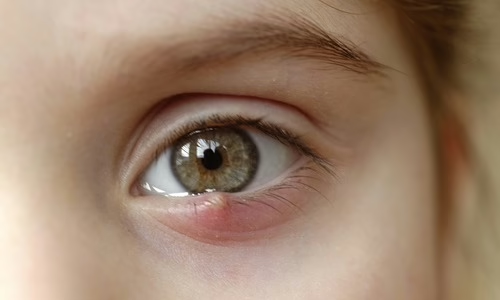
how to get rid of a stye overnight (Because Nobody Wants to Look Like They’ve Been Crying Over a Rom-Com)
We’ve all been there—waking up with a red, angry bump on your eyelid that makes you look like you lost a fight with a mosquito. Styres are the ultimate party crashers, showing up uninvited and refusing to leave. But before you panic and start Googling “emergency eye surgery near me” (relax, it’s not that serious), let’s talk about how to kick that Stye to the curb ASAP. And hey, if you’re in Vienna, Virginia, you’ve got the Liberty Laser Eye Center crew nearby for all things eye-related—though today, we’re sticking to stye survival tips.
Table of Contents
What Even Is a Stye? (Spoiler: It’s Not a Pimple)
Let’s get nerdy for a second. A stye is a tiny, painful abscess caused by a blocked oil gland in your eyelid. Think of it like a zit’s annoying cousin who overstays their welcome. They’re usually triggered by bacteria (thanks, dirty hands), stress, or leftover mascara. Fun fact: If you’re prone to styes, it might be time to rethink your makeup routine—or at least wash those brushes more often.
Types of Styes
There are two main types of styes:
External stye:
This type appears on the outside of your upper or lower eyelid. It is the most common type. It usually happens because of an infection in a hair follicle of an eyelash.
Internal stye:
This type forms on the inside of your eyelid, facing your eye. It is caused by an infection in the glands inside your eyelid that produce oil. These oils help keep your eyelid moist.
Symptoms of a Stye
The main sign of a stye is a painful, swollen bump on the edge of your eyelid near your eyelashes.
Other symptoms may include:
- Swelling of the eyelid (sometimes the whole eyelid)
- Discharge (fluid) from the eye
- Crusting on the eyelid
- Sensitivity to light
- Pain, soreness, or itching
- Watery eyes (extra tears)
- A feeling like something is in your eye (scratchy sensation)
Can You Really Zap a Stye Overnight? Let’s Get Real
We’re not gonna lie—styres are stubborn. while perfect overnight results aren’t guaranteed (unless you’ve got a magic wand), these tricks can shrink the little menace fast and ease the pain. Pro tip: The sooner you act, the better your odds.
Your Stye Emergency Kit: 6 Tricks to Try
1. Warm Compress: The OG Stye Buster
Grab a clean washcloth, soak it in warm (not scalding) water, and press it gently on your eyelid for 10–15 minutes. Repeat 3–4 times a day. Why it works: Heat unclogs the gland and speeds up drainage. Bonus points if you hum “Eye of the Tiger” while doing it.
2. Keep It Clean (No, Seriously)
Mix baby shampoo with warm water and gently wipe your eyelid. Avoid rubbing—aggressive scrubbing just pisses off the stye more. FYI: If you wear contacts, ditch them until the stye’s gone.
3. Tea Bag Trick: For the Aesthetic
A cooled chamomile or green tea bag works like a mini compress. The anti-inflammatory properties help reduce swelling. Plus, you’ll look ~zen~ while doing it.
4. Hands Off the Drama
Resist the urge to pop it! Squeezing a stye can spread bacteria and turn a minor issue into a “why is my face swollen?” disaster.
5. Over-the-Counter Relief
Try antibiotic ointments (like Stye™) or pain relievers. But—if the stye sticks around longer than a week, it’s time to call a pro.
6. Sleep It Off (Literally)
Your body heals best when you’re snoozing. Aim for 7–8 hours and skip the eye makeup.
When to Call the Pros (Hi, It’s Us!)
Most styes vanish on their own, but if yours is still partying after a week, or if your vision’s blurry, reach out to an eye doc STAT. At Liberty Laser Eye Center in Vienna, Virginia, we’re all about keeping your peepers healthy—whether it’s a pesky stye, Dry Eye Treatment, or discussing Lasik recovery tips for that crisp 20/20 vision.
Funny story: One patient came in panicking about a “giant stye”… turns out it was just a stubborn eyelash. (We laughed, they laughed, everyone got coffee.)
Stye Remedies: A Quick Comparison
| Remedy | Effectiveness | Time Commitment | Pros | Cons |
|---|---|---|---|---|
| Warm Compress | High | 10–15 mins/session | Cheap, easy, no side effects | Requires consistency |
| Tea Bags | Moderate | 10 mins/session | Soothing, natural | Mild results |
| OTC Ointments | Moderate-High | 2–3x daily | Fast relief | May cause irritation |
| Professional Drainage | Very High | 1 office visit | Immediate results | Requires appointment |
FAQs: Stye Edition
Q: Can I wear makeup with a stye?
A: Hard pass. Let your eyelid breathe—and toss old mascara to avoid reinfection.
Q: Are styes contagious?
A: Not really, but sharing eye makeup is like sharing a toothbrush. Just don’t.
Q: Why do I keep getting styes?
A: Could be clogged glands, stress, or poor hygiene. Pro move: Book an Annual Eye Exam with us at Liberty Laser Eye Center to rule out chronic issues like blepharitis.
Q: Does insurance cover stye treatment?
A: Usually, yes! Most plans cover basic care. For elective stuff like Lasik eye surgery or PresbyLASIK, we offer affordable payment options.
Prevention > Cure: How to Avoid Future Styres
- Wash your hands before touching your eyes.
- Replace eye makeup every 3–6 months.
- Manage stress (easier said than done, we know).
- Treat underlying conditions (Dry Eye Treatment, anyone?).
Hey, While We’re Talking About Eyes…
If you’re in the Washington DC area and tired of glasses, swing by Liberty Laser Eye Center. Whether you’re curious about Topography-Guided LASIK Surgery for Astigmatism or Advanced PRK Surgery for thin corneas, we’ve got the tech (and the best Lasik surgeons) to help. Fun fact: Our Wavefront Analysis customizes procedures so precisely, you’ll wonder why you didn’t do this sooner.
Final Thoughts: Eyes on the Prize
Styres suck, but they’re rarely serious. Stick to warm compresses, keep it clean, and please don’t pop it. And if you’re ever in Vienna, Virginia, remember that Liberty Laser Eye Center isn’t just about laser eye surgery—we’re your go-to for everything from Corneal Cross-Linking for Keratoconus to routine Annual Eye Exams.
TL;DR: Treat the stye, skip the stress, and if all else fails—call us. We’ll fix your eyesight and your bad day. 😉
Ready to See Clearly?
Schedule a consultation at Liberty Laser Eye Center today. We’re your nearest experts for Lasik, Dry Eye Treatment, and more. Check out our reviews—we’re kinda a big deal. 👀
Related Articles
People Also Ask
While a tea bag is not a cure for a stye, it can offer temporary relief from discomfort. The warmth from a steeped, cooled tea bag acts similarly to a warm compress, which is the standard home remedy to encourage the clogged oil gland to drain. The tannins in black or green tea may also provide mild anti-inflammatory benefits. However, a tea bag will not eliminate the bacterial infection. For persistent or painful styes, professional care is recommended. At Liberty Laser Eye Center, we advise that if a stye does not improve within 48 hours or affects your vision, you should schedule an eye exam for safe and effective treatment options.
Styes are typically triggered by a bacterial infection, most commonly Staphylococcus aureus, which enters the oil glands at the base of your eyelashes. Common contributing factors include touching your eyes with unwashed hands, using expired or shared eye makeup, leaving makeup on overnight, or poor contact lens hygiene. Chronic conditions like blepharitis, rosacea, or high stress levels can also increase your risk. Additionally, rubbing your eyes when they are itchy or tired can introduce bacteria. At Liberty Laser Eye Center, we advise patients to maintain strict eyelid hygiene and avoid sharing personal eye care items to reduce recurrence. If a stye persists beyond a week or affects your vision, seek professional evaluation.
To draw out a stye, the most effective and safe method is to apply a warm compress. Soak a clean cloth in warm water, wring it out, and place it over your closed eyelid for 10 to 15 minutes, three to four times daily. The consistent heat helps bring the clogged oil gland to a head, allowing it to drain naturally on its own. Avoid squeezing or popping the stye, as this can spread infection deeper into the eyelid. You can also gently clean the eyelid with diluted baby shampoo. If it does not improve within a week or becomes very painful, seek professional care. At Liberty Laser Eye Center, we recommend a comprehensive eye exam to rule out more serious conditions.
No, Benadryl will not get rid of a stye. A stye is a bacterial infection of an eyelash follicle or oil gland, while Benadryl is an antihistamine designed to block allergic reactions. Therefore, it has no effect on the bacteria causing the stye. To treat a stye, apply a warm compress to the area for 10-15 minutes, four times a day, to help it drain naturally. Avoid squeezing it, as this can spread the infection. If the stye persists or becomes painful, consult an eye care professional. At Liberty Laser Eye Center, we can evaluate persistent eyelid issues to ensure proper healing and rule out more serious conditions.
For a stye, most cases are caused by a bacterial infection, and over-the-counter lubricating eye drops can provide temporary relief from dryness and irritation. However, the primary treatment is not a medicated drop but rather a warm compress applied for 10-15 minutes, four times a day, to help the gland drain. If you need a drop, preservative-free artificial tears are the safest choice to avoid further irritation. Prescription antibiotic drops, such as erythromycin, are reserved for persistent or severe infections and require a doctor's evaluation. At Liberty Laser Eye Center, we advise against using redness-relief drops, as they can mask symptoms. If the stye does not improve within 48 hours or affects your vision, schedule an appointment for a proper diagnosis and treatment plan.
A stye on the upper eyelid is a localized infection of an oil gland, and most resolve on their own within a week. The most effective home treatment is to apply a clean, warm compress to the closed eyelid for 10 to 15 minutes, three to four times daily. This helps draw the pus to the surface and encourages drainage. You should also gently clean the eyelid with diluted baby shampoo and avoid wearing makeup or contact lenses until it heals. Never squeeze or pop the stye, as this can spread the infection. If the stye persists for more than a week, becomes very painful, or affects your vision, seek professional medical care. At Liberty Laser Eye Center, we can safely evaluate persistent eyelid issues to rule out more serious conditions.
A stye is a common, painful bump on the eyelid caused by a bacterial infection. To treat it effectively, apply a warm compress for 10-15 minutes, four times a day. This helps draw out the infection and promotes drainage. Avoid squeezing or popping the stye, as this can spread the infection. Keep the area clean by washing your hands frequently and using a mild, tear-free shampoo on your lashes. Over-the-counter pain relievers can help manage discomfort. If the stye persists for more than a week or affects your vision, consult a professional. For additional relief and preventive care, you may find our internal article titled Quick Remedies for Swollen Eyelids: Fast Healing Tips helpful, as it covers related eyelid health tips. At Liberty Laser Eye Center, we prioritize your eye health and are here to guide you through proper stye management.
An internal stye, or hordeolum, is a blocked oil gland, and treatment focuses on warm compresses applied for 10-15 minutes, four times daily, to promote drainage. Over-the-counter antibiotic ointments are not typically effective because they do not penetrate the gland. For persistent cases, a doctor may prescribe a topical antibiotic like erythromycin, or in severe situations, an oral antibiotic. Never squeeze a stye, as this can spread infection. If it does not improve within 48 hours, or if swelling and pain increase, seek professional care. At Liberty Laser Eye Center, we can evaluate the stye and recommend the safest, most effective medical treatment for your specific eye health needs.
Treating a stye often comes with many old wives' tales, but most are ineffective or even harmful. Common myths include rubbing a gold ring on the eye or applying a warm tea bag directly to the lid, which risk introducing bacteria or causing further irritation. The medically sound approach is to apply a clean, warm compress for 10 to 15 minutes, four times a day, to help the clogged oil gland drain naturally. You should also avoid squeezing the stye, as that can spread the infection. If it persists for more than a week or affects your vision, professional care is needed. At Liberty Laser Eye Center, we recommend safe, evidence-based methods over folklore for your ocular health.
A stye, or hordeolum, begins as a small, red, tender bump on the eyelid margin, often resembling a pimple. It typically starts with localized swelling, mild discomfort, and a sensation of grittiness or a foreign body in the eye. This initial stage is caused by a bacterial infection, usually Staphylococcus, in an eyelash follicle or an oil gland. You might notice slight tearing and increased light sensitivity. To manage these early symptoms, apply a warm compress for 10 to 15 minutes, four times a day, to help the clogged gland drain naturally. Avoid squeezing or rubbing the area, as this can spread the infection. If the stye does not improve within 48 hours, or if redness and swelling spread, seek professional care. At Liberty Laser Eye Center, we can provide a proper diagnosis and safe treatment plan to prevent complications.
A stye is a small, painful lump caused by a bacterial infection of an eyelash follicle. While it is rare for a stye to disappear completely overnight, you can significantly reduce swelling and speed up healing. For kids, the safest and most effective method is a warm compress. Soak a clean washcloth in warm (not hot) water, wring it out, and place it over the closed eye for 5 to 10 minutes. Repeat this several times throughout the evening. This helps bring the infection to a head and encourages drainage. Never squeeze or pop a stye, as this can spread infection. Ensure your child washes their hands frequently and avoids rubbing their eyes. If the stye persists, worsens, or affects vision, consult a pediatrician. For persistent or recurring styes, a professional evaluation at Liberty Laser Eye Center can provide tailored care and rule out underlying conditions.