
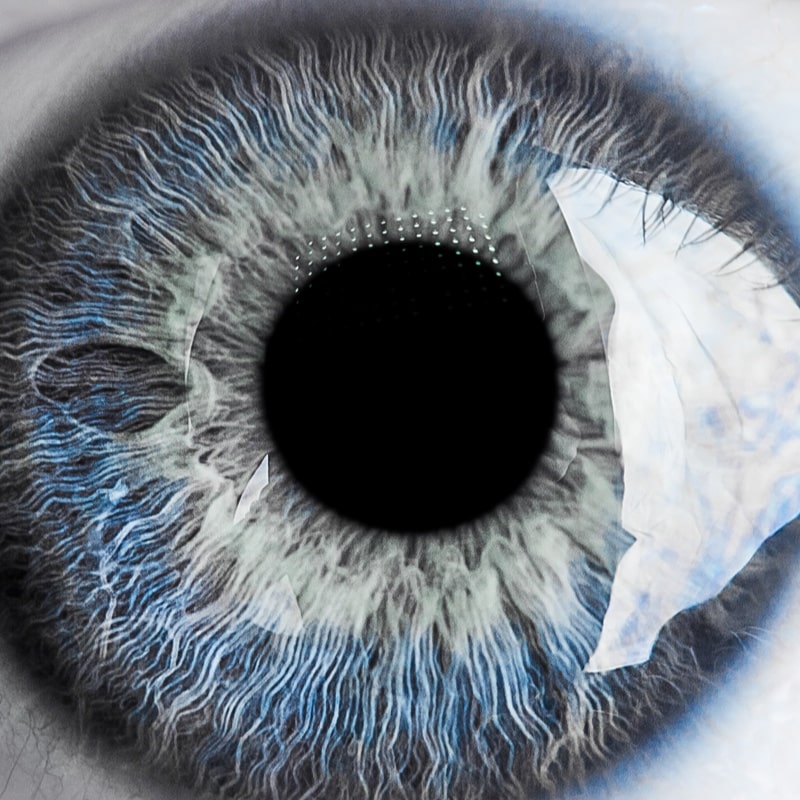

I had a great experience at Liberty Laser Eye Center. Dr. Nancy Tanchel and her entire team were extremely professional, kind, and made me feel comfortable throughout the whole process. They explained everything clearly and answered all of my questions, which really helped me feel confident before the procedure.
The surgery went smoothly and the staff was very supportive from start to finish. I’m very grateful to Dr. Tanchel and her team for their excellent care and professionalism.
Thank you all for helping me improve my vision. I truly appreciate the great work you do.

My vision wasn't terrible, but I was just sick of dealing with the hassle of contacts for sports until I came here. Great and professional business

I had a really good experience at Liberty Laser Eye Center. The staff was friendly and made me feel comfortable the whole time. The procedure was quick, and my vision is so much better now.

Informative staff offering careful evaluations and supportive patient care throughout the process.

Having LASIK surgery was the best thing I have ever done. Waking up every morning with the ability to see 20/20 without having to reach for my glasses or contacts is the ultimate freedom. The surgery was painless and the staff was incredible. I highly recommend it so don't wait!

Brought My grandmother for her eye exam. Jeeimy helped us and explained in detail such amazing team.

I’d been thinking about LASIK for years but kept putting it off out of sheer nervousness. The staff at Liberty are some of the kindest and most patient people I’ve ever met. It’s been a few months and I’m still not used to the freedom of just rolling out of bed and seeing.

I consider this the best investment I've ever made in myself, no question about it. The freedom of just rolling out of bed and being able to see is something I'll never take for granted.
Wavefront LASIK, also known as custom or wavefront-guided LASIK, is often considered worth the investment for many patients seeking high-quality vision correction. This advanced technology creates a detailed 3D map of your eye, allowing the laser to address not only common refractive errors like nearsightedness and astigmatism but also subtle, higher-order aberrations that can affect night vision and contrast sensitivity. By treating these finer imperfections, the procedure aims to provide sharper, clearer vision than standard LASIK, particularly in low-light conditions. For a deeper understanding of how modern laser technology enhances outcomes, we recommend reading our internal article, “Bladeless” LASIK: Marketing Hype Or Real Advantage?. As with any procedure, a comprehensive consultation is essential to determine if your specific visual profile makes you an ideal candidate for this premium option.
Wave front analysis is a sophisticated diagnostic technology used in ophthalmology to create a highly detailed map of the eye's optical system. It measures how light waves are distorted as they pass through the cornea and lens, identifying even the most minute imperfections—called higher-order aberrations—that standard prescriptions cannot correct. This data is crucial for planning customized laser vision correction procedures, such as wavefront-guided LASIK. By tailoring the laser treatment to the eye's unique imperfections, surgeons can often achieve vision quality that surpasses what is possible with glasses or standard contact lenses, potentially improving contrast sensitivity and reducing nighttime glare.
LASIK is a highly effective procedure, but it does have limits. It is typically approved to treat up to approximately -12.00 diopters of nearsightedness (myopia), up to +6.00 diopters of farsightedness (hyperopia), and up to 6 diopters of astigmatism. However, the "worst" eyesight it can fix varies significantly per individual. Factors like corneal thickness, curvature, pupil size, and overall eye health are more critical than the prescription number alone. A person with a very high prescription may have corneas too thin for a safe LASIK procedure. In such cases, alternative vision correction surgeries, such as ICL (Implantable Collamer Lens), might be recommended. A comprehensive consultation is essential to determine candidacy.
A wavefront exam, also known as wavefront-guided analysis, is a highly detailed diagnostic procedure that maps the unique imperfections in your entire optical system. During the exam, you will look into a specialized device while a technician captures precise measurements. The process is non-invasive and quick, typically taking only a few minutes per eye. The device projects a low-energy light wave into your eye and analyzes how it is distorted as it reflects back, creating a detailed 3D map of your vision. This map, far more precise than a standard glasses prescription, identifies higher-order aberrations like glare and halos. This data is crucial for planning customized laser vision correction procedures, such as LASIK or PRK, to achieve the sharpest possible visual outcome.
Wavefront testing, also known as wavefront analysis or aberrometry, is a sophisticated diagnostic technology used to map the unique imperfections in the way an individual's eye focuses light. This goes far beyond a standard prescription for nearsightedness, farsightedness, and astigmatism. The test measures higher-order aberrations—subtle irregularities in the cornea and lens—that can cause issues like glare, halos, and poor night vision. The resulting detailed map guides customized laser vision correction procedures, such as wavefront-optimized or wavefront-guided LASIK. This personalized approach allows surgeons to tailor the treatment to the patient's specific optical system, often resulting in sharper, higher-quality vision than what is achievable with glasses or standard contacts.
Wavefront aberrometry is a sophisticated diagnostic technology used in ophthalmology to measure how light travels through the eye. Unlike traditional methods that only assess basic refractive errors like nearsightedness, farsightedness, and astigmatism, an aberrometer maps the entire optical system of the eye. It identifies higher-order aberrations, which are subtle imperfections in the cornea and lens that can cause issues like glare, halos, and reduced night vision. This detailed map, often called a wavefront map, is crucial for planning customized laser vision correction procedures such as wavefront-guided LASIK. By addressing these unique imperfections, the technology aims to achieve visual outcomes that can potentially surpass the clarity provided by standard glasses or contact lenses.
A wavefront analyzer is a sophisticated diagnostic tool used in ophthalmology to measure how light travels through the eye's optical system. It goes beyond standard prescriptions by mapping unique imperfections called higher-order aberrations, which affect vision quality even when standard refractive errors are corrected. This detailed map guides customized laser vision correction procedures, such as wavefront-optimized or wavefront-guided LASIK, aiming to provide sharper, clearer vision with potentially reduced risks of glare and halos at night. The analysis is a key step in determining a patient's candidacy for advanced laser eye surgery and in planning a truly personalized treatment.


130 reviews

