
Alright, let’s have a real talk about something most people don’t think about until after the fact: the LASIK warranty. We get it. When you’re researching Lasik eye surgery, you’re laser-focused (pun absolutely intended) on finding the best Lasik surgeon, reading reviews, and maybe sweating a little over the cost. The warranty pamphlet often gets tossed aside with the rest of the “fine print.”
But what if we told you that understanding your LASIK warranty is just as important as the surgery itself? It’s the safety net for your investment in clear vision. So, grab a coffee, get comfortable, and let’s break this down together. We’re going to walk you through everything you need to know, and yeah, we might crack a joke or two along the way. We’re from Liberty Laser Eye Center over in Vienna, Virginia, and we’ve seen it all, so we’re speaking from experience.
What Even Is a LASIK Warranty, Anyway?
Think of it like the best insurance policy you hopefully never have to use. You’re making a significant investment in your quality of life, and a warranty is your center’s promise to stand behind their work. It’s not some magical forcefield that guarantees you’ll never need reading glasses (thanks, Presbyopia), but it is a commitment to address certain specific outcomes.
Most warranties cover two main things:
- The Enhancement Policy: This is the big one. It covers a follow-up procedure (often called an “enhancement”) if your vision changes significantly over time. This is crucial because our eyes aren’t statues; they can change. This policy is your guarantee that if your nearsightedness, farsightedness, or astigmatism starts to creep back within a certain period, you won’t be paying full price—or sometimes anything at all—to get it corrected.
- The Medical Care Clause: This covers the medical management of any rare, surgery-related complications that might arise during the initial healing period.
Not All Warranties Are Created Equal (Here’s the Fine Print)
This is where the conversation gets real. When you’re searching for “Lasik doctors near me” or “affordable Lasik,” the warranty details can tell you a lot about a center’s confidence in its work. FYI, the cheapest option often comes with the most limited warranty. You get what you pay for, and that includes peace of mind.
Let’s look at the common types of warranties you’ll encounter:
The “Basic” Warranty
This is often the bare minimum. It might cover enhancements for a short period, like one year. The catch? It often comes with a hefty list of exclusions and might require you to pay facility or OR fees for any touch-up procedure. IMO, this type of warranty is better than nothing, but it leaves a lot of potential future risk on your shoulders.
The “Lifetime” or Long-Term Warranty
This is what we offer at Liberty Laser Eye Center and what you should be looking for. A true lifetime warranty promises to cover enhancement procedures for life, as long as you meet certain simple criteria, like getting an annual eye exam. This shows a center stands by its results long-term.
But wait—”lifetime” can sometimes be a tricky word. You have to ask: Whose lifetime? The company’s? The technology’s? Yours? Always get clarity on that.
The “Why Bother?” Warranty
We’re being sarcastic here, but some places might offer a warranty that’s so filled with loopholes and exclusions it’s practically useless. Always read the details!
Here’s a quick table to compare what you might find:
| Warranty Feature | The Basic Plan | The Liberty Lifetime Plan (The One You Want) |
|---|---|---|
| Coverage Period | 1-2 Years | Lifetime |
| Enhancement Coverage | Partial (may have fees) | Full (no surgeon fee) |
| Key Requirement | None | Annual Eye Exam with any doctor |
| Transferable | No | No |
| What it Says | “We’ll fix it if it goes wrong right away.” | “We’re partners in your vision for life.” |
Why Would You Even Need to Use the Warranty?
Great question. It’s not because the surgery “failed.” LASIK has an incredibly high success rate. Most of the time, if a follow-up is needed, it’s due to natural changes in your prescription or your eyes healing in a slightly unexpected way. Our eyes are biological, not mechanical, so a small percentage of people might need a fine-tuning procedure years down the line.
This is where your warranty becomes golden. Instead of stressing about a new price tag, you simply give your center a call, and they guide you through the next steps. It turns a potential headache into a simple check-up.
The Golden Ticket: Your Annual Eye Exam
This is the single most important part of most long-term warranties. You must get a yearly eye exam. It’s not just a hoop to jump through; it’s genuinely good for your health.
This exam does two things:
- It provides a paper trail that proves your eyes are healthy and any vision change is due to a normal prescription shift and not an underlying condition.
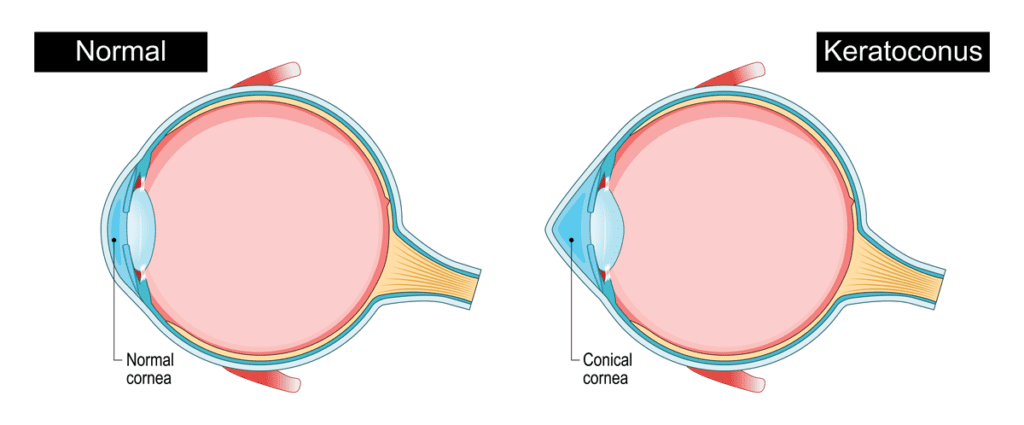
- It allows your eye doctor to monitor for other issues like glaucoma, cataracts, or keratoconus, which are separate from your LASIK outcome.
Seriously, just get the exam. It’s the easiest way to keep your warranty active and your eyes healthy. It’s a win-win.
Beyond the Standard Warranty: The Tech That Makes It Possible
At a center like ours in Washington DC, the warranty is backed by the technology we invest in. Not all eye surgery types are the same, and not all technology is created equal. Advanced diagnostics are what allow us to offer such strong warranties confidently.
- Wavefront Analysis: This is like getting a fingerprint of your eye. It maps out unique imperfections that standard exams miss, allowing for a truly customized treatment.
- Topography-Guided LASIK Surgery: This takes customization even further, creating a 3D map of your cornea’s surface to guide the laser with insane precision. This is a game-changer for people with irregular astigmatism.
- Advanced PRK Surgery: For some patients, PRK is a better option than LASIK. Having a warranty that covers all the Lasik eye surgery alternatives we offer, including PRK, is a sign of a comprehensive practice.
We use this tech not just because it’s cool (which it is), but because it leads to better, more stable outcomes. And better outcomes mean we’re a lot more comfortable promising to take care of you for the long haul.
Your To-Do List: How to Be a Warranty Pro
So, how do you make sure you’re fully covered? Let’s get tactical.
- Ask About the Warranty During Your Consultation: Any center that hesitates or gives you vague answers is a major red flag. The team at Liberty Laser Eye Center will go over every detail of our lifetime warranty with you upfront. No secrets.
- Get It in Writing: Do not, we repeat, do not rely on a verbal promise. The written warranty document is the only thing that matters. Read it, understand it, and file it away somewhere safe.
- Understand the Requirements: Know what you need to do to keep it valid. Is it the annual eye exam? Make a calendar reminder right now.
- Keep Your Records: Hold onto your surgical paperwork and every single eye exam report. Having a complete history makes any future process smooth and simple.
Let’s Answer Your Burning Questions
Q: If I have a lifetime warranty and need an enhancement 10 years later, will I be treated with outdated technology?
A: An excellent question! At a reputable center like ours, the enhancement will be performed using the latest technology available at that time. You won’t be getting a procedure from 2005; you’ll get the best we have to offer when you need it.
Q: Does the warranty cover conditions like dry eyes?
A: Typically, a LASIK warranty covers the enhancement procedure itself. Conditions like dry eye treatment are managed as part of your standard medical care. Many centers, including ours, will provide complimentary dry eye treatments during the initial Lasik recovery period, but long-term management is separate from the surgical warranty.
Q: What if I move away from the Washington DC area?
A: This is a common concern. Most warranties, including ours, are tied to the original surgical center. If you move, you’d need to return to your original center for any warranty-covered procedure. It’s one reason why choosing a center you trust and can realistically return to is so important. So, while searching for the nearest clinic is tempting, sometimes the closest isn’t the best long-term partner.
Q: Are there any conditions that would void my warranty?
A: Absolutely. This is why the fine print matters. Your warranty will likely be voided if you develop an unrelated eye disease (like cataracts or progressive keratoconus) that affects your vision, if you get pregnant and your prescription changes (hormones are wild!), or if you fail to get your annual eye exam.
The Bottom Line: Peace of Mind is Priceless
At the end of the day, your LASIK warranty isn’t just a document; it’s a promise. It’s a promise from your surgical team that they are committing to your vision for the long run. When you’re comparing Lasik eye surgeons, don’t just look at the upfront cost. Consider the value of a lifetime partnership.
We’re obviously proud of the commitment we make to our patients here at Liberty Laser Eye Center in Vienna, Virginia. We believe so strongly in our technology and our surgeons’ skills that we back it up with one of the best warranties in the business. We want you to see clearly today, tomorrow, and twenty years from now.
So, do your homework, ask the tough questions, and choose a center that gives you confidence both in the procedure and in the decades that follow. Your future self will thank you for it.
Ready to talk about your vision future with a team that offers a true lifetime commitment? Give us a call. Let’s chat.
Related Articles
People Also Ask
Yes, most reputable LASIK providers offer a warranty or enhancement plan. This is typically a lifetime assurance policy that covers future touch-up procedures if your vision changes significantly over time. It is crucial to understand that this is not a guarantee of perfect vision forever, as some natural regression or age-related changes like presbyopia can still occur. The warranty usually has specific conditions, such as requiring annual eye exams and not covering changes due to medical conditions like cataracts. Always review the detailed terms of the surgeon's specific policy, as coverage varies. A strong warranty reflects the provider's confidence in their outcomes and commitment to patient care.
The value of LASIK when not covered by insurance is a significant personal and financial consideration. While the upfront cost, often ranging from $2,000 to $3,000 per eye, can be substantial, many patients find it a worthwhile long-term investment. You eliminate recurring expenses for prescription glasses, contact lenses, solutions, and eye exams related to vision correction. The convenience of clear, unaided vision for daily activities, sports, and travel is a major benefit. It is crucial to have a thorough consultation with a qualified surgeon to assess your candidacy and discuss realistic outcomes. Financing plans are commonly available to make the procedure more accessible. For many, the lasting improvement in quality of life and freedom from corrective eyewear justifies the out-of-pocket expense.
The LasikPlus Lifetime Commitment is a warranty program for qualifying patients. It is not a traditional "guarantee" of perfect vision, but rather an assurance that if a patient's vision changes and requires an enhancement procedure after the initial LASIK surgery, it may be covered. Key conditions typically apply: the patient must have annual eye exams to monitor vision stability, and the changes must be due to natural shifts in the prescription, not due to conditions like cataracts. This program underscores the clinic's confidence in their outcomes and provides long-term value, though the specific terms and eligibility are detailed in the patient's individual contract. It is always crucial for patients to review all program details directly with the provider before surgery.
While LASIK does not last forever, it is overwhelmingly considered a worthwhile investment for most patients. The procedure permanently reshapes the cornea to correct vision, and for the vast majority, the results are stable for decades. The primary reason vision may change later in life is the natural, age-related condition called presbyopia (the need for reading glasses) or the development of cataracts, neither of which are caused by LASIK. These are normal aging processes that would occur with or without the surgery. The long-term satisfaction rates are exceptionally high, as detailed in our internal review The 10-Year LASIK Satisfaction Survey Results, which confirms that patients value the many years of clear, glasses-free vision. For most, the freedom from daily dependence on corrective lenses for a significant portion of their adult life makes the procedure highly valuable.
ClearSight is a brand name associated with laser hair removal technology, and reviews typically focus on its efficacy, comfort, and value compared to other systems. Professional reviews often note that ClearSight devices, which are generally diode lasers, are designed for in-clinic use and are praised for their speed in treating larger body areas. The consensus in industry standards is that diode lasers like those from ClearSight offer a good balance of penetration and melanin absorption, making them suitable for a range of skin types when operated by a trained professional. Patient reviews frequently highlight the importance of the clinic's expertise over the machine alone; a skilled technician using ClearSight can deliver excellent, long-term hair reduction. As with any cosmetic procedure, results vary, and a consultation to assess individual hair and skin type is always recommended.
The cost for clear sight lens replacement varies based on the specific device model, lens material, and service provider. For most standard laser systems, replacement lenses can range from $200 to $800 per unit, with high-precision or specialty coatings increasing the price. Labor for professional installation and calibration typically adds $100 to $300 to the total service invoice. It is strongly advised to use manufacturer-approved optics and certified technicians to maintain system integrity and warranty coverage. Always request a detailed quote that includes parts, labor, and any potential shipping fees before authorizing service to avoid unexpected charges.