
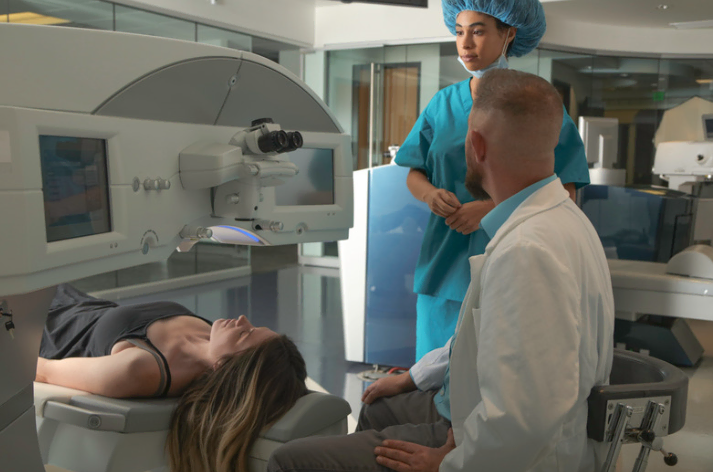
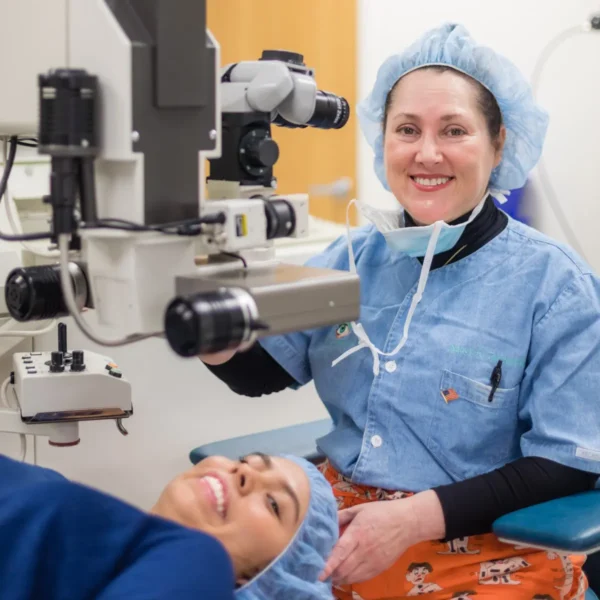

I had a great experience at Liberty Laser Eye Center. Dr. Nancy Tanchel and her entire team were extremely professional, kind, and made me feel comfortable throughout the whole process. They explained everything clearly and answered all of my questions, which really helped me feel confident before the procedure.
The surgery went smoothly and the staff was very supportive from start to finish. I’m very grateful to Dr. Tanchel and her team for their excellent care and professionalism.
Thank you all for helping me improve my vision. I truly appreciate the great work you do.

My vision wasn't terrible, but I was just sick of dealing with the hassle of contacts for sports until I came here. Great and professional business

I had a really good experience at Liberty Laser Eye Center. The staff was friendly and made me feel comfortable the whole time. The procedure was quick, and my vision is so much better now.

Informative staff offering careful evaluations and supportive patient care throughout the process.

Having LASIK surgery was the best thing I have ever done. Waking up every morning with the ability to see 20/20 without having to reach for my glasses or contacts is the ultimate freedom. The surgery was painless and the staff was incredible. I highly recommend it so don't wait!

Brought My grandmother for her eye exam. Jeeimy helped us and explained in detail such amazing team.

I’d been thinking about LASIK for years but kept putting it off out of sheer nervousness. The staff at Liberty are some of the kindest and most patient people I’ve ever met. It’s been a few months and I’m still not used to the freedom of just rolling out of bed and seeing.

I consider this the best investment I've ever made in myself, no question about it. The freedom of just rolling out of bed and being able to see is something I'll never take for granted.
Presbyopia is the age-related loss of near vision, typically beginning after age 40, and it cannot be cured by standard LASIK surgery. This is because presbyopia is caused by a hardening of the eye's natural lens, not by an irregular corneal shape which LASIK corrects. However, several laser vision correction strategies can reduce dependence on reading glasses. These include monovision LASIK, where one eye is corrected for distance and the other for near vision, and presbyLASIK or blended vision techniques that create a multifocal effect on the cornea. The best option depends on a thorough evaluation of your eyes, visual needs, and lifestyle. A consultation with a qualified surgeon is essential to determine if you are a candidate for these specialized approaches.
The price of LASIK can vary significantly based on geographic location, the technology used, the surgeon's experience, and the specific needs of the patient. While $4000 is within the typical national range, which often spans from $2,000 to $3,000 per eye, it is crucial to evaluate what that quote includes. A comprehensive price should cover all pre-operative consultations, the procedure itself, and all necessary post-operative care. Be wary of prices that seem unusually low, as they may exclude important follow-up visits or use outdated technology. The most important factor is the value you receive for your investment, which includes the surgeon's expertise, the quality of the diagnostic equipment, and the type of laser technology employed. Always schedule a thorough consultation to understand the specifics of your quote and ensure it represents a good long-term investment in your vision.
Taylor Swift has not publicly disclosed specific personal reasons for undergoing LASIK surgery. However, the general motivations for choosing LASIK are well-understood within the industry. The primary goal is to achieve freedom from glasses and contact lenses, which can be particularly beneficial for a performer with a demanding schedule involving travel, stage lighting, and long hours. LASIK corrects common refractive errors like nearsightedness, farsightedness, and astigmatism by reshaping the cornea. For many public figures, the convenience and improved quality of life are significant factors. It is a quick, outpatient procedure with a high success rate, allowing for a rapid return to normal activities, which is essential for someone with a career as dynamic as Swift's.
The long-term outcomes of LASIK are generally very positive, with the majority of patients enjoying stable, clear vision a decade later. The procedure permanently reshapes the cornea, and this correction is designed to last a lifetime. For most, the prescription stabilized in the months following surgery remains constant. However, it's important to understand that LASIK does not stop the natural aging processes of the eye. Around age 40, presbyopia—the normal loss of near vision—will occur, requiring reading glasses for close work regardless of LASIK history. Some patients may also experience minor, age-related prescription changes. Regular eye exams remain essential to monitor overall eye health. For more detailed information on long-term considerations, including contact lens use, you can refer to our internal article Wearing Contacts After LASIK: What You Need to Know 10 Years Later.


130 reviews

