
It’s one of those things you don’t think about until it happens. You’re reading a menu, driving home on the Dulles Toll Road, or trying to focus on a screen, and there it is—a little shadow, a wispy thread, or a dark speck drifting across your field of vision. You blink, it moves. You look directly at it, it slides away. Eye floaters are rarely a medical emergency, but they can be an absolute nuisance, and for some people, they start to interfere with daily life in a real way.
We’ve spent years working with patients here in Northern Virginia who come in frustrated, sometimes scared, often just tired of swatting at things that aren’t there. The conversation usually starts the same way: “Is this normal?” The short answer is yes—most floaters are harmless. But the longer, more honest answer is that “normal” doesn’t mean you have to live with them. There are professional strategies for managing floaters, and not all of them involve surgery.
Key Takeaways
- Most floaters are benign but can become disruptive over time.
- Observation and adaptation work for many, but not everyone.
- Laser treatment (vitreolysis) and surgery (vitrectomy) are options with real trade-offs.
- A thorough exam is non-negotiable before considering any intervention.
- Lifestyle adjustments and mental adaptation are underrated tools.
Table of Contents
What Floaters Actually Are (And What They Aren’t)
Floers are tiny clumps of collagen or protein that form inside the vitreous—the clear, jelly-like substance that fills the inside of your eye. As we age, that gel naturally shrinks and pulls away from the retina. This process is called posterior vitreous detachment (PVD), and it’s the most common cause of new floaters. It happens to nearly everyone eventually, usually after age 50, though it can occur earlier, especially in nearsighted people or after an injury.
What floaters aren’t? They aren’t bugs, dust on the lens, or hallucinations. We’ve had patients clean their glasses obsessively or even try to rinse their eyes out, thinking something is stuck. That frustration is real, but it helps to understand the anatomy. The floater is casting a shadow on the retina, and your brain is trying to interpret that shadow as a real object.
The vast majority of PVD-related floaters settle down over six to twelve months. The brain learns to ignore them—a process called neuroadaptation. But for a subset of people, the floaters don’t settle. They stay large, numerous, or positioned right in the central line of sight. That’s when people start looking for management strategies beyond just waiting.
When Ignoring Them Stops Working
We’ve seen a lot of patients who tried the “just ignore it” approach for a year or two before walking through our doors. Some people adapt beautifully—they genuinely stop noticing. Others find that the floaters interfere with reading, driving, or even just enjoying a sunny day. There’s no shame in that. The human brain is remarkable, but it can only tune out so much.
One patient told us he couldn’t play catch with his son anymore because the floater in his right eye looked like a fast-moving baseball coming at him. That’s not just annoying—that’s a quality-of-life issue. Another woman who worked as an editor said she spent more time trying to “read around” a floater than actually reading the text. These are the cases where professional management becomes relevant.
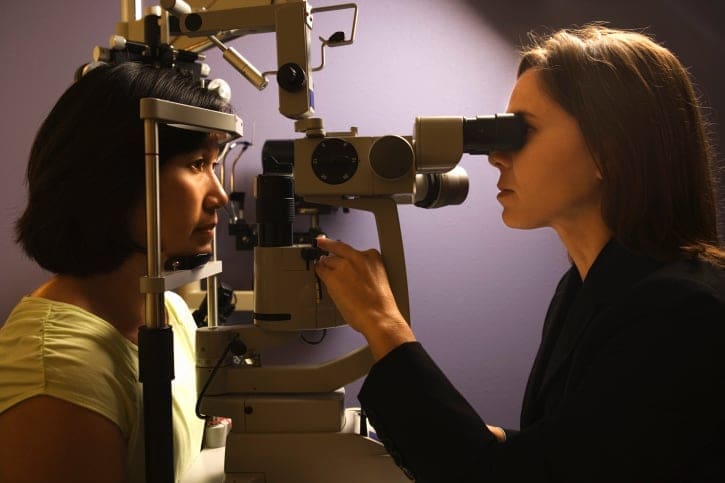
But here’s the critical point: before you even think about treatment, you need a dilated eye exam. Not a quick screening at the optometrist. A full exam with dilation, and possibly imaging, to rule out retinal tears or detachments. Floaters can sometimes be a symptom of something more serious, especially if they appear suddenly with flashes of light. If that happens, it’s not a conversation about management—it’s a trip to the emergency room.
The Observation and Adaptation Approach
For most people, the best strategy is still the most boring one: wait, adapt, and check back in six months. We’re not saying that to dismiss anyone’s frustration. We’re saying it because the risks of intervention, while low, are real. And because many floaters genuinely do become less noticeable over time.
Adaptation isn’t passive. There are practical things you can do. Adjusting screen brightness and contrast can reduce the shadow effect. Wearing sunglasses on bright days helps—not because the floaters disappear, but because the reduced light makes the shadows less distinct. Some people find that looking up and down quickly shifts the floater out of their central vision temporarily. It sounds silly, but it works for some.
We also recommend a simple mental reframe. Instead of fighting the floater, acknowledge it. “There it is. It’s harmless. I can still see what I need to see.” That sounds like pop psychology, but there’s real neuroscience behind it. The anxiety of trying to escape the floater actually makes you more aware of it. Relaxing into the experience often reduces the perceived severity.
This approach isn’t right for everyone. If you’ve waited a year and your floaters are worse, or if they’re genuinely interfering with your ability to work or drive safely, it’s time to talk about active treatment.
Laser Vitreolysis: The Middle Ground
Laser treatment for floaters, officially called vitreolysis, uses a YAG laser to break up larger floaters into smaller, less noticeable pieces. It’s an in-office procedure, takes about 20 minutes, and requires no incisions. Sounds ideal, right? It can be, but it has real limitations.
The laser works best on floaters that are well-separated from the retina and lens. A single, large, central floater is a good candidate. Multiple small floaters scattered throughout the vitreous? Not so much. The laser can also create smaller floaters in the process of breaking up the big one, which sometimes makes the situation worse before it gets better.
We’ve referred patients for vitreolysis, and we’ve also advised against it. The key is honest expectations. Most studies show that about 60–70% of patients report significant improvement after laser treatment. That’s good, but it’s not 100%. And there’s a small risk of retinal damage, cataract formation, or increased eye pressure. For a procedure that’s technically “optional,” those risks matter.
One thing we’ve learned from experience: don’t let anyone rush you into laser treatment. A responsible LASIK surgeon or retina specialist will do a thorough exam first, discuss the location of your floaters, and be honest about whether they think the laser will help. If they’re promising a perfect result, get a second opinion.
Vitrectomy: The Surgical Option
For the small group of people with debilitating floaters that don’t respond to observation or laser, there’s vitrectomy. This is a surgical procedure where the vitreous gel—along with the floaters inside it—is removed and replaced with a clear saline solution. It’s the most definitive treatment available.
But it’s also the most invasive. Vitrectomy is performed in an operating room, usually under local anesthesia. Recovery takes weeks. There’s a real risk of cataract formation (almost everyone who has a vitrectomy will develop a cataract within a year or two), infection, bleeding, and retinal detachment. For a benign condition, those are heavy trade-offs.
We’ve only recommended vitrectomy for a handful of patients over the years—people who were truly unable to function because of their floaters. One was a pilot who couldn’t read instruments reliably. Another was a teacher who said the floaters made her feel like she was “seeing through a dirty windshield” every minute of the day. For those patients, the risk was worth it. For most people, it’s not.
If you’re considering vitrectomy, you need a surgeon who specializes in the procedure and who has done hundreds of them, not dozens. Ask about their complication rates. Ask about the expected recovery timeline. And be prepared for the fact that you will likely need cataract surgery within a year or two afterward.
A Practical Decision Framework
To help clarify the options, here’s a straightforward comparison based on what we’ve seen work in practice.
| Approach | Best For | Trade-offs | Typical Outcome |
|---|---|---|---|
| Observation + adaptation | Mild floaters, recent onset, no vision interference | No risk, but requires patience; not helpful for severe cases | 60–70% improve or become tolerable within 6–12 months |
| Laser vitreolysis | Single large central floater, clear from retina/lens | 30–40% may not improve; small risk of retinal damage or new floaters | Significant improvement in 60–70% of good candidates |
| Vitrectomy | Debilitating floaters that fail other treatments | Invasive; cataract almost guaranteed; small risk of infection or detachment | Near-complete resolution; long recovery |
This isn’t a one-size-fits-all chart. It’s a starting point for a real conversation with a specialist.
What We’ve Learned From Patients in Vienna, VA
Living in this area means dealing with a lot of screen time, whether you’re working in Tysons, commuting through McLean, or managing a home office near Wolf Trap. We’ve noticed that floaters tend to bother people more when they’re already tired or stressed. That’s not just anecdotal—fatigue reduces your brain’s ability to suppress visual noise.
We’ve also seen that people in our community are often very proactive about their health, which is good. But sometimes that proactivity leads them straight to the internet, where they read about miracle supplements or eye exercises that claim to “dissolve” floaters. We’ll save you the trouble: none of that works. There’s no pill, drop, or eye movement that makes collagen clumps disappear. Save your money.
What does help is a structured approach: get a proper diagnosis, give adaptation a fair chance, and if that fails, have an informed conversation about laser or surgery with a qualified specialist. Liberty Laser Eye Center in Vienna, VA has helped many patients navigate this decision, and the common thread is always the same—patients who go in with realistic expectations come out happier than those looking for a magic fix.
When Professional Help Is the Right Call
There’s a point where self-management stops being reasonable. If you’re avoiding driving at night because floaters distract you, or if you’re constantly squinting and blinking to clear your vision, you’ve crossed the line from annoyance to impairment. That’s when it’s worth scheduling a consultation.
We also want to be clear about when you should not wait. If you see a sudden shower of floaters, especially accompanied by flashes of light or a dark curtain over part of your vision, that’s a potential retinal detachment. That’s not a “let’s see how it goes” situation. That’s a call to an eye surgeon immediately.
For the vast middle ground—annoying but not dangerous—the best strategy is a calm, informed, stepwise approach. You don’t have to suffer through floaters, but you also don’t have to rush into treatment that carries its own risks.
Final Thoughts
Eye floaters are one of those weird human experiences that almost everyone gets, but nobody talks about until they become a problem. The good news is that for most people, they’re manageable. The better news is that for those who need more help, there are real options—just not perfect ones.
We’ve learned over the years that the patients who do best are the ones who understand the trade-offs before they walk in. They know that observation isn’t surrender. They know that laser isn’t a guaranteed fix. And they know that surgery, while effective, comes with a real price. That’s not pessimism—that’s the reality of working with a delicate structure like the human eye.
If you’re struggling with floaters, start with a thorough exam. Give adaptation a real chance. And if you need more, have an honest conversation with a surgeon who will tell you what they can and can’t do. That’s the professional way to handle it.
Related Articles
Understanding Eye Floaters: Causes, Symptoms, and Treatments
Vienna Eye Doctors Offering Comprehensive Vision Care Services
Can High Blood Pressure Cause Sudden Blurry Vision In One Eye
People Also Ask
Dealing with severe eye floaters requires a professional evaluation to determine the underlying cause. While many floaters are harmless, a sudden increase or flashes of light can indicate a retinal tear or detachment, which is a medical emergency. For bothersome floaters that persist, treatment options include a vitrectomy, where the vitreous gel is surgically removed, or laser vitreolysis, which breaks up large floaters. Both procedures have risks and are typically reserved for severe cases that significantly impair vision. For a deeper understanding of this condition, we recommend reading our internal article titled Understanding Eye Floaters: Causes, Symptoms, and Treatments. At Liberty Laser Eye Center, we emphasize that any sudden change in your vision warrants an immediate comprehensive eye exam to rule out serious issues.
For individuals seeking relief from eye floaters, the most anticipated advancement in 2026 involves a refined, non-invasive laser treatment known as YAG vitreolysis. This procedure uses precise laser pulses to break apart bothersome floaters, making them less noticeable. While not entirely new, the technology is expected to see significant improvements in 2026, with more targeted energy delivery and reduced risk to surrounding eye tissue. At Liberty Laser Eye Center, we stay informed on these emerging standards. For a detailed look at upcoming innovations, please read our internal article titled Revolutionary Eye Surgery Technologies Expected To Arrive In 2026. It is important to note that not all floaters require treatment, and a comprehensive evaluation is essential to determine if you are a suitable candidate.
Training your brain to ignore eye floaters, a process called neuroadaptation, is often effective for benign floaters. The brain can learn to filter out these visual disturbances over time. To encourage this, avoid chasing floaters with your eyes, as this reinforces your attention on them. Instead, practice shifting your focus to the background of your visual field. If floaters become bothersome, try moving your eyes up and down or side to side to shift the floater out of your central vision. For persistent cases, Liberty Laser Eye Center recommends reading our internal article titled 'Understanding Eye Floaters: Causes, Symptoms, and Treatments' at Understanding Eye Floaters: Causes, Symptoms, and Treatments for deeper insight. If floaters suddenly increase or are accompanied by flashes, seek an eye exam promptly to rule out retinal issues.
Severe eye floaters are typically characterized by a sudden and significant increase in the number of floaters you see, often described as a "shower" or "cloud" of spots. This can be accompanied by flashes of light in your peripheral vision or a dark curtain-like shadow that obscures part of your visual field. These symptoms may indicate a serious condition, such as a retinal tear or detachment, which requires immediate medical attention. While occasional floaters are common, a rapid onset of many new floaters is not normal. At Liberty Laser Eye Center, we advise patients to seek prompt evaluation if they experience these changes. For a deeper understanding of this topic, please refer to our internal article titled Understanding Eye Floaters: Causes, Symptoms, and Treatments, which provides comprehensive guidance on symptoms and when to seek care.
While many natural remedies are suggested for eye floaters, it is important to understand that no scientifically proven method can completely eliminate them. Staying well-hydrated and maintaining a diet rich in antioxidants, such as leafy greens and citrus fruits, may support overall eye health. Some people find that reducing eye strain by taking regular breaks from screens helps minimize their awareness of floaters. However, the most effective approach is to allow your brain to adapt and ignore them over time. If you experience a sudden increase in floaters, especially with flashes of light, you should seek an immediate evaluation. At Liberty Laser Eye Center, we recommend a professional assessment to rule out serious conditions like retinal detachment.
Many patients report that eye floaters become less noticeable over time, but true disappearance is rare. The brain often adapts by ignoring them, a process called neuroadaptation. In some cases, floaters may settle out of the central line of sight. For persistent or severe floaters, a procedure called vitrectomy or YAG laser vitreolysis can be considered. At Liberty Laser Eye Center, we evaluate each patient's specific condition to determine if treatment is appropriate. Success stories typically involve patients whose floaters significantly diminished in visual impact, either through natural adaptation or after a medical procedure. It is important to have a comprehensive eye exam to rule out any underlying retinal issues before assuming floaters are benign.
For many patients, eye floaters can be managed without surgery. The most common non-surgical approach is observation, as floaters often become less noticeable over time as the brain learns to ignore them. In some cases, a procedure called YAG laser vitreolysis may be recommended. This uses a focused laser to break up large floaters, making them less obstructive. At Liberty Laser Eye Center, we emphasize that this laser treatment is distinct from surgical vitrectomy. To determine the best course for your specific symptoms, we recommend reading our internal article titled Vienna Eye Doctors Offering Comprehensive Vision Care Services, which discusses comprehensive evaluation options. Always consult with an eye care professional before deciding on any treatment path.
Eye floaters are typically caused by age-related changes in the vitreous, the gel-like substance inside your eye. As you get older, the vitreous can shrink and become more liquid, causing tiny fibers to clump together and cast shadows on your retina, which you perceive as floaters. Other causes include eye inflammation, bleeding in the eye, or a torn retina. For a deeper understanding of these causes and how they relate to your vision, we recommend reading our internal article titled Understanding Eye Floaters: Causes, Symptoms, and Treatments. At Liberty Laser Eye Center, we emphasize that while most floaters are harmless, a sudden increase in floaters, especially with flashes of light, requires immediate professional evaluation.