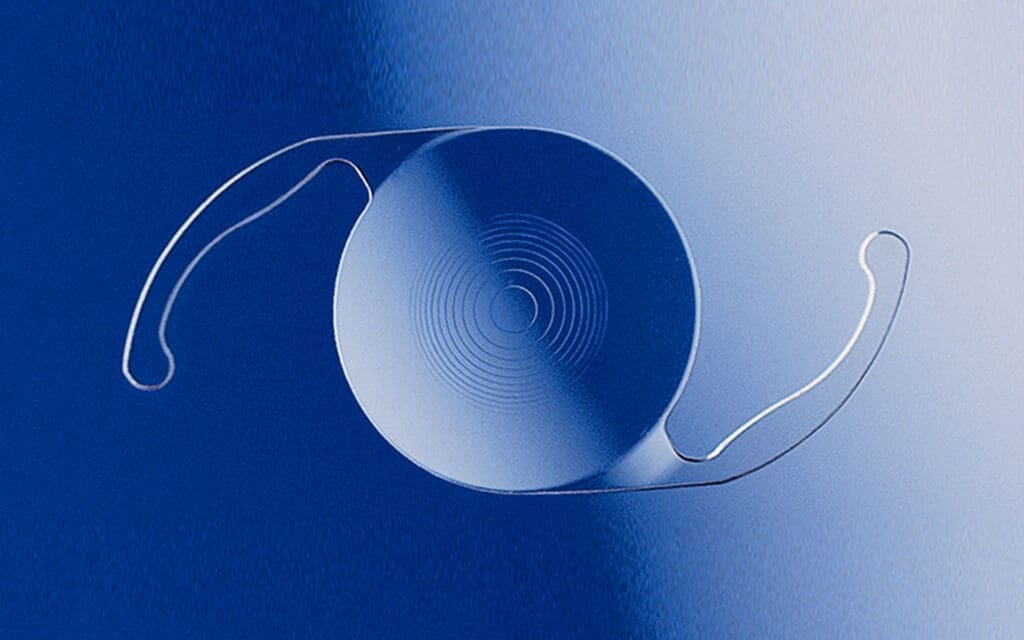

Let’s talk about night vision. Specifically, let’s talk about what it’s like to drive home on the George Washington Parkway after sunset, with oncoming headlights flaring and street signs blurring, wondering if your eyes are up to the task. It’s a real, daily concern for anyone considering vision correction, especially as we get older. If you’re researching Presby LASIK or other laser eye surgeries to ditch reading glasses, the question of how you’ll see at night isn’t just a side note—it’s often the primary source of hesitation. We get it. We’ve had this conversation in our consultation room at Liberty Laser Eye Center in Vienna, VA, more times than we can count.
Key Takeaways:
- Night vision changes after any refractive surgery are common but are typically temporary and manageable.
- Modern PresbyLASIK (or Presbyond®) technology is specifically designed to minimize night vision disturbances compared to older methods.
- The biggest factor in your outcome isn’t just the laser; it’s the pre-operative screening and the surgeon’s experience in managing higher-order aberrations.
- Realistic expectations are everything. Perfect daytime vision doesn’t always translate to perfect night vision, and that’s okay.
Table of Contents
So, What Actually Happens to Night Vision After Surgery?
In simple terms, any procedure that reshapes your cornea—the clear front window of your eye—can affect how light scatters inside it, especially in low-light conditions when your pupil dilates. This isn’t unique to PresbyLASIK; it’s true of PRK, SMILE, and standard LASIK too. You might notice temporary starbursts, halos, or glare around lights. The key word is temporary. For the vast majority of patients, these effects diminish significantly as the eye heals over 3-6 months.
The FDA notes that some patients experience visual symptoms like halos or glare following LASIK, especially in low light. This is a well-documented part of the healing process, not a secret flaw.
It’s Not Your Father’s LASIK: How Technology Has Changed the Game
The horror stories you might have heard from someone who had LASIK 20 years ago are largely obsolete. Back then, treatment zones were smaller, and lasers were less precise, which could indeed lead to more pronounced night vision issues. Today’s wavefront-guided and wavefront-optimized lasers, which we use for PresbyLASIK treatments, map the unique contours of your eye and apply a smoother, more customized ablation. This preserves the natural aspheric shape of the cornea better, which is crucial for reducing those higher-order aberrations that cause light scatter.
Think of it like sanding a piece of wood. The old method might leave a slightly rough, irregular surface that catches the light awkwardly. The new method is like using progressively finer grits to achieve a buttery-smooth finish. The goal is a corneal surface that focuses light as cleanly as possible, day or night.
The Real Deciding Factor: Your Eyes and Your Surgeon’s Judgment
Here’s the unvarnished truth no amount of marketing can overcome: technology is a tool, not a guarantee. The most critical phase of your PresbyLASIK journey happens before you ever lie down under the laser. It’s the screening.
We measure your pupil size in a dark room. Large pupils (over 7mm in dim light) require extra consideration and a wider treatment zone to minimize risk. We analyze the thickness and shape of your corneas with multiple imaging systems. We dry-eye evaluation is non-negotiable, as dry eyes can exacerbate night vision symptoms. If the numbers aren’t right, a good surgeon will tell you no. Full stop. This isn’t a limitation; it’s professional ethics. Sometimes, the best way to preserve great night vision is to recommend a different procedure, like PRK (which has its own recovery trade-offs), or to not recommend laser vision correction at all.
The PresbyLASIK Specifics: Trading Reading Glasses for a Little Glare?
PresbyLASIK, or blended vision LASIK, adds another layer. It’s designed to give you a range of focus—distance, intermediate, and near—by creating a slight difference in the correction between your two eyes (a technique called monovision or, in its more advanced form, Presbyond®). Your brain learns to use the eye that sees best for the task at hand.
This blending can, for some patients, initially affect contrast sensitivity, which is key for night driving. It’s not usually a “halo” issue, but more a feeling that things aren’t quite as sharp in low light. The adaptation period is real. Most brains are remarkably good at adapting, but it takes a few weeks to months. This is why we insist on a contact lens trial to simulate the outcome before surgery. If you can’t adapt to the monovision effect with contacts in your daily life—including driving at night—you likely won’t adapt to it after surgery.
A Practical Comparison: What Are Your Real-World Options?
Let’s be honest, every solution has a trade-off. Here’s a blunt, experience-based look at how different vision correction options stack up for the night-driving commuter.
| Option | How It Addresses Presbyopia | Night Vision & Recovery Considerations | The Real-World Trade-Off |
|---|---|---|---|
| Modern PresbyLASIK / Presbyond® | Creates a blended vision range in both eyes. | Temporary halos/glare possible. Adaptation period for brain to blend vision. Contrast sensitivity may take time to optimize. | Trading reading glasses for a potential, often temporary, reduction in low-light contrast. Long-term convenience vs. short-term adaptation. |
| Monovision LASIK | Corrects one eye for distance, one for near. | Similar night vision considerations as PresbyLASIK. Brain adaptation is critical and not guaranteed. | Simpler technology, but lower rate of patient satisfaction with the adaptation compared to advanced blending. |
| PRK (for presbyopia) | Same visual goal as PresbyLASIK, but no corneal flap. | Longer, more uncomfortable initial recovery (4-5 days). Night vision outcomes similar once healed, but healing takes longer. | Better for thinner corneas or very active lifestyles. You trade a faster LASIK recovery for a slower, sometimes painful, PRK recovery. |
| Cataract Surgery w/ Premium IOLs | Replaces the eye’s natural lens with a multifocal or extended-depth-of-focus lens. | Multifocal IOLs: Known to cause more halos/glare as a permanent side effect. EDOF IOLs: Designed specifically to reduce night vision issues. | The ultimate solution when cataracts are present. You’re choosing between maximum range of vision (multifocal) and better night vision (EDOF). Not an option for clear, young lenses. |
| Reading Glasses | External optical correction. | Zero impact on night vision. Zero surgical risk. | The hassle of constantly finding, cleaning, and losing them. The trade-off is pure convenience. |
When PresbyLASIK for Night Drivers Might Not Be the Right Call
Based on the patterns we’ve seen, you should pump the brakes and have a very serious conversation with your surgeon if:
- Your profession demands exceptional night vision (e.g., long-haul trucker, pilot).
- You have extremely large pupils in dim light and corneal topography that doesn’t allow for a sufficiently large treatment zone.
- You have significant pre-existing dry eye disease that isn’t well-managed.
- You tried a contact lens monovision trial and absolutely hated it, especially for night driving.
- You’re seeking “perfection.” If your expectation is that night vision will be better than it was with your best glasses or contacts, you may be disappointed. The realistic goal is for it to be good enough that it doesn’t interfere with your life, in exchange for a life free of dependency on glasses.
For Our Northern Virginia Neighbors: Local Realities to Consider
Driving around here isn’t a passive activity. It’s the mixing bowl at 7 PM, it’s Route 7 in Tysons with endless construction lights, it’s the unlit backroads of Great Falls. The visual demand is high. A patient from a quieter suburb might adapt to slight halos effortlessly, but a consultant who logs hours on the Capital Beltway every night has a different threshold. We factor this into the conversation. It often means being more conservative in our treatment plans, opting for a slightly smaller reading boost to prioritize the quality of distance vision, or extending the adaptation timeline we discuss. The local need isn’t just for sharp vision; it’s for resilient vision that holds up under stressful, real-world conditions.
So, What’s the Bottom Line?
The unspoken truth is this: some change in night vision is a common part of the healing process with PresbyLASIK, but with modern technology and rigorous screening, severe or permanent problems are rare. The goal isn’t to pretend there’s zero risk, but to manage your expectations and stack the deck overwhelmingly in your favor through technology, data, and surgical experience.
The most practical step you can take is to move beyond online research and get the hard data on your own eyes. Get a comprehensive consultation where they don’t just sell you a procedure, but honestly assess your candidacy. Ask them specifically about your pupil size, your corneal thickness maps, and their plan for managing your night vision outcome. If they gloss over it, that’s your red flag.
For those of us who’ve performed these procedures for years, the real satisfaction isn’t in selling the surgery; it’s in the two-year post-op check when a patient mentions, almost in passing, that they drove to Annapolis for dinner and didn’t think twice about their eyes on the ride home. That’s the realistic win we’re all aiming for.
People Also Ask
The regret rate for LASIK eye surgery is generally very low, with most large-scale studies reporting that approximately 95 to 98 percent of patients are satisfied with their results. This means the regret rate typically falls between 2 and 5 percent. Dissatisfaction or regret often stems from pre-existing dry eye issues, unrealistic expectations, or residual refractive error. For a comprehensive breakdown of potential outcomes, we recommend reviewing our internal article titled 'Understanding The True Percentage Of LASIK Complications And Side Effects', available at Understanding The True Percentage Of LASIK Complications And Side Effects. At Liberty Laser Eye Center, we emphasize thorough pre-surgical screening to minimize these risks and ensure patients have realistic expectations for their vision correction journey.
The worst eyesight that LASIK can typically correct depends on the individual's prescription, but industry standards generally allow for treatment of up to -12.00 diopters of nearsightedness, +6.00 diopters of farsightedness, and up to 6.00 diopters of astigmatism. However, these are not strict limits, as factors like corneal thickness, age, and overall eye health play a critical role in determining candidacy. At Liberty Laser Eye Center, we emphasize that a thorough evaluation is necessary to assess if LASIK is safe and effective for your specific vision needs. For very high prescriptions, alternative procedures like PRK or lens implants may be recommended instead. Always consult with a qualified surgeon to understand your options and realistic outcomes.
Ten years after LASIK, most patients continue to enjoy stable vision, though natural age-related changes can occur. It is common to experience presbyopia, which typically begins around age 40 and may require reading glasses for close-up tasks. Additionally, some individuals might notice minor vision shifts due to long-term healing or underlying conditions. Regular annual eye exams remain crucial to monitor eye health and address any changes. For those who wore contacts before surgery, it is important to understand the long-term implications. At Liberty Laser Eye Center, we recommend reviewing our detailed guide titled Wearing Contacts After LASIK: What You Need to Know 10 Years Later for comprehensive information on this topic.