
Let’s Get Real About Laser Vision Correction: A Friendly Chat
Alright, let’s have a real talk. We’ve all been there—fumbling for glasses on the nightstand, dealing with the dry desert of contact lenses by 3 PM, or that hilarious moment you try to read a menu in a dimly lit restaurant. If the thought of waking up and actually seeing the alarm clock clearly sounds like a distant dream, you’re in the right place. We’re going to cut through the noise and talk about laser eye surgery, not with a bunch of intimidating jargon, but like we’re sharing the coolest tech upgrade you never knew you needed.
We’re Liberty Laser Eye Center over in Vienna, Virginia, and we live and breathe this stuff. Our entire day is a conversation about freedom from glasses and contacts. So, grab a coffee, get comfortable, and let’s walk through what modern vision correction really looks like. No sales pitch, just the facts, some opinions from the front lines, and hopefully a few laughs along the way.
Your Eyes Are Not All The Same (And Thank Goodness Surgery Isn’t Either)
Here’s the first big myth we need to bust: laser eye surgery is not a one-size-fits-all deal. Think of it like ordering a custom suit instead of grabbing something off the rack. Your unique vision issues—whether it’s nearsightedness, farsightedness, astigmatism, or the frustrating presbyopia that hits us in our 40s—require a tailored approach.
That’s why throwing around a generic “Lasik eye surgery” search and hoping for the best isn’t the smartest move. The real magic happens in the consultation, where we figure out which of the modern eye surgery types is your perfect match. It’s our job to be your guide, not just a surgeon.
The Tech Toolbox: It’s More Than Just “The Laser”
This is where it gets fun. The technology has evolved in ways that would make sci-fi writers jealous. It’s not just about zapping your cornea; it’s about precision mapping and customization. When you start looking for the best Lasik surgeon, you’re really looking for a team with access to and mastery over this entire toolbox.
- Wavefront Analysis: This is like taking a 3D topographic map of your eye’s entire optical system. It goes beyond a standard glasses prescription to find tiny, unique imperfections (called higher-order aberrations) that can affect night vision. We use this data to guide the laser for a truly custom treatment.
- Topography-Guided LASIK Surgery: If Wavefront maps the eye’s internal optics, topography maps the cornea’s surface shape in extreme detail. This is a game-changer for treating irregular astigmatism or fine-tuning results. It’s like having GPS for the laser instead of just following street signs.
- Advanced PRK Surgery: “But I heard I’m not a candidate for LASIK!” Hold that thought. Advanced PRK is often the unsung hero. Instead of creating a corneal flap (like in LASIK), we gently remove the very surface skin cells, which then regenerate. It’s fantastic for thinner corneas, certain professions, or active lifestyles. The recovery takes a bit more patience, but the long-term results are spectacular.
- PresbyLASIK Surgery: Hitting the “over-40” wall where your arms aren’t long enough to read your phone? That’s presbyopia. PresbyLASIK is a clever technique, often called blended vision, where we correct one eye for distance and the other for near vision. Your brain brilliantly blends them. It’s not for everyone, but when it works, it’s like getting your young eyes back.
See what we mean? The right tool for the right job makes all the difference.
Beyond LASIK: When Your Eyes Need a Little Extra TLC
Sometimes, vision correction isn’t just about ditching glasses; it’s about managing eye health. This is a huge part of comprehensive care that a great center should offer.
- Dry Eye Treatment: Let’s be honest, if your eyes are already dry before surgery, you want that managed properly. A great pre-op workup includes a serious look at your tear film. Treating dry eye before and after surgery isn’t an add-on; it’s essential for comfort and healing. We spend a ton of time on this at our center in Washington DC metro area because, frankly, happy eyes heal better.
- Corneal Cross-Linking: This is a vital procedure for stabilizing a condition called keratoconus, where the cornea weakens and bulges outward. It uses UV light and riboflavin drops to strengthen corneal tissue. While it’s not a vision-correcting procedure on its own, it’s a crucial stabilizing treatment that can often be combined with other lasers later. It’s a perfect example of why a full-service center matters.
The Million-Dollar Question: What’s This All Going to Cost?
Let’s talk about the price tag. We get it—you’re searching for info, and you see ads screaming “affordable” LASIK with a suspiciously low number. IMO, that’s a red flag. Laser eye surgery is a lifetime investment in your quality of life, not a commodity.
The cost reflects the technology (see that fancy toolbox above?), the surgeon’s experience, and the comprehensive care that wraps around the 10-minute procedure itself. You’re paying for the Wavefront guidance, the lifetime of follow-up care, the management of your dry eye, and the peace of mind that comes with an experienced team. When you look for “Lasik eye surgeons” near me, please weigh the value, not just the number. The nearest or cheapest option might not be the one that protects your most important sense.
Your Playbook: From Consultation to Crystal Clear
So, what does the journey actually look like? Let’s break it down.
Step 1: The Mother of All Eye Exams
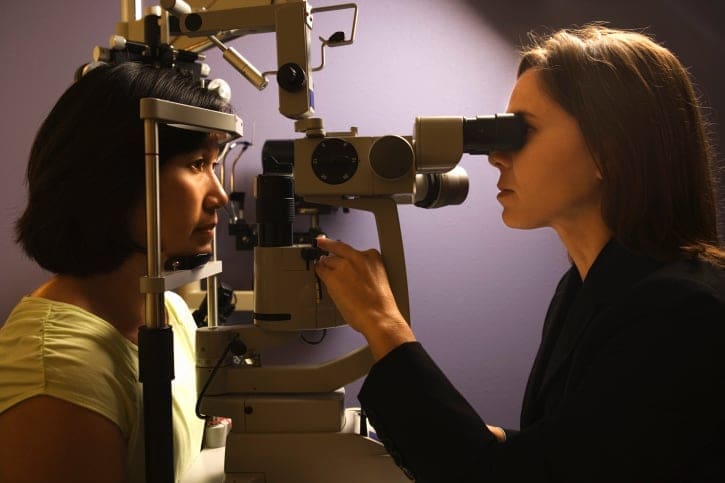
This isn’t your standard annual eye exam. This is a two-hour deep dive. We’ll measure your corneal thickness, map your cornea with topography, dilate your pupils, check for dry eye, and run that Wavefront analysis. We need every piece of data to say “yes, you’re a great candidate” and for which procedure. It’s the most important step.
Step 2: Surgery Day (It’s Way Cooler Than You Think)
You’re in the suite for about 30 minutes, and the laser time is often under 10 minutes per eye. You’ll feel some pressure, but no pain. The laser itself has a tracking system that follows your eye’s microscopic movements—yes, even if you think you moved. It’s incredibly precise.
Step 3: Lasik Recovery – The Nap Heard ‘Round the World
You’ll go home and sleep for a few hours (we insist!). When you wake up, the world is already sharper. For LASIK, most people see well enough to drive by the next morning. Advanced PRK requires a bit more downtime as the surface heals over several days. We give you a detailed playbook and are available 24/7 for any questions.
Demystifying the Stats: A Quick Reality Check
Let’s look at some facts in a simple table. This is the kind of data we discuss every day.
| Topic | The Reality | Our Take (From The Trenches) |
|---|---|---|
| Success Rate | Often quoted as 96%+ patient satisfaction. | This is high, but “success” means meeting realistic expectations. We focus heavily on setting those expectations correctly during your consult. |
| Finding a Surgeon | Searching “Lasik doctors near me” or “best Lasik surgeon”. | Look for experience, technology, and transparency. Read the reviews, but also meet them. Do you feel heard and educated? |
| Pain | Minimal during, some dryness/itching after. | It’s more “discomfort” than pain. The first 4-6 hours after PRK can be rougher, which is why we plan your pain management meticulously. |
| Long-Term Stability | Very stable for most after healing. | Your eyes will still age. Presbyopia happens to everyone around 40-45, and cataracts will develop later. This fixes your current prescription brilliantly. |
Your Top Questions, Answered Straight
We hear these all day, every day. Let’s tackle them head-on.
1. “Am I even a good candidate?”
Maybe! But maybe not. The only way to know is with that advanced diagnostic workup. Thick, healthy corneas, stable vision, and realistic expectations are key. Conditions like severe dry eye or keratoconus need management first. This is why we never quote a price or guarantee candidacy over the phone—it’s irresponsible.
2. “What if you mess up?”
Fair question 🙂 Modern technology has incredible safety profiles. The lasers have multiple fail-safes and shut off if you move too much. The real risk is in choosing an inexperienced provider or one that cuts corners on diagnostics. That’s why your research is so critical.
3. “How long does it really last?”
It permanently reshapes your cornea to correct your current prescription. So, if your vision was stable before surgery, the correction is permanent. Remember, your eyes will still age naturally—that’s a biology thing, not a surgery thing.
4. “Why should I choose your center in Vienna, Virginia?”
Well, we’re biased, but here’s our reasoning: We’re not a high-volume, impersonal factory. We offer the full spectrum of technology (Topography-Guided, PRK, PresbyLASIK, Cross-Linking) because we believe in the right procedure for the right eye. We’re your closest local experts who provide personal care from the first call to your final follow-up. Our team in Washington DC’s backyard has dedicated our practice to this one thing, and we’d love the chance to earn your trust.
The Bottom Line: It’s About Your Vision, Not Just Your Eyesight
There’s a difference. Eyesight is the measurement on the chart. Vision is watching your kid’s soccer game without foggy glasses, seeing the ocean horizon clearly on vacation, or simply rolling over and seeing the clock. That’s the freedom we’re talking about.
If you’re tired of the search for “laser eye surgery near me” and want a real, human conversation with experts who will give it to you straight, we’re here. Give Liberty Laser Eye Center a call or schedule a consultation online. Let’s find out what’s possible for you. Your future clear-eyed self will thank you.