

The level of care here really stands out compared to other clinics I visited. They took detailed measurements and explained why certain treatment options would work better for my eyes. The follow-up appointments were just as thorough as the consultation. Very professional team from beginning to end.

I appreciated how honest and straightforward the doctor was during my evaluation. Instead of pushing surgery immediately, they carefully reviewed whether I was truly a good candidate. That honesty gave me a lot of confidence in the clinic. The procedure went perfectly and my vision is now better than it has ever been.

The surgeon and staff made the entire process feel very smooth and professional. They explained both the benefits and realistic expectations before treatment, which I appreciated. The office is modern, clean, and very efficient. My night vision and overall clarity improved significantly after surgery.
Ok, so this is going to be a long review, but totally worth reading if you have horrible eyesight like I did.
I had horrible, horrible eyesight & if you're telling yourself you do too, wait till you hear my old prescription. 'cause I had to live over 10+ years with this degree listening to people with -1 or even -.5 tell me how bad their vision was. cue rolling eyes.
I was a -11 & -12 in my left & right eye respectively. Now you can gasp & go, "holy sh*t". that's right. I was pretty much blind. If I didn't have glasses or contacts in, my whole world was one giant blurry mess. I couldn't make out distinctive items & I sure as hell couldn't identify a human being from one another.
Funny enough, I never looked into laser eye surgery because I didn't know if I qualified. I originally went to TLC laser eye surgery (where they wasted my time and told me I would not qualify for laser eye surgery due to my high degree). So, I had to call around & actually ask clinics if they took in high degree patients. Spoiler alert, a lot of places do not due to the high risk factor involved with taking in high degree patients. You basically burn off a lot of your eye tissue to even get you to a better degree.
Now I wasn't expecting anything wild, but anything is better than what I was at. I finally called Liberty Laser Eye Center after reading a review about how this one patient with a high degree was able to get to -.75 after her surgery. She was just about the same degree set as me & was going on over a few years after surgery. Naturally, I had to call them & make sure they still took in patients with my degree.
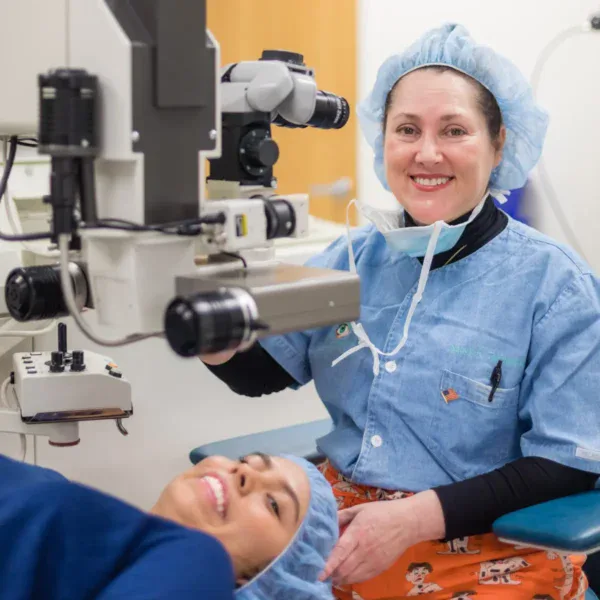
Dr. Tanchel was so ready to work with me & to see what she could do for me. She never pressured me, but gave me a ton of information on the procedure itself. Spoiler alert - I went through with it. I could only qualify for PRK - which is the original laser eye surgery before LASIK came out. PRK is the procedure where they scrub the top layer of your eye ball & then shoot a laser into your eye. I will say during my procedure, I was pretty nervous. She put in numbing eye drops in my eyes & I had to wait a few minutes for it to set. Weirdest feeling to have your eyes numbed. I had my right eye done first & then my left. The system started recalibrating before they began on my left eye. Omgosh. So, so turns out the numbing drops don't last a long time. After the system recalibrated, they pulled me back into the room. I felt her scrub my eye ball, whooo, weirdest feeling ever. She thankfully put in extra drops in my eye & I felt so much more relief. Each eye took about a minute to complete & each time it just felt like I was looking into a red dot. Afterwards, I left a little blind. I could see right after for a split second before my vision went blurry.
I ended up sleeping in my closet for a whole week & that was nice. I was constantly tired & sleeping. If I was sleeping, I was putting in my medicated eye drops & regular eye drops to keep my eyes hydrated ('cause I just had them burned off by a laser.).
It's been over six years, and to say I am happy is understated. I am beyond thrilled that I can see. I am ecstatic that I can wake up in the middle night without being blind to my surroundings. I no longer need glasses/contacts to be able to see. y'all I can drive without any corrective lenses. it's amazing! highly recommend you contact Dr. Tanchel for an appointment.

I had a great experience at Liberty Laser Eye Center. Dr. Nancy Tanchel and her entire team were extremely professional, kind, and made me feel comfortable throughout the whole process. They explained everything clearly and answered all of my questions, which really helped me feel confident before the procedure.
The surgery went smoothly and the staff was very supportive from start to finish. I’m very grateful to Dr. Tanchel and her team for their excellent care and professionalism.
Thank you all for helping me improve my vision. I truly appreciate the great work you do.

I had a great experience at Liberty Laser Eye Center. Dr. Nancy Tanchel and her entire team were extremely professional, kind, and made me feel comfortable throughout the whole process. They explained everything clearly and answered all of my questions, which really helped me feel confident before the procedure.<br><br>The surgery went smoothly and the staff was very supportive from start to finish. I’m very grateful to Dr. Tanchel and her team for their excellent care and professionalism.<br><br>Thank you all for helping me improve my vision. I truly appreciate the great work you do.

I had a really good experience at Liberty Laser Eye Center. The staff was friendly and made me feel comfortable the whole time. The procedure was quick, and my vision is so much better now.

Informative staff offering careful evaluations and supportive patient care throughout the process.

Brought My grandmother for her eye exam. Jeeimy helped us and explained in detail such amazing team.



The cost of PresbyLASIK can vary based on individual prescription complexity and the technology used. At Liberty Laser Eye Center, patients typically find the investment comparable to premium multifocal lens implants, though specific pricing is determined during a consultation. Industry standards for this advanced procedure generally range from $2,500 to $4,500 per eye. For a deeper understanding of how this treatment transforms vision, including real patient experiences, we recommend reading our internal article titled Monuments By Moonlight: Night Vision Success Stories. Your final cost will be confirmed after a thorough evaluation of your corneal thickness and overall eye health.
Yes, presbyopia can be addressed with LASIK, but the approach differs from standard vision correction. Traditional LASIK reshapes the cornea to treat nearsightedness, farsightedness, or astigmatism, but it does not stop the natural aging process that causes presbyopia, which typically begins around age 40. For patients with presbyopia, a specialized technique called monovision LASIK is often used. In this procedure, one eye is corrected for distance vision and the other for near vision, allowing the brain to adapt for clear sight at multiple ranges. For the most current insights on this topic, we recommend reviewing our internal article titled Can Presbyopia Be Corrected with LASIK in 2025?, which details the latest advancements and considerations for 2025. At Liberty Laser Eye Center, we evaluate each patient's unique visual needs to determine the best surgical plan.
For patients seeking to correct presbyopia, the best surgical option depends heavily on your individual lifestyle, eye health, and vision goals. At Liberty Laser Eye Center, we often recommend monovision LASIK or a conductive keratoplasty procedure as leading solutions. Monovision corrects one eye for distance and the other for near vision, reducing the need for reading glasses. Another advanced option is a presbyopia-correcting lens exchange, which replaces the eye's natural lens. To determine which approach is safest and most effective for you, a comprehensive evaluation is essential. We strongly advise reading our internal article titled Second Opinions: Why They Matter For Vision Correction to understand how a second opinion can help you make a confident decision.


108 reviews
