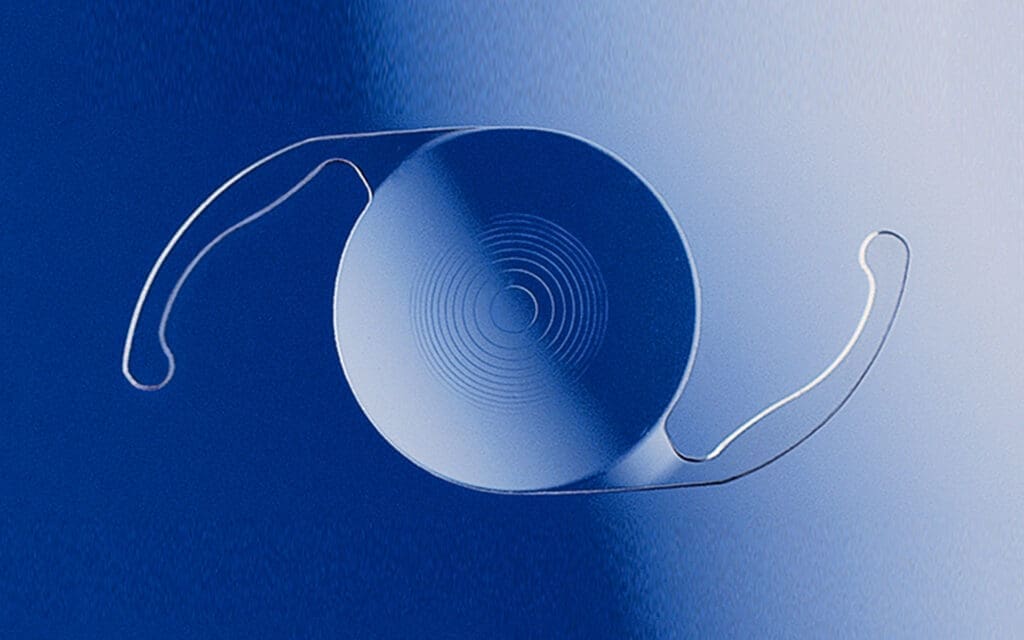

LASIK can directly and dramatically reduce the screen fatigue that plagues modern professionals. By permanently correcting the refractive errors that force your eyes to strain through glasses or contacts, advanced laser vision correction eliminates the very visual demands that make long hours in front of a computer exhausting. At Liberty Laser Eye Center, we have guided thousands of screen-dependent workers—software developers, attorneys, financial analysts, and creatives—out of the cycle of end-of-day headaches, dry, burning eyes, and blurred text. Here is exactly how we do it and what you need to know for 2026.
Table of Contents
The Real Problem: Screen Fatigue and Digital Eye Strain in 2026
Digital eye strain, also called computer vision syndrome, has become the new normal. The Vision Council’s 2022 Digital Eye Strain report found that adults in the United States spend an average of more than seven hours a day on digital devices, and that number is still climbing. By 2026, remote and hybrid professionals routinely log 10 or more hours of screen time daily. The symptoms are measurable: eye discomfort, fluctuating blur, difficulty refocusing, dry eyes, and tension headaches that sap productivity and quality of life.
The physical root is a combination of uncorrected or under-corrected refractive error, constant accommodation and convergence demands, reduced blink rate, and the optical side effects of corrective lenses themselves. A report from the American Academy of Ophthalmology (source) confirms that even a mild prescription can aggravate asthenopia when you stare at high-resolution displays for prolonged periods. This is the hidden barrier that separates a functional workday from a pain-free, high-performance one.
How Traditional Vision Correction Amplifies Screen Fatigue
Most people assume glasses and contacts are neutral tools. For heavy screen users, they are frequently part of the problem.
-
Glasses induce minification or magnification that forces the eyes to recalibrate distance judgment and text alignment, leading to persistent accommodative strain.
-
Lens reflections, smudges, and fogging scatter light, reducing contrast and forcing squinting that tires the muscles around the eyes.
-
Contact lenses exacerbate dryness because they sit on the tear film, absorbing moisture and limiting oxygen. For professionals staring at screens who already blink 66% less often, this creates a chronic dry eye loop.
-
Progressive or bifocal glasses for presbyopia demand head-tilting and unnatural posture, contributing to neck and shoulder tension that compounds visual exhaustion.
In our clinic, we routinely meet patients who have spent years troubleshooting these layered discomforts with artificial tears, blue light glasses, and ergonomic adjustments—and still end their day with tired, red eyes.
How LASIK Directly Targets the Root Causes of Screen Fatigue
LASIK works by reshaping the cornea so light focuses precisely on the retina without auxiliary lenses. This eliminates the intermediary optical distortions that glasses and contacts introduce. The result is a natural, seamless visual signal that requires less effort to process—even during multi-screen workflows.
What makes modern LASIK especially beneficial for screen-centric lives is its ability to go beyond simple sphere and cylinder correction. Our wavefront-optimized and topography-guided platforms measure and treat higher-order aberrations that compromise contrast sensitivity and create halos or ghosting around text and user interface elements on a screen. A 2021 review in Clinical Ophthalmology (source) confirmed that wavefront-guided LASIK significantly reduces post-operative glare and improves low-contrast visual acuity—exactly the improvements that keep your vision crisp during hour eight of spreadsheet analysis.
Crucially, LASIK also breaks the contact lens–dry eye cycle. Without a lens on the surface of the eye, your natural tear film can stabilize, and blink-related moisture distribution improves. For the same reason, professionals who undergo LASIK no longer need to manage reading glasses or progressive lenses; those with presbyopia can opt for blended-vision LASIK or PresbyLASIK to maintain clear near and intermediate vision simultaneously.
Tailored Laser Vision Correction Options for Screen-Focused Professionals
Not all LASIK is the same. Liberty Laser Eye Center offers an array of FDA-approved, personalized procedures that directly address the visual demands of high-screen-use careers. The table below matches each option to the typical screen fatigue pain point.
| Procedure | Best For | Screen Fatigue Benefit | Typical Return to Screen Use |
|---|---|---|---|
| Custom Bladeless LASIK | Myopia, hyperopia, and astigmatism in patients seeking fastest recovery | All-laser flap creation reduces dry eye risk; wavefront-optimized ablation sharpens contrast and reduces glare from overhead office lighting | Most return to light screen work in 24–48 hours with lubricating drops |
| CATz Topography-Guided LASIK | Irregular corneas, higher-order aberrations, patients who demand the sharpest possible text clarity | Treats subtle corneal irregularities that scatter light on monitors; delivers the highest-quality night and low-contrast vision | Similar rapid recovery; significantly less ghosting around letters |
| Advanced PRK | Patients with thin corneas, active lifestyles, or those who prefer a flapless procedure | Provides same superb visual quality without a flap; beneficial for patients whose screen dryness is compounded by environmental factors | Surface healing takes a few days longer; office work typically resumes after 4–5 days |
| PresbyLASIK (Blended Vision) | Professionals over 40 who want to ditch reading glasses and see both their monitor and phone without switching | Creates a custom depth-of-field so you can read fine print on screens and see in the distance naturally; eliminates the neck strain of progressive lenses | Adaptation is quick; reading on screens is comfortable almost immediately, with full neural adaptation in days to weeks |
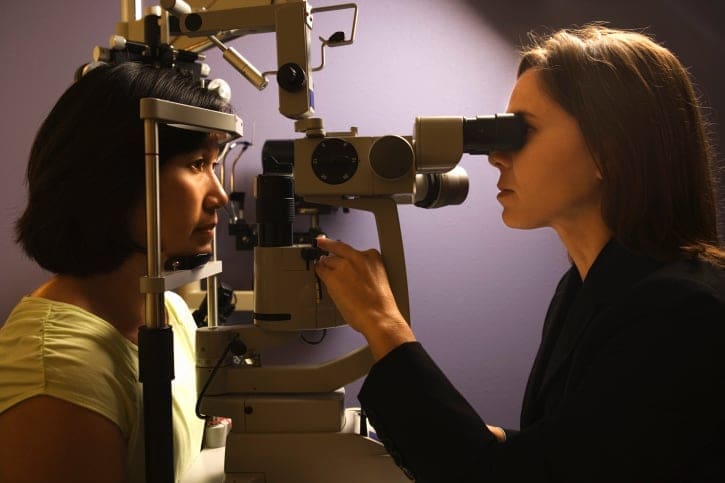
We design every treatment plan after a comprehensive diagnostic exam that measures more than 30,000 data points across the cornea, ensuring your vision is tailored to the exact visual demands of your work.
The Liberty Laser Eye Center Difference: Why Vienna, VA Professionals Choose Us
When you trust a practice with your vision and your career, experience and precision matter. Dr. Nancy Tanchel, our board-certified ophthalmologist, has performed over 30,000 laser vision procedures—more than any other female surgeon in the United States. She brings that volume of experience to every single mapping and ablation, using only FDA-approved wavefront-optimized technology to create a truly individualized plan.
Our center in Vienna serves Fairfax County and the entire Washington Metropolitan Area with a comforting, patient-first approach. We know your time is valuable, which is why we offer a complimentary shuttle from Dunn Loring Metro and a seamless consultation-to-post-op experience. From our advanced dry eye evaluation before surgery—because healthy tears are critical to screen comfort—to our detailed return-to-work protocols, every step is built for the professional who cannot afford a long, uncomfortable recovery.
Most importantly, we see your screen fatigue not as a minor annoyance but as a correctable barrier to your best work and life. Our patients consistently report that LASIK with us was a turning point in their energy levels at work and their ability to enjoy off-screen time without residual eye strain.
Recovery and Returning to Screens: A Practical Timeline
One of the first questions we hear is, “When can I get back to my monitors?” Here is the realistic, experience-based timeline we share with every screen-dependent professional at Liberty Laser Eye Center.
-
First 24 hours: Rest is required. No screen use. We provide protective eyewear and a lubricant schedule that starts immediately.
-
Day 2: Many patients can check essential emails on a phone or tablet briefly, with frequent breaks and preservative-free artificial tears. Comfort varies; some still see halos or mild blur, but this clears rapidly.
-
Days 3–5: Laptop and monitor work resumes for most with modified habits. We enforce the 20-20-20 rule (every 20 minutes, look at something 20 feet away for 20 seconds). Screen brightness should be reduced, and high refresh rates help reduce flicker sensation.
-
Week 1–2: Full work capacity typically returns. Mild visual fluctuations are normal and stabilize. We teach a blinking exercise to re-train tear film distribution.
-
Month 1 and beyond: Vision solidifies. Dry eye symptoms that were once driven by contacts dissipate. A January 2023 study in the Journal of Refractive Surgery indicated that symptoms of computer vision syndrome decrease significantly by the three-month mark after topography-guided LASIK (source).
We provide every patient with a written, day-by-day protocol so you can plan your work calendar with confidence.
Long-Term Savings and Career Impact
The financial case for LASIK is strong. The typical professional wearing daily contact lenses spends between 500 and 800 dollars per year on lenses, solutions, and replacement cases. Over a 20-year window, that is 10,000 to 16,000 dollars—often more than the cost of premium bilateral LASIK. Glasses users face replacement frames, lens upgrades, and specialty coatings that easily add up. By choosing LASIK now, you redirect those dollars and reclaim hundreds of hours of lens maintenance and eye doctor visits.
But the real return is in energy and performance. We have had attorneys tell us they no longer need a 3 PM coffee break just to rest their eyes. Data analysts report faster error detection on dense spreadsheets. A software engineer described the effect as “switching from a standard-definition monitor to a retina display.” When your vision is no longer a variable you have to manage, your entire workday becomes more fluid.
Unique 2026 Insight: LASIK and the Augmented Reality Workplace
As more companies integrate AR headsets and immersive display environments, the demand for flawless uncorrected vision will intensify. Headsets do not accommodate glasses comfortably, and contact lens dryness is exacerbated in sealed head-mounted displays. LASIK—especially topography-guided, high-definition corrections—positions you perfectly for the next generation of workspaces. It is an investment we are already helping forward-thinking professionals make.
Frequently Asked Questions
Can LASIK cure digital eye strain completely?
LASIK corrects the refractive errors that contribute to eye strain, but it does not change the blink rate or environmental factors. By eliminating glasses and contact lens issues, it often reduces symptoms by 80% or more. We also teach lifelong screen habits to maintain comfort.
Is LASIK safe if I spend 10 hours a day on a computer?
Absolutely. We perform an exhaustive dry eye assessment before clearing anyone for surgery. If any underlying dry eye disease is present, we treat it first. Post-operative visual quality for screen work is excellent, and with our protocols, you can return to your routine faster than many imagine.
Will LASIK eliminate my need for reading glasses as I get older?
If you are over 40 and dealing with presbyopia, standard LASIK will correct your distance vision but you will still need reading glasses. PresbyLASIK or blended-vision LASIK reduces or eliminates the need for reading glasses by giving each eye a slightly different focal point. Our diagnostic process determines which solution suits your screen setup.
What does LASIK cost at Liberty Laser Eye Center in dollars?
The price depends on your personalized treatment plan and the technology we use. As a premium center using custom wavefront and topography-guided platforms, the investment typically ranges from around 2,200 to 3,300 dollars per eye. We offer detailed financing options and will give you an exact quote during your consultation. We believe in transparent pricing with no hidden fees.
How long do LASIK results last?
The corneal reshaping is permanent. Your eyes can still undergo age-related changes, such as presbyopia or cataracts later in life, but the refractive correction remains stable as long as your prescription was stable before surgery. We have patients enjoying 20/20 vision decades after their procedure.
Will my vision be too sharp for screens? Can that cause headaches?
No, modern LASIK profiles are designed to provide smooth, natural focus transitions. Some patients notice a “hyper-real” sharpness for a few days, but the brain adapts quickly. We customize your treatment to avoid overcorrection that could cause strain at intermediate working distances.
See Clearly, Work Freely: Book Your Consultation
If screen fatigue is stealing your after-work energy, blurring your focus by mid-afternoon, or making your contact lenses unbearable by 5 PM, we can help. At Liberty Laser Eye Center in Vienna, Virginia, we deliver more than vision correction—we deliver a new baseline for your professional and personal life.
Call us at (571) 234-5678 to schedule your comprehensive LASIK evaluation. Enjoy our free shuttle from Dunn Loring Metro, experience our comfortable office, and meet the team led by Dr. Nancy Tanchel, the surgeon who has transformed tens of thousands of eyes. See clearly and live freely—starting with your next screen-filled Monday.