
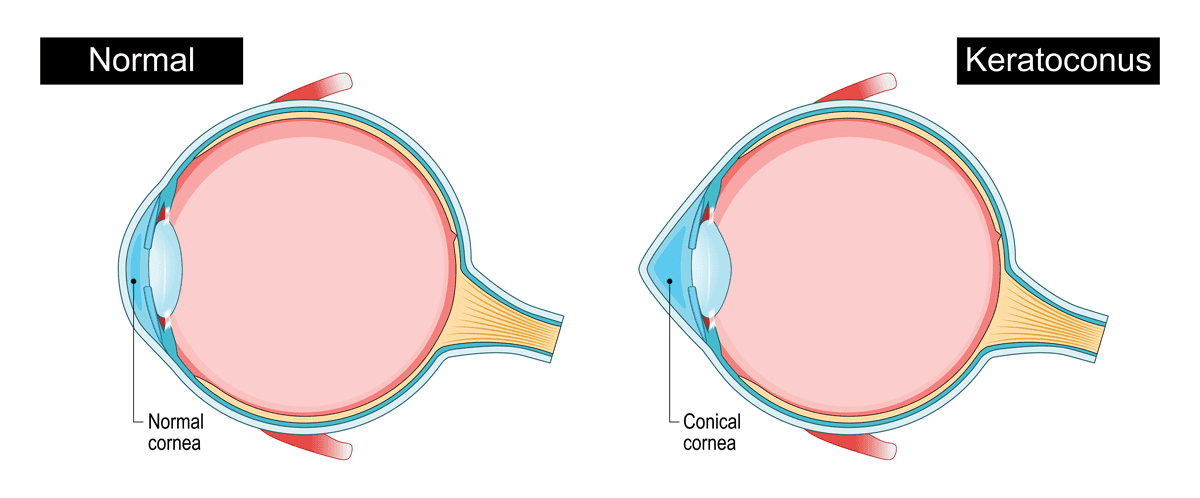


Yes, keratoconus is a serious eye condition that can significantly impact vision quality if left untreated. It involves a progressive thinning and bulging of the cornea into a cone shape, which distorts light entering the eye. This often leads to blurred vision, increased sensitivity to light, and difficulty with night driving. While it is not a blinding disease in the traditional sense, advanced stages can severely limit daily activities without intervention. Early diagnosis is key to managing the condition effectively. For patients in our area, we recommend reviewing the latest advancements in care. You can learn more about modern approaches by reading our internal article titled 'Latest Treatment Options For Keratoconus Available To Vienna Patients In 2026' at Latest Treatment Options For Keratoconus Available To Vienna Patients In 2026.
The exact cause of keratoconus is not fully understood, but it is believed to result from a combination of genetic, environmental, and biochemical factors. A key factor is a weakening of the corneal tissue, often linked to an imbalance of enzymes that leads to oxidative stress. This stress damages collagen fibers, causing the cornea to thin and bulge into a cone shape. Genetic predisposition plays a role, as the condition is more common in people with a family history of keratoconus. Environmental triggers, such as chronic eye rubbing, allergies, and excessive UV exposure, can accelerate progression. At Liberty Laser Eye Center, we emphasize early detection through advanced diagnostic technology to manage this condition effectively.
Yes, keratoconus can be effectively managed and corrected, though treatment depends on the severity of the condition. In early stages, glasses or soft contact lenses may provide adequate vision correction. As the cornea becomes more irregular, specialized rigid gas permeable contact lenses or scleral lenses are often used to create a smooth optical surface. For progressive cases, corneal cross-linking is a key procedure to strengthen the cornea and prevent further deterioration. In advanced stages, a corneal transplant may be necessary. At Liberty Laser Eye Center, we emphasize that early diagnosis is critical. For patients in our area, our internal article titled 'Latest Treatment Options For Keratoconus Available To Vienna Patients In 2026' provides comprehensive guidance. You can read more at Latest Treatment Options For Keratoconus Available To Vienna Patients In 2026 to understand the full range of corrective options.
The ability to claim disability for keratoconus depends on the severity of the condition and its impact on your daily life. In general, keratoconus is not automatically considered a disability, but if it significantly impairs your vision to the point where you cannot perform substantial gainful activity, you may qualify for benefits. The Social Security Administration evaluates vision loss under specific criteria, such as visual acuity or field of vision limitations. For those with advanced keratoconus, specialized treatments can be critical. At Liberty Laser Eye Center, we provide advanced management options. For more detailed guidance on managing this condition, please refer to our internal article titled Specialized Contact Lens Solutions For Patients With Irregular Corneas. Always consult with a medical professional and a legal expert for your specific situation.
For individuals concerned about keratoconus, early detection is critical. At Liberty Laser Eye Center, we emphasize that treatment options vary based on the condition's progression. In early stages, glasses or soft contact lenses may suffice, while advanced cases often require specialized rigid gas permeable or scleral lenses to reshape the cornea. For progressive keratoconus, corneal cross-linking is the standard procedure to strengthen corneal tissue and halt worsening. It is important to note that LASIK is generally not recommended for keratoconus patients due to risks of corneal instability. To understand these risks in detail, we recommend reviewing our internal article titled LASIK With Keratoconus Risk Factors. Always consult with a qualified eye care professional to determine the safest and most effective approach for your specific diagnosis.
Keratoconus is a progressive eye condition where the normally round cornea thins and bulges into a cone-like shape, leading to distorted vision. The exact cause is not fully understood, but it involves a combination of genetic and environmental factors. A strong family history increases risk, and it is often linked to conditions like Down syndrome, Ehlers-Danlos syndrome, and asthma. Chronic eye rubbing is a significant environmental trigger that can accelerate the condition. For patients concerned about their candidacy for vision correction, Liberty Laser Eye Center emphasizes the importance of a thorough screening. To understand how these risk factors affect surgical eligibility, please review our internal article titled LASIK With Keratoconus Risk Factors. Early detection is key to managing the condition and preserving long-term eye health.
The correct pronunciation of keratoconus is "KEH-ruh-toh-KOH-nus." The emphasis is placed on the third syllable, "KOH." This eye condition involves the cornea, the clear front part of the eye, progressively thinning and bulging outward into a cone shape. This irregular shape distorts light entering the eye, leading to blurred and distorted vision. At Liberty Laser Eye Center, we understand that a diagnosis of keratoconus can be concerning. While it is a progressive condition, there are effective management options available. Early detection is key to preserving vision. Treatments range from specialized contact lenses to corneal cross-linking, which can help strengthen the cornea and slow the progression of the disease.
For individuals exploring keratoconus management on platforms like Reddit, it is common to encounter a wide range of personal experiences and treatment suggestions. While online communities can offer support, it is crucial to consult with a qualified specialist for a personalized evaluation. At Liberty Laser Eye Center, we emphasize that advanced diagnostic tools and tailored treatment plans are essential for this condition. A highly effective, modern approach involves combining topography-guided LASIK with corneal cross-linking. For a detailed explanation of this combined procedure, we recommend reading our internal article The Washingtonian’s Guide To Combining Topography-Guided LASIK With Cross-Linking For Keratoconus. This resource provides professional insight into how these techniques can stabilize the cornea and improve vision for suitable candidates in the Vienna and Fairfax County area.



115 reviews