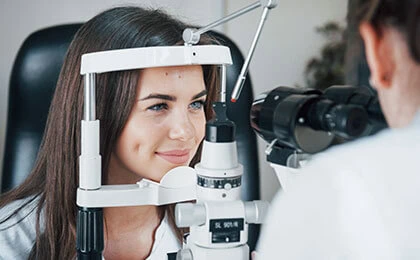
No. 55 is not too old for LASIK. The U.S. Food and Drug Administration (FDA) has approved LASIK for anyone 18 years or older and has set no maximum age limit. What truly matters is not the number on your driver’s license but the health, stability, and specific needs of your eyes. Every year, thousands of patients in their 50s, 60s, and even 70s undergo successful, life‑changing LASIK procedures at Liberty Laser Eye Center.
However, the conversation changes after age 55. You deserve more than a simple “yes” or “no” — you deserve a strategy that matches your eyes, your lifestyle, and your long‑term vision goals. In this guide, you will learn exactly how your eyes have changed, what LASIK can (and cannot) do for you, which advanced technologies are available, and how Liberty Laser Eye Center serves patients throughout Washington DC, Maryland, Alexandria, Arlington, Tyson’s Corner, and all of Northern Virginia with personalized care.
Table of Contents
How Your Eyes Change After 55 — and Why LASIK Can Still Work
To understand LASIK candidacy in your mid‑50s, you must first understand what is happening inside your eye. Three key aging processes shape the decision:
1. Presbyopia — The Universal “Reading Glasses” Problem
Presbyopia is the gradual stiffening of the natural lens inside the eye. It usually begins in the early to mid‑40s and is fully established by 55, making it difficult to focus on close objects such as menus, phones, or medicine labels.
Traditional LASIK reshapes the cornea — the clear front surface — to correct distance vision. It does not alter the lens where presbyopia lives. A 55‑year‑old who has standard LASIK will almost certainly still need reading glasses for near work. This is not a failure of LASIK; it is simply where the problem lies.
2. Cataracts — The Clouding Lens
By the mid‑50s, the natural lens often begins to develop early cataracts. These may not yet affect vision, but they will progress over time. LASIK does not treat cataracts; when cataracts become visually significant, cataract surgery (often with advanced intraocular lenses) becomes the preferred treatment.
3. Dry Eye — A Common Age‑Related Concern
Hormonal changes (particularly during and after menopause) and certain medications can reduce tear production, leaving the eyes drier. Moderate to severe dry eye can affect LASIK healing and satisfaction. However, with modern pre‑operative screening and aggressive dry eye management, many patients with well‑controlled dryness can still proceed safely.
LASIK Candidacy at 55: What Surgeons Actually Evaluate
LASIK candidacy is never decided by age alone. Surgeons evaluate a short list of objective factors. The table below compares the criteria for patients under 40 versus those over 55.
| Candidacy Factor | Under 40 | Over 55 |
|---|---|---|
| Prescription stability | Must be stable for at least 1 year, ideally less than 0.5‑diopter change | Same requirement; any recent shift may signal cataract development |
| Corneal thickness | Must be sufficient for safe reshaping (≥ 500 microns) | Same requirement; older corneas may be slightly thinner, requiring careful measurement |
| Lens clarity | Usually clear | Must rule out visually significant cataracts; early lens changes may shift recommendation toward RLE |
| Tear film quality | Generally healthy | Higher prevalence of dry eye; may require pre‑treatment with drops, plugs, or thermal therapy |
| Overall eye health | No glaucoma, keratoconus, or uncontrolled disease | Same; plus screening for age‑related macular degeneration and other conditions |
Sources: American Academy of Ophthalmology; TLC Laser Eye Centers; Holzman Laser Vision.
LASIK Options Designed for the Over‑55 Eye
When you are 55, a cookie‑cutter LASIK approach is rarely the best answer. Liberty Laser Eye Center offers several specialized strategies to address presbyopia and other age‑related changes.
PresbyLASIK (Blended Vision)
PresbyLASIK, also called blended vision or monovision LASIK, corrects one eye primarily for distance and the other for near tasks. The brain learns to merge the two images, providing functional vision at multiple ranges. It is the closest thing to “bifocals without the bifocals.”
-
Ideal for: Patients who want to reduce dependence on both distance glasses and reading glasses.
-
What to expect: Most patients adapt within weeks. Depth perception may be slightly altered, but the brain compensates remarkably well.
Advanced PRK (No‑Flap Surface Treatment)
For patients with thinner corneas, dry eye, or occupations that carry a risk of eye trauma (e.g., athletes, first responders), PRK is an excellent alternative. PRK reshapes the corneal surface without creating a flap, eliminating any flap‑related complications.
-
Ideal for: Patients who value long‑term corneal stability or have mild dry eye.
-
What to expect: Recovery takes slightly longer than LASIK (a few extra days of blurry vision), but the final visual outcome is equivalent.
Corneal Cross‑Linking (When Stability Is a Concern)
For the rare patient who has early keratoconus or borderline corneal weakness, corneal cross‑linking can strengthen the cornea, making LASIK or PRK possible. This “reinforcement step” uses riboflavin drops and ultraviolet light to create new collagen bonds.
LASIK vs. Refractive Lens Exchange (RLE) After 55
One of the most important conversations for any patient over 55 is whether LASIK or Refractive Lens Exchange (RLE) provides the better long‑term value. RLE replaces the natural lens with an advanced intraocular lens (IOL), simultaneously correcting distance, intermediate, and near vision while permanently eliminating the risk of future cataracts.
| Factor | LASIK (Corneal Surgery) | Refractive Lens Exchange (RLE) |
|---|---|---|
| What it treats | Cornea (front surface) | Natural lens (inside the eye) |
| Corrects presbyopia? | Partially (via monovision/PresbyLASIK) | Fully (trifocal or extended‑depth‑of‑focus IOLs) |
| Prevents future cataracts? | No | Yes — the natural lens is removed |
| Ideal age range | 18–60 (depending on lens clarity) | 50+ (especially with early lens changes) |
| Recovery | 1–2 days | 1–2 weeks (one eye at a time) |
| Long‑term stability | Excellent, but age‑related lens changes continue | Permanent; lens does not age |
Sources: Berkeley Eye Center; EuroEyes; Collaborative Eye.
Bottom line: If your natural lenses are still clear and your primary goal is to reduce dependence on glasses for distance, LASIK remains a strong choice. If you already have early cataracts or want a comprehensive solution that addresses reading vision as well, RLE may provide superior long‑term value. At Liberty Laser Eye Center, we evaluate both options objectively during your complimentary consultation.
What Does LASIK Cost for Patients Over 55?
LASIK is an elective procedure and is generally not covered by insurance. The cost reflects the technology, surgeon experience, and the complexity of your prescription.
| Cost Component | Typical Range (per eye) |
|---|---|
| Standard LASIK | 2,000 dollars – 2,500 dollars |
| Wavefront‑Guided Custom LASIK | 2,500 dollars – 3,200 dollars |
| PresbyLASIK (Blended Vision) | 2,500 dollars – 3,500 dollars |
| Advanced PRK | 2,200 dollars – 3,000 dollars |
National averages; actual prices at Liberty Laser Eye Center are confirmed during consultation.
Financing: We offer flexible monthly payment plans, often as low as 50 dollars – 80 dollars per month. Health Savings Accounts (HSA) and Flexible Spending Accounts (FSA) are also accepted, effectively reducing your cost by using pre‑tax dollars.
LASIK Recovery at 55: What to Expect
Recovery after LASIK is generally quick, regardless of age. Most patients return to work within one to two days.
| Timeline | Activity |
|---|---|
| Day 1 | Rest. Avoid rubbing eyes. Use prescribed antibiotic and lubricating drops. Vision may be hazy. |
| Week 1 | Avoid pools, hot tubs, makeup, and dusty environments. Wear protective eye shields at night. |
| Month 1 | Attend follow‑up appointments. Refrain from contact sports and heavy eye strain. |
| Month 3+ | Vision stabilizes. Continue annual eye exams to monitor overall eye health. |
Dry Eye Management: If you experience dryness, we offer preservative‑free artificial tears, punctal plugs, and in‑office thermal treatments to keep your eyes comfortable during healing.
Real Data: LASIK Outcomes for Patients Over 55
Multiple peer‑reviewed studies have confirmed that LASIK in the presbyopic age group is safe, effective, and predictable.
-
A 2024 study published in the Journal of Refractive Surgery found that LASIK in patients older than 55 years had almost the same safety outcomes as LASIK in patients aged 30–40 years, though efficacy (the absolute level of vision achieved) was slightly lower and correlated with age.
-
Research in patients aged 40 to 69 years reported reasonable safety, efficacy, and predictability, with no greater risk of vision loss compared to younger groups.
-
A separate study of patients aged 65 and older concluded that “patients ≥65 years that were candidates for conventional and presbyopic LASIK showed satisfactory and safe refractive and visual outcomes”.
National benchmarks: Across all age groups, approximately 75 to 80 percent of LASIK patients achieve 20/20 vision, and about 95 percent achieve functional driving vision (20/40 or better).
Frequently Asked Questions About LASIK at 55
Does LASIK fix reading vision?
Standard LASIK corrects distance vision. PresbyLASIK (monovision) can reduce dependence on reading glasses, but most patients will still need readers for very fine print.
Will LASIK stop me from having cataract surgery later?
No. LASIK does not prevent or interfere with future cataract surgery. Your cataract surgeon can calculate the appropriate intraocular lens power using pre‑LASIK records.
Is LASIK safe if I have dry eyes?
Mild to moderate dry eye can often be managed before and after surgery. Severe dry eye may make LASIK inadvisable; PRK or RLE may be better alternatives.
How long do LASIK results last?
LASIK provides permanent corneal reshaping. However, age‑related lens changes (presbyopia, cataracts) will still occur naturally over time. Regular eye exams remain essential.
What if I have early cataracts?
If early cataracts are present, RLE may offer a more comprehensive solution. Your doctor will discuss this during your evaluation.
Why Liberty Laser Eye Center Is the Smart Choice for Patients Over 55
-
Expertise in Presbyopic LASIK: Our surgeons have extensive experience with PresbyLASIK, PRK, and advanced technology-guided treatments tailored to the aging eye.
-
State‑of‑the‑Art Diagnostic Technology: We use Wavefront Analysis, Corneal Topography, and Tomography to map your eyes with micron‑level precision.
-
Comprehensive Dry Eye Care: We don’t ignore dry eye — we treat it aggressively before and after surgery to optimize your comfort and results.
-
No‑Pressure Consultations: If LASIK isn’t your best option, we will tell you honestly and guide you toward a better alternative, whether that is RLE, ICL, or continued glasses.
-
Convenient Location: Our Vienna, Virginia clinic is easily accessible from Washington DC, Arlington, Alexandria, Tyson’s Corner, and all of Northern Virginia.
Take the Next Step — Your Eyes Deserve a Second Act
Fifty‑five is not a stop sign. It is simply a reason to look closer — literally. At Liberty Laser Eye Center, we have helped countless patients in the Washington DC, Maryland, and Northern Virginia area reclaim clear vision, reduce their dependence on glasses, and enjoy life with fewer visual barriers.
Schedule your free LASIK consultation today. We will perform a thorough eye examination, review your unique age‑related considerations, and design a personalized vision correction plan that puts your long‑term eye health first.
Book Your Free LASIK Consultation
References
-
U.S. Food and Drug Administration. LASIK: What You Should Know.
-
American Academy of Ophthalmology. LASIK — Laser Eye Surgery.
-
Holzman Laser Vision. Am I Too Old for LASIK? Age Requirements.
-
TLC Laser Eye Centers. Am I Too Old for LASIK?
-
Manhattan Eye. LASIK Age and Suitability Guide.
-
Berkeley Eye Center. Compare LASIK, PRK, EVO ICL & RLE.
-
EuroEyes. What Age Is Best for Vision Correction Surgery?
-
Collaborative Eye. Refractive Surgery Options for Seniors.
-
PMC. Influence of Age on LASIK Safety and Efficacy (2024).
-
ScienceDirect. LASIK in the Presbyopic Age Group (2007).
-
The Best of Health. Does Laser Eye Surgery Really Work? (2026).
-
American Refractive Surgery Council. Balancing the Cost of Vision Care.
Disclaimer: This article is for informational purposes only and does not constitute medical advice. Individual candidacy can only be determined through a comprehensive eye examination.
Related Articles
Long-Term Patient Satisfaction Rates For LASIK Surgery In Northern Virginia
Medical Conditions And Medications That Disqualify You From LASIK In Vienna, VA
Complete Guide To LASIK Eye Surgery Costs And Financing In Washington DC
The Washingtonian’s Guide To Combining Topography-Guided LASIK With Cross-Linking For Keratoconus
Monovision LASIK for Over 40s in the DC Area: Achieve Near and Far Vision Without Glasses
Multifocal IOLs vs. LASIK for Presbyopia: The Complete Guide to Reclaiming Reading Vision Without Bifocals
Dry Eye Treatment Services in Herndon, VA
People Also Ask
For many patients in their 50s, LASIK can be a worthwhile option, but it depends on your specific eye health. The primary consideration is that presbyopia, the natural age-related loss of near vision, typically begins around age 40. While LASIK can correct distance vision, it does not prevent presbyopia, meaning you may still need reading glasses after surgery. However, a procedure called monovision LASIK, where one eye is corrected for distance and the other for near, can reduce this dependence. At Liberty Laser Eye Center, we recommend a comprehensive evaluation to check for early cataracts or dry eye, which are more common in this age group. For active patients, we also provide guidance on recovery; you can learn more about returning to hobbies by reading our article Indoor Rock Climbing Safety Post-LASIK. Ultimately, the decision should be based on your lifestyle needs and a thorough eye exam.
Yes, people with Sjögren's syndrome can be considered for LASIK, but it requires a very careful evaluation. Sjögren's is an autoimmune condition that commonly causes severe dry eye, which is a primary risk factor for LASIK complications. At Liberty Laser Eye Center, we follow strict industry guidelines and would conduct a thorough tear film assessment. If your dry eye is well-controlled with treatments like prescription drops or punctal plugs, and your corneas are healthy, you may be a candidate. However, many patients with Sjögren's are better suited for alternative procedures like PRK, which has a lower risk of exacerbating dryness. A comprehensive consultation with your eye surgeon is essential to determine the safest option for your specific situation.
Ten years after LASIK, most patients continue to enjoy stable vision, though natural age-related changes like presbyopia may begin to affect near vision. The corneal tissue remains healed, and long-term complications are rare when proper care is followed. However, it is crucial to maintain regular eye exams to monitor for conditions such as dry eye syndrome or refractive shifts. For those considering contact lenses later, our internal article titled Wearing Contacts After LASIK: What You Need to Know 10 Years Later provides essential guidance on safe usage after a decade. At Liberty Laser Eye Center, we emphasize that while LASIK results are durable, your eyes still require routine professional care to ensure lasting health and clarity.
LASIK is generally not recommended for patients under the age of 18, as the eyes are still developing and vision prescriptions can continue to change. For older adults, there is no strict upper age limit, but candidacy depends on overall eye health. Conditions such as significant cataracts, glaucoma, or severe dry eye syndrome often disqualify older patients. The most critical factor is a stable prescription for at least one year before surgery. At Liberty Laser Eye Center, we evaluate each patient individually to ensure safety and effectiveness. For those considering the impact on active lifestyles, our internal article titled 'Athletes And LASIK: Performance Benefits Explained' provides valuable insights. You can find it at Athletes And LASIK: Performance Benefits Explained.
While age alone is not a strict disqualifier for LASIK, patients over 60 must be carefully evaluated. The primary concern is presbyopia, a natural age-related condition that reduces the eye's ability to focus on close objects, typically beginning in the mid-40s. LASIK corrects distance vision but does not prevent presbyopia, meaning you would still need reading glasses after surgery. Additionally, the presence of early cataracts is a common consideration for this age group, as cataract surgery can often correct vision simultaneously. At Liberty Laser Eye Center, we recommend a comprehensive evaluation to assess your overall eye health. For a detailed list of conditions that may affect your candidacy, please refer to our article Medical Conditions And Medications That Disqualify You From LASIK In Vienna, VA.